
PUGLIA
Adriatic dolphins learn to follow trawlers as fish stocks collapse
Baby bottlenose dolphins copying parents' scavenging behaviour signals overfishing crisis in Mediterranean waters
Francesca Lazzari312 wordsEdition №35Saturday, 4 July 2026 — Edition № 35
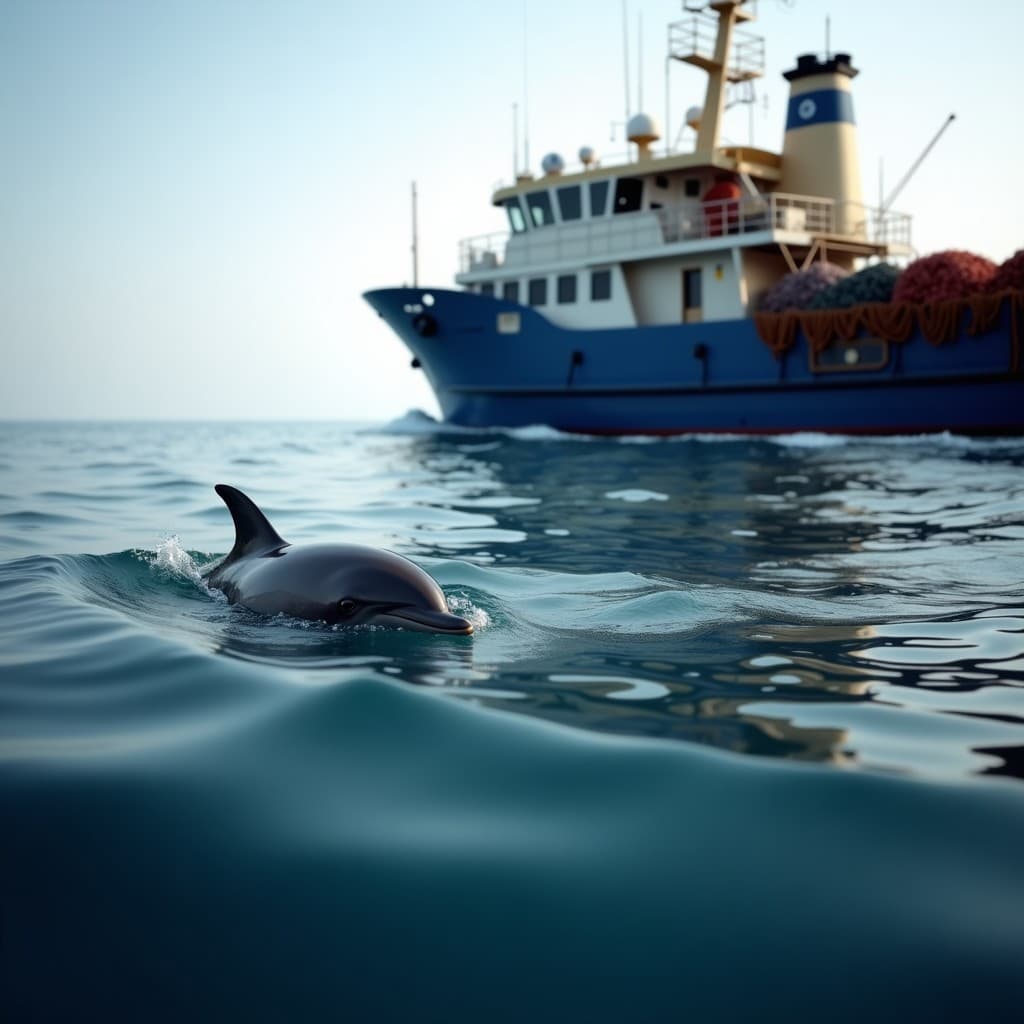
The Guardian reported Friday that scientists have documented a striking shift in behaviour among bottlenose dolphins in the Adriatic Sea. In one surveyed area, 76 per cent of fishing boats were being followed by dolphins seeking leftover catch, with baby dolphins learning the foraging technique from their mothers and fathers. Giovanni Bearzi, a co-author of the study, told the Guardian that locating dolphins in the Adriatic these days amounts to simply looking for trawlers.
The behaviour reflects a deeper collapse in the Adriatic's fish stocks. As wild prey becomes scarcer due to industrial overfishing, dolphins have adapted by scavenging discards from commercial vessels—a survival strategy that now appears to be passing from one generation to the next. The Adriatic, bordered by Italy, Croatia, and the Balkans, has long been one of Europe's most heavily fished seas, and the shift signals an ecosystem under acute stress.
For Puglia, a region whose economy depends on Adriatic fishing and tourism, the finding carries immediate weight. The collapse of wild fish populations that has forced dolphins to follow trawlers also threatens the livelihoods of local fishermen, who face declining catches and stricter EU quotas designed to rebuild stocks. The Guardian's reporting suggests that the damage is already severe enough to reshape the behaviour of apex predators across multiple generations.
The scavenging behaviour also poses a secondary risk: dolphins following trawlers face entanglement in nets and injury from propellers, a hazard that compounds the region's broader marine conservation crisis. The Adriatic's dolphin population has declined sharply over decades, and this new adaptation—while allowing survival in the short term—may mask an underlying catastrophe in the sea's carrying capacity.
The study underscores what international marine scientists have long warned: the Mediterranean and Adriatic fishing grounds are being exploited at unsustainable rates. EU fishing regulations aim to address the problem, but the dolphins' behaviour suggests the window for recovery may be narrowing. Local fishing communities in Puglia face a difficult choice between short-term catch and the long-term health of stocks that sustain both human livelihoods and marine life.