
PUGLIA
Kushner's Albanian Resort Plan Stirs Adriatic Alarm
Thousands protest luxury development as Mediterranean coast faces pressure from foreign capital and environmental risk
Francesca Lazzari1,247 wordsEdition №6Saturday, 6 June 2026 — Edition № 6
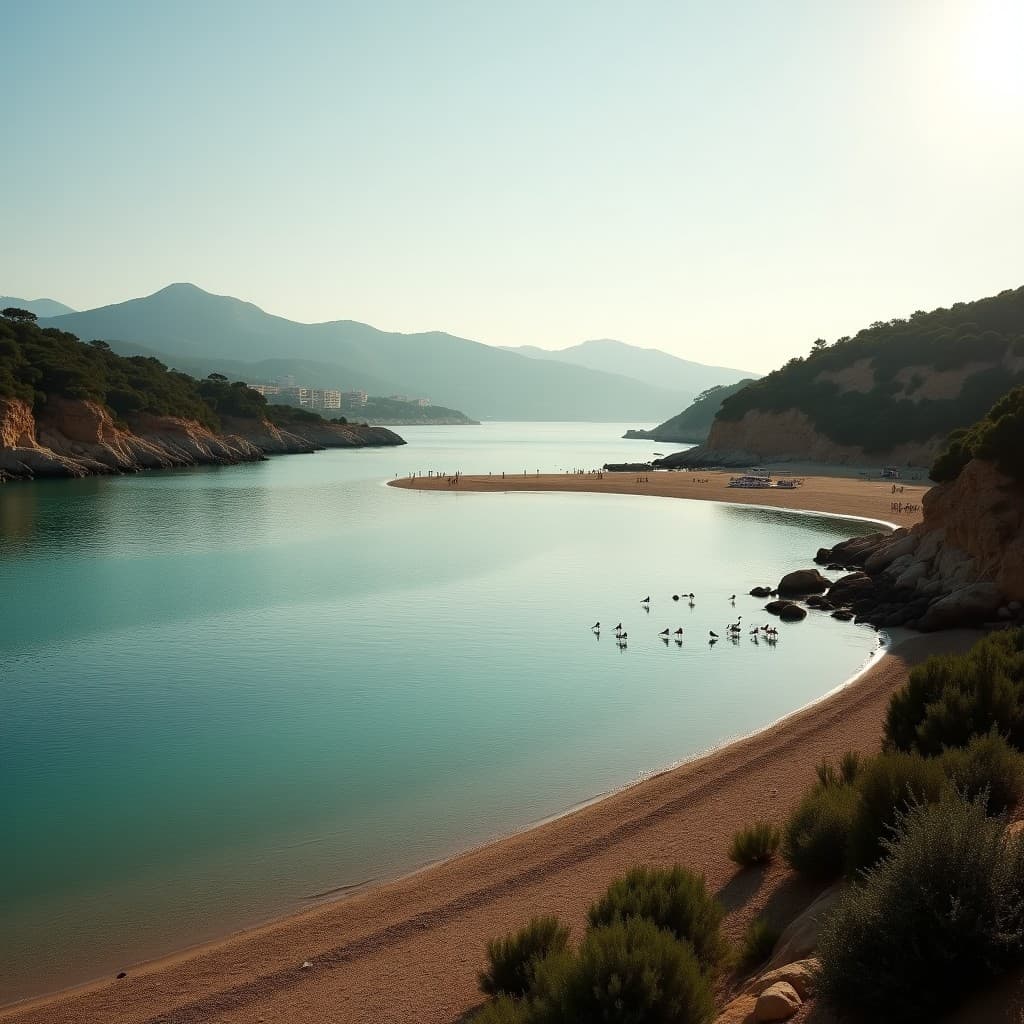
Thousands of Albanians took to the streets this week to oppose a luxury resort development backed by President Donald Trump's son-in-law, Jared Kushner's investment firm, according to Newsweek. Protesters warned the project could threaten a protected coastal area home to flamingos, seals and sea turtles. Some carried signs reading "Albania is not for sale," signalling broader unease about foreign capital reshaping the Mediterranean shoreline.
The proposed development sits across the Adriatic from Puglia, a region whose own tourism economy has grown sharply in recent years. The Albanian protests reflect tensions now visible across the Mediterranean: rapid foreign investment in coastal zones, the environmental cost of luxury tourism, and the question of who controls the region's natural inheritance.
The controversy exposes a familiar pattern in southern Europe. Tourism growth and foreign resort capital have transformed the Adriatic coast, but the environmental and social price remains contested. For Puglia, where tourism has become a pillar of the regional economy, the Albanian case offers a mirror: the same pressures, the same foreign investors, the same calculus between jobs and environmental risk.
The Albanian protests, reported by Newsweek on 5 June, represent one of the largest public demonstrations against a single development project in the region in recent years. The resort, backed by Kushner Companies, would be built on a coastal site in Albania that environmental groups say is critical habitat for protected Mediterranean species. Flamingos, seals and sea turtles depend on the area; the development would fragment the ecosystem and alter water patterns, according to the protesters' statements cited in the coverage.
Kushner Companies has positioned itself as a major investor in Mediterranean real estate in recent years. The firm has pursued luxury resort and residential projects across southern Europe, betting on the region's appeal to wealthy international tourists and second-home buyers. The Albanian project fits that pattern: high-end accommodation, foreign capital, coastal location, and the promise of jobs and tax revenue to a developing economy.
Albania, like much of the Balkans, has faced pressure to open its coasts to foreign development as a path to economic growth. The country has limited domestic capital and sees tourism as a route to foreign exchange and employment. But the speed and scale of resort development has begun to provoke public backlash, particularly among younger Albanians and environmental advocates who see the coast as a shared resource being sold to foreign interests.
The Adriatic itself has become a zone of competing claims. On the Italian side, Puglia's tourism boom has reshaped the regional economy over the past two decades. Foreign visitors—particularly from Germany, France and the UK—have driven demand for coastal accommodation, restaurants and experiences. That growth has brought jobs and investment, but also strain on infrastructure, water resources and the character of historic towns. Salento, the peninsula at Puglia's heel, has seen property prices rise sharply as foreign buyers acquire land and buildings.
The Albanian protests suggest that publics across the Adriatic are beginning to ask whether the tourism model serves local interests or primarily enriches foreign investors and international hotel chains. The signs reading "Albania is not for sale" carry a pointed message: that national resources and coastal zones should not be treated as commodities for foreign capital to acquire and develop at will.
Newsweek reported that some protesters invoked environmental law and EU standards, even though Albania is not yet an EU member. That reference signals how European environmental norms have become a common language across the region. The EU's Habitats Directive and Birds Directive protect certain coastal zones; Albania, as a candidate country, is expected to align its environmental rules with EU standards. The resort project thus becomes a test of whether those standards will be enforced or waived in the name of economic development.
For Puglia, the Albanian case carries direct implications. The region has pursued tourism growth as a strategy to offset the decline of agriculture and manufacturing. Olive oil production, once the region's backbone, has been weakened by xylella disease. The Taranto steelworks, an industrial anchor for decades, has faced environmental pressure and investment uncertainty. Tourism has filled some of that gap, bringing foreign currency and employment to coastal towns and rural areas.
But that growth has also created tensions. Infrastructure in smaller towns has struggled to keep pace. Water demand from hotels and restaurants has strained local supplies, particularly in dry summers. Historic centres have been transformed by holiday rentals and tourist-oriented businesses, changing the character of communities. The same foreign investors now reshaping the Albanian coast have also acquired property and built resorts in Puglia—a pattern that suggests the region is part of a larger Mediterranean market being consolidated by international capital.
The environmental stakes are particularly acute in the Adriatic. The sea is shallow, enclosed and biologically rich; it is also heavily trafficked by shipping and fishing. Climate change has already altered water temperatures and salinity, affecting fish stocks and marine ecosystems. Coastal development, pollution from agriculture and industry, and tourism pressure compound those stresses. A protected area like the one threatened by the Albanian resort represents a rare refuge for species under pressure.
Puglia's own coast faces similar pressures. The region has several protected marine areas and Natura 2000 sites—EU-designated conservation zones. But development pressure is constant. Property developers, hotel chains and foreign investors see coastal land as valuable real estate. Local governments, eager for tax revenue and employment, often approve projects that environmental advocates warn will damage ecosystems or alter coastal character permanently.
The Albanian protests also reflect a generational shift. Younger Albanians, many educated abroad or connected to European networks, are more likely to invoke environmental and democratic arguments against development. They see their country's natural inheritance as something to be stewarded, not sold. That sentiment mirrors growing environmental consciousness in Puglia, where younger residents and activists have begun to question whether tourism growth and industrial development serve the region's long-term interests.
Kushner Companies has not publicly responded to the Albanian protests, according to Newsweek's reporting. The firm's strategy in the Mediterranean has been to work with local governments and present projects as engines of economic development. In Albania, as in other countries where it operates, the company likely argues that the resort will create jobs, attract foreign currency and raise living standards. Environmental concerns, from that perspective, are secondary to economic opportunity.
But the scale of the Albanian protests suggests that argument is no longer persuasive to significant portions of the public. The demonstrations reflect a broader reckoning across southern Europe about the terms on which tourism and foreign investment should be permitted. The question is not whether development should occur, but who benefits, who bears the cost, and whether environmental and social limits should constrain capital's freedom to reshape landscapes.
For Puglia, the Albanian case offers a cautionary example and a moment for reflection. The region has benefited from tourism growth, but the costs are becoming visible: pressure on water and infrastructure, the transformation of rural communities, the consolidation of property ownership in foreign hands, and the gradual loss of local control over how the region develops. The Albanian protests suggest that publics across the Adriatic are beginning to demand a voice in those decisions.