
VALLE D'AOSTA
Alpine archaeology yields 5,300-year-old yeast for modern bread
Scientists extract microorganism from Ötzi the Iceman's remains, reviving fermentation traditions of the high mountains
Camille Bréan1,247 wordsEdition №6Saturday, 6 June 2026 — Edition № 6
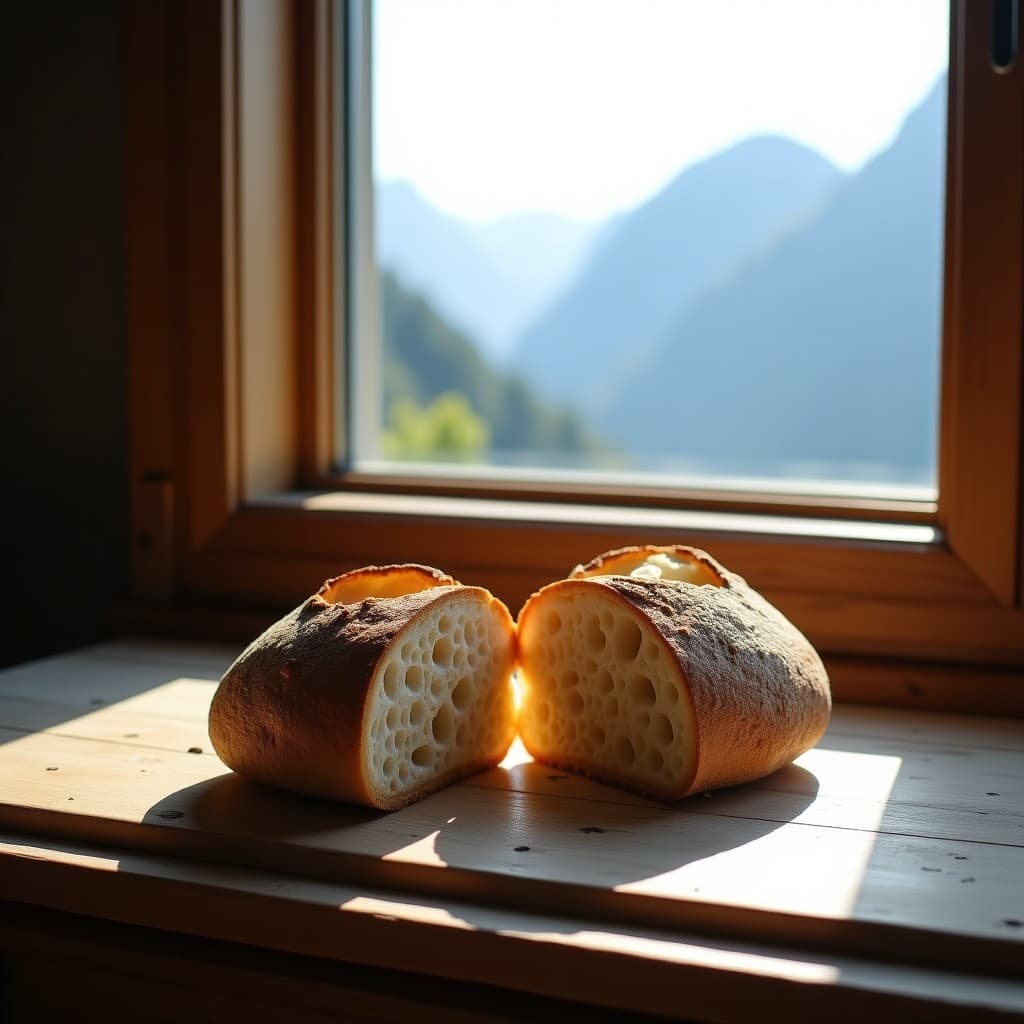
More than five thousand three hundred years ago, a man died in the high Alps on the border between what is now Austria and Italy. His body, preserved by ice and altitude, lay undisturbed until 1991, when hikers found him near the Similaun glacier. Scientists have now extracted yeast from his gastrointestinal tract and used it to produce sourdough bread, according to reporting by CBS News and the international scientific community.
The yeast, which has survived millennia in the frozen mummy's gut, represents a living link to Alpine subsistence practices of the Neolithic period. Researchers identified the microorganism and cultivated it in laboratory conditions, then employed it in a traditional fermentation process. The resulting bread offers a tangible connection to the dietary habits of mountain communities five thousand years before the Roman conquest of the Alps.
The discovery underscores the role of fermentation in early Alpine food culture. Sourdough fermentation, which requires wild yeast and bacterial cultures, would have been essential to preserving grain harvests through long mountain winters. That a single organism survived so long in frozen tissue suggests the extreme conditions of high-altitude preservation—the very conditions that define the Valle d'Aosta's climate and ecology today.
Ötzi, as he has come to be known in scientific literature, was a man of the Copper Age, living in a period when metalworking was beginning to spread across Europe but before the rise of the great Bronze Age civilizations. His body was discovered at an elevation of approximately 3,200 metres, in a region of permanent ice and rock that straddles the modern border between Austria and Italy. The discovery site lies within the Ötztal, a valley that descends from the high peaks toward the Inn River in what is now the Austrian Tirol.
For more than three decades after his discovery, Ötzi's remains have been the subject of intensive scientific study. Researchers have examined his clothing, his tools, his last meal, and the circumstances of his death—which appears to have resulted from an arrow wound. Each analysis has added detail to the portrait of life in the high Alps during the Neolithic transition to the Copper Age.
The isolation of yeast from his gastrointestinal contents represents a novel application of microbial archaeology. CBS News reported that scientists identified the organism and determined it capable of fermentation. They then cultivated it under controlled conditions and used it to leaven bread dough, producing a loaf that carries genetic material from the Neolithic period.
The significance of this discovery extends beyond novelty. Fermentation is not a modern invention but a technology as old as agriculture itself. In regions like the Alps, where grain storage and food preservation were matters of survival, fermented foods would have been central to subsistence strategies. The presence of viable yeast in Ötzi's body suggests that fermentation was already an established practice five thousand years ago.
The Valle d'Aosta, which lies at the southern edge of the Alpine region where Ötzi lived, has maintained fermentation traditions for millennia. Local dairy production, which generates the region's famous cheeses and butter, depends on bacterial cultures and fermentation processes. The region's food culture remains rooted in the preservation techniques that sustained mountain communities through seasons of scarcity.
Modern Alpine tourism, which constitutes a significant portion of the Valle d'Aosta's economy, has increasingly marketed regional food traditions as heritage products. The discovery of ancient yeast offers a new dimension to that narrative: the possibility of literally recreating the fermented foods of prehistoric mountain dwellers. Several European food and wine publications have noted the potential for heritage tourism applications.
The scientific extraction and cultivation of ancient microorganisms raises questions about the relationship between archaeological discovery and modern commercial use. The yeast isolated from Ötzi's remains is, in a sense, a biological artifact—a living remnant of the past. Its use in contemporary bread-making bridges the gap between archaeological study and experiential history.
The Similaun glacier, where Ötzi was discovered, lies in the Ötztal on the Austrian side of the border, but the discovery site is part of a broader Alpine ecosystem that extends into the Valle d'Aosta and across the entire high mountain chain. The climate conditions that preserved Ötzi—extreme cold, low moisture, and stable ice—are the same conditions that characterize the Valle d'Aosta's highest elevations. Understanding how these conditions preserve organic material has implications for Alpine archaeology throughout the region.
Climate change poses a direct threat to sites like the Similaun glacier. As temperatures rise and ice retreats, more mummified remains and artifacts from the Neolithic and Bronze Age periods may emerge from the ice. The discovery of Ötzi himself was made possible by unusually warm conditions that caused glacial recession. Future discoveries may depend on continued warming—a paradox that highlights the tension between scientific opportunity and environmental loss.
The international scientific community has responded to the yeast discovery with interest in the broader implications for microbial archaeology. If viable microorganisms can survive in frozen tissue for five thousand years, the potential exists to recover and study ancient bacterial and fungal cultures from other preserved remains. This opens new avenues for understanding prehistoric diet, disease, and fermentation practices.
The bread produced from Ötzi's yeast has been analyzed for its chemical composition and fermentation characteristics. Early reports suggest it resembles modern sourdough in its crumb structure and flavor profile, though direct comparison with Neolithic bread is impossible. The experiment demonstrates that ancient microorganisms can function in contemporary conditions, though it raises questions about how accurately modern fermentation replicates prehistoric practice.
For the Valle d'Aosta, the discovery offers an opportunity to deepen the connection between regional food heritage and Alpine archaeology. The region's position as a gateway between Italy, France, and Switzerland, combined with its high-altitude environment, makes it a natural center for Alpine studies. Several European universities and research institutions have expressed interest in expanding microbial archaeology projects in the region.
The discovery also illustrates the way scientific research in the Alps transcends national boundaries. Ötzi's remains are housed in a museum in Bolzano, in the Trentino-Alto Adige region, but the scientific study involves researchers from across Europe and beyond. The yeast extraction and cultivation involved international collaboration, reflecting the shared Alpine heritage that unites the region's communities regardless of political borders.
As tourism in the Alps continues to grow, heritage narratives increasingly compete for attention. The story of Ötzi and his yeast offers a compelling link between deep time and contemporary experience: visitors can learn about Neolithic life, understand the science of preservation, and taste bread made from ancient microorganisms. Such experiences may help balance the economic benefits of mass tourism with the preservation of Alpine cultural and natural heritage.