
CULTURA
Pulitzer Winner Greer Mines Writers' Residency for New Novel
Villa Coco draws on the author's experience directing a Tuscan retreat, exploring the comedy and vulnerability of creative life abroad.
Eleonora Vanzetti1,198 wordsEdition №9Tuesday, 9 June 2026 — Edition № 9
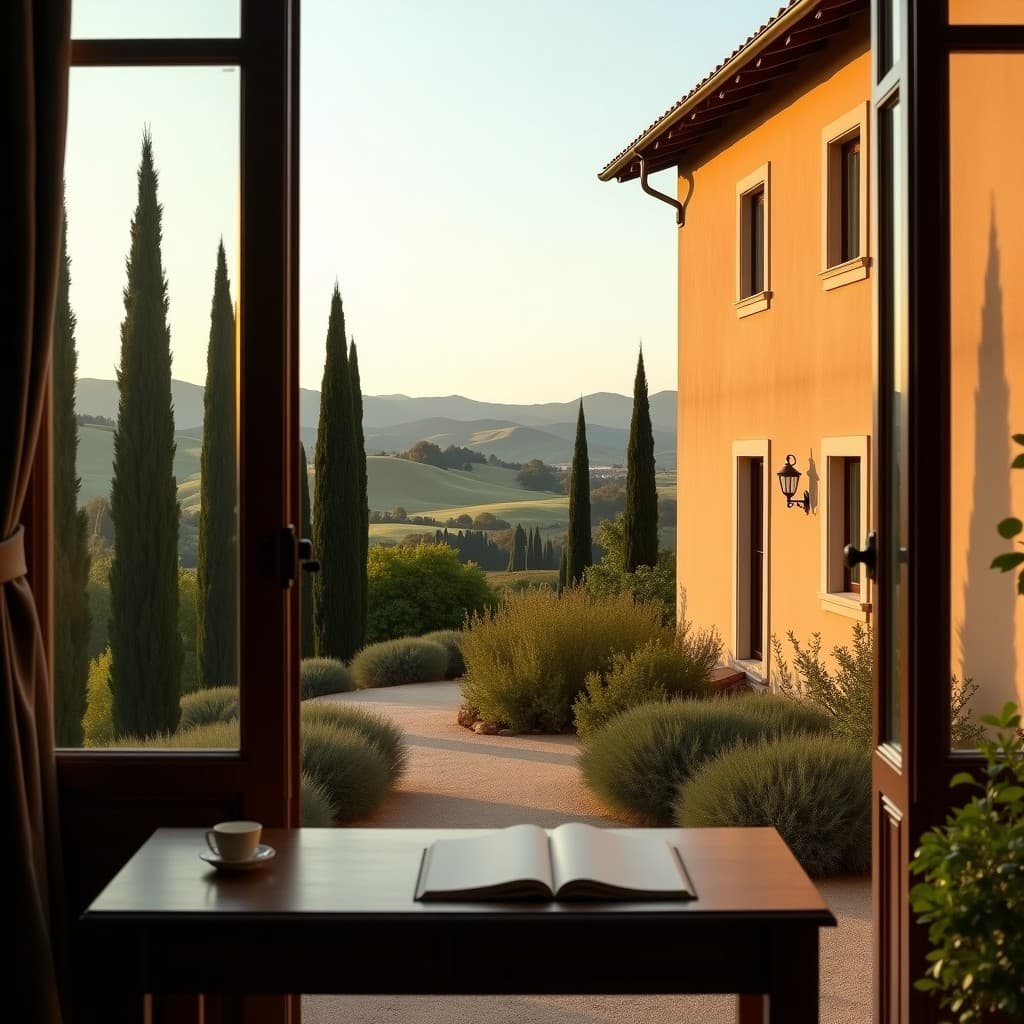
Andrew Sean Greer, the Pulitzer Prize-winning author of Less, has published Villa Coco, a novel set in Tuscany that draws directly from his experience directing a writers' residency in Italy. According to The Guardian's books coverage, the novel is framed as a "breezy confection of fish-out-of-water wit, insecurity and self-discovery set in an Italian paradise." The premise—a character who receives an invitation to work at a residency in Italy—mirrors Greer's own two-year tenure directing such a retreat.
The novel arrives at a moment when the international literary world has renewed interest in Italy as a setting for contemporary fiction. Writers' residencies in Tuscany and elsewhere in Italy have become established fixtures in the global literary economy, attracting American and European authors seeking time and space away from commercial pressures. Villa Coco, by grounding itself in that lived experience, offers readers an insider's view of how such retreats function and what they mean to the artists who pass through them.
Greer's previous novel Less won the Pulitzer Prize for Fiction in 2018 and became an international bestseller, establishing him as a major voice in American literary fiction. Villa Coco represents his return to Italy as both subject and setting, suggesting that his residency experience left a lasting mark on his imagination. The Guardian's review frames the novel as lighter in tone than some of Greer's earlier work, emphasizing comedy and self-discovery over the existential weight that characterised Less.
The literary residency model itself has deep roots in Italy. For decades, American and European writers have sought refuge in Italian villas and rural retreats, drawn by the combination of natural beauty, cultural heritage, and distance from the demands of publishing and literary celebrity. These residencies function as both practical workspaces and symbolic retreats—places where writers can imagine themselves as artists rather than as commercial products. Greer's two years directing such a space gave him access to the daily rhythms and interpersonal dynamics that such retreats generate.
Villa Coco's publication also reflects broader patterns in contemporary literary fiction. Italy—particularly Tuscany, with its associations of beauty, wine, food, and artistic tradition—has become a stock setting for novels aimed at international audiences. The Guardian's review positions Greer's novel within this tradition while suggesting that his insider knowledge gives him authority to both celebrate and gently mock the fantasy that Italy represents for many writers and readers.
The novel's timing is significant for the Italian cultural economy. Italy's soft power abroad rests substantially on its reputation as a centre of aesthetic refinement and artistic inspiration. Writers' residencies, literary tourism, and novels set in Italy all reinforce that reputation and draw international visitors and cultural attention to the country. Greer's novel, by presenting the residency experience through a lens of wit and vulnerability, makes that fantasy legible to international readers while acknowledging its constructed nature.
For Tuscany specifically, Villa Coco represents the kind of cultural product that sustains the region's appeal to international audiences. The novel will likely be marketed to readers interested in Italy, travel, and literary fiction—overlapping audiences that drive both book sales and tourism. The Guardian's review, appearing in one of the world's most widely read English-language newspapers, reaches precisely the demographic most likely to visit Tuscany or to seek out Italian cultural experiences.
Greer's career trajectory also illustrates the international circulation of literary prestige. A Pulitzer Prize winner publishing a novel set in Italy with a major international publisher reaches audiences across the English-speaking world and beyond. The novel will be translated into Italian and other languages, extending its reach further. In this way, Greer's work becomes part of the global conversation about Italy and Italian culture, shaping how international audiences imagine the country.
The residency experience itself has become a subject of literary interest. Writers have long written about their time in Italy—from Henry James to contemporary authors—but the residency model adds a layer of institutional mediation. Rather than the solitary artist abroad, the residency brings together multiple writers, creating a temporary community bound by shared artistic purpose. Greer's novel appears to explore the comedy and tension that arise from that proximity.
Villa Coco also arrives at a moment when questions about tourism, authenticity, and cultural commodification have become increasingly urgent. Italy, particularly Tuscany, has faced criticism for over-tourism and the erosion of local culture by international visitors seeking an imagined version of Italy. A novel that explores the experience of foreign writers in Italy necessarily engages with these tensions, even if obliquely. The Guardian's description of the novel as witty and self-aware suggests that Greer is aware of these dynamics.
The publication of Villa Coco also reflects the ongoing vitality of the novel as a form for exploring cultural encounter and displacement. Despite predictions of the novel's decline, major literary prizes continue to reward fiction, and publishers continue to invest in literary novels by established authors. Greer's return to Italy as a subject, following his Pulitzer success, signals that the literary establishment continues to value sustained artistic engagement with particular places and experiences.
For the international publishing industry, Villa Coco represents the kind of literary product that travels well across borders and languages. A novel set in Italy by an American author, published in English and likely to be translated widely, appeals to readers in multiple markets. The Tuscan setting and the residency premise offer both specificity and universality—specific enough to feel authentic, universal enough to resonate with readers across cultures.
The novel's exploration of artistic insecurity and self-discovery also speaks to contemporary anxieties about creative work in an age of market pressure and algorithmic visibility. The residency, in this context, becomes a refuge from those pressures—a space where artists can imagine themselves as purely creative beings rather than as branded commodities. Greer's experience directing such a space, and his decision to transform that experience into fiction, suggests that the residency model continues to hold imaginative power for writers and readers alike.