
TOSCANA
Antony Gormley's cardboard immersion opens a dialogue between art and landscape
The British artist's first work in the material challenges San Gimignano's postcard identity with an exhibition of scale and physical presence
Costanza Bardi398 wordsEdition №14Saturday, 13 June 2026 — Edition № 14
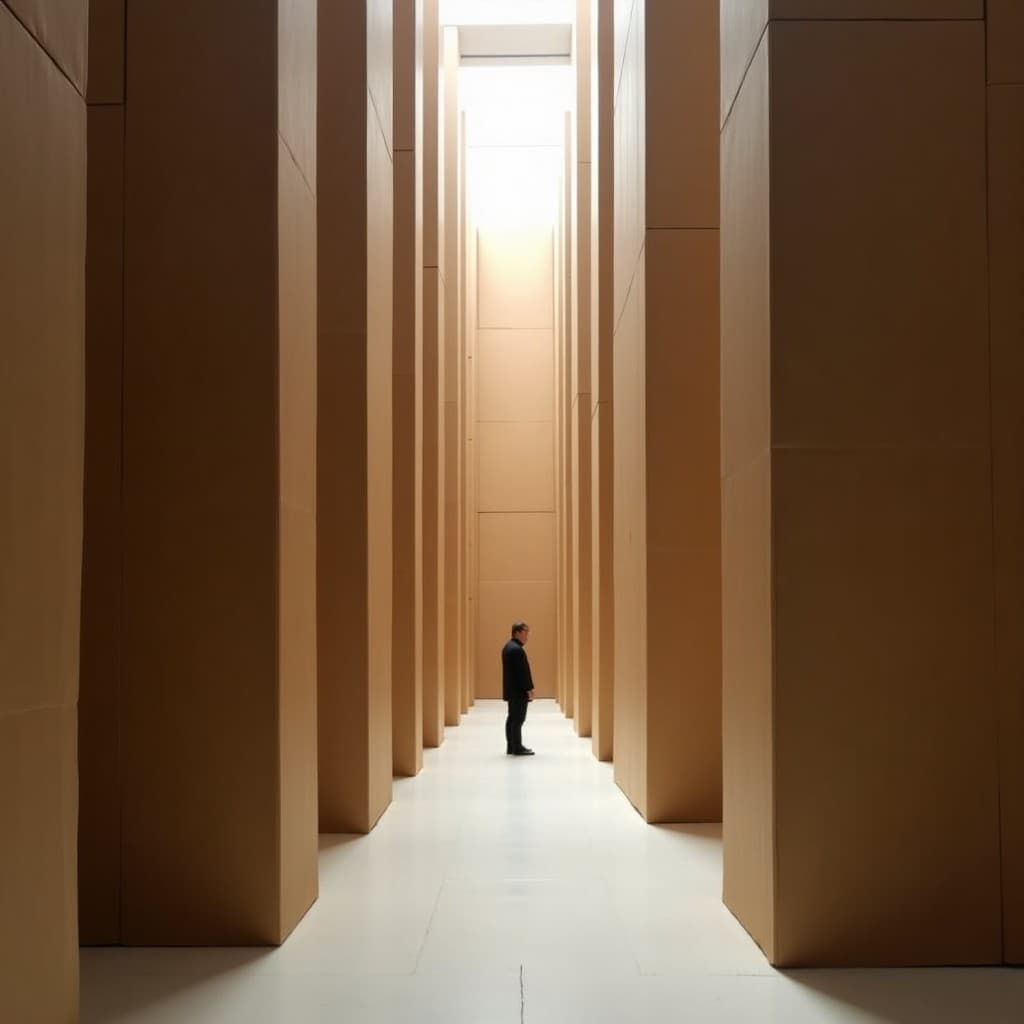
Antony Gormley, the British sculptor known for landmark public installations including the Angel of the North in Gateshead and Event Horizon in New York, has brought a significant new body of work to San Gimignano, a Tuscan hill town famous for its medieval towers and postcard status. According to Forbes, the centerpiece of his exhibition "What Holds Us" at Galleria Continua is titled "Innercity" and marks the first time Gormley has worked substantially in cardboard. The material choice is deliberate: cardboard is temporary, humble, and radically at odds with the marble, fresco, and Renaissance stone that define Tuscan heritage.
The exhibition's venue—a commercial gallery in a town whose economy and identity depend almost entirely on tourism and its image as a preserved medieval village—creates a productive tension. Forbes describes "Innercity" as one of Gormley's most immersive works, suggesting an experience that asks visitors to move through space and engage with their own physical presence, rather than stand before an object and consume it. In San Gimignano, a place where tourism often means the rapid accumulation of photographs and the conversion of landscape into backdrop, Gormley's work insists on presence and duration.
San Gimignano has become a case study in Tuscan over-tourism. Its fourteen towers, preserved from the medieval period, draw hundreds of thousands of visitors annually, many of them passing through in a few hours. The town's narrow streets, its restaurants, its shops selling wine and ceramics to tourists—all are calibrated to the rhythms of mass visitation. Art exhibitions in such a context are themselves subject to tourism's logic: another attraction, another photograph, another item checked off an itinerary.
Gormley's choice to work in cardboard, and to create an immersive rather than a consumable experience, suggests a different proposition. Cardboard degrades, it is not precious, it requires the viewer to enter and move through the work rather than regard it from a distance. Forbes notes that the exhibition is one of Gormley's most physically demanding, implying that the experience demands time and bodily engagement—the opposite of the quick visual transaction that characterizes much tourism.
For San Gimignano, the exhibition represents a moment of creative intervention in a town otherwise locked into its heritage identity. Whether the work reaches tourists or residents, whether it changes how visitors understand their relationship to the place, remains to be seen. But Gormley's presence in Tuscany, and his refusal of the materials and aesthetics that typically define heritage tourism, offers a small counter-current to the postcard logic that governs so much of the region's international reputation.