
INTERNATIONAL
EU-Balkans Summit in Montenegro Signals Shift in Italy's Eastern Frontier
As Brussels moves to expand eastward, Trieste faces new geopolitical and economic realities on its doorstep.
Sergio Madrussan1,247 wordsEdition №6Saturday, 6 June 2026 — Edition № 6
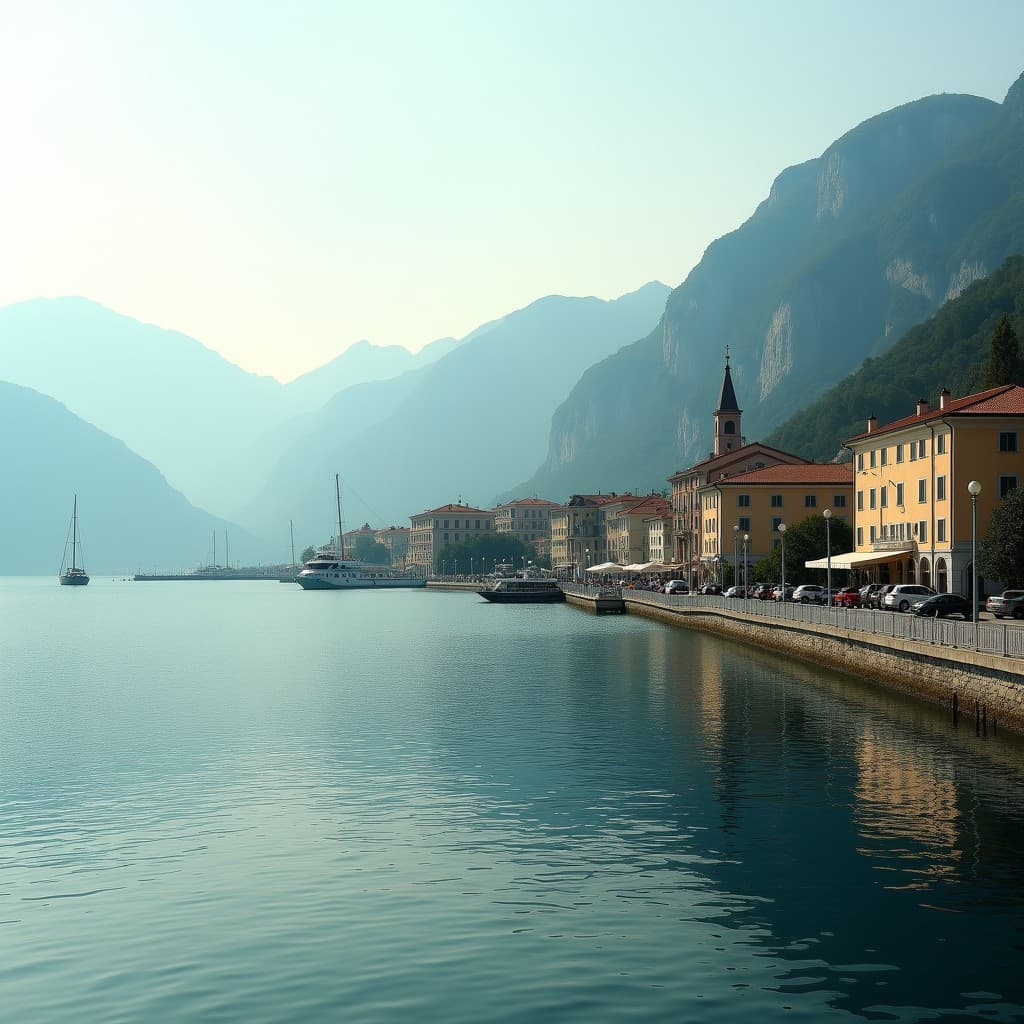
Leaders from across the European Union and the Western Balkans convened in Tivat, Montenegro, on Friday to discuss the bloc's eastward expansion, according to the Associated Press. The summit, framed as a response to security and economic threats from Russia and China, marks a critical moment in the EU's approach to a region that sits on Italy's eastern frontier and has long been a source of both opportunity and instability for the Italian state.
For Friuli-Venezia Giulia, the implications are immediate. The region has historically served as Italy's bridge to Central Europe and the Balkans—a role that intensifies as EU enlargement moves from diplomatic aspiration to operational reality. Trieste's port, already a critical node in EU-Balkan trade flows, stands to gain from deeper integration of the region into European structures. Yet enlargement also means new migration pressures, new border management challenges, and a reordering of the economic relationships that have sustained the region's cross-border economy.
The summit's focus on countering Russian and Chinese influence reflects a broader geopolitical recalibration. For Italy, positioned between NATO's western core and the Balkans' contested space, the enlargement process represents both strategic necessity and administrative burden. The AP reported that EU leaders see the region as pivotal terrain in the competition for influence in southeastern Europe—a calculation that places Trieste and the northeastern border region at the centre of Europe's eastern strategy.
The Tivat summit brings together the formal machinery of EU decision-making with the aspirations of countries seeking membership. According to the Associated Press, the gathering addresses what Brussels views as a critical gap: the integration of the Western Balkans into the European political and economic order before Russian or Chinese actors consolidate influence in the region. For Italy, this is not abstract geopolitics. It is a question of how Trieste's role as a logistics hub, a science centre, and a border city will evolve as the EU's eastern frontier moves further away from the Italian peninsula.
Historically, Friuli-Venezia Giulia has occupied an ambiguous position in Italian governance. The region's five-statute autonomy was granted partly because of its borderland status—a buffer between Italy and the contested territories of the post-Habsburg world. The Cold War froze this arrangement into a kind of equilibrium: the region remained prosperous but peripheral, its role as a gateway to Central Europe and the Balkans limited by the iron curtain and later by the managed borders of the Yugoslav federation.
The collapse of Yugoslavia and the opening of Central Europe transformed Trieste's economic horizons. The port, once Italy's link to a hostile communist hinterland, became a crucial entry point for EU trade with the Balkans and Central Europe. Shipbuilding, science institutions, and logistics networks grew around this newfound accessibility. Yet the region remained marginal to Rome's strategic thinking, overshadowed by northern Italian manufacturing and the pull of the Alpine passes toward Germany and Austria.
Enlargement changes this calculation. As the EU absorbs more of the Balkans, the region ceases to be a frontier and becomes instead an interior zone. For Trieste, this should mean deeper integration into European supply chains, more predictable governance in neighbouring countries, and reduced border friction. Yet it also means competition. If Balkan economies integrate fully into the EU, they become alternative destinations for investment that might otherwise flow through Trieste. The port's competitive advantage as a gateway to a semi-developed hinterland diminishes if that hinterland develops.
The security dimension compounds these economic shifts. According to AP reporting, the summit frames enlargement as a bulwark against Russian and Chinese expansion. For Italy, this means accepting a more active role in managing the Balkans' geopolitical orientation—a role that sits uneasily with Italy's traditional preference for diplomatic ambiguity and economic pragmatism. The Italian government, whatever its composition, will face pressure to align with a more assertive EU posture toward the region, even as Italian business interests may prefer the status quo of managed ambiguity and profitable uncertainty.
Migration flows offer another lens through which to read the Tivat summit. Friuli-Venezia Giulia sits on one of the EU's most heavily trafficked irregular migration routes. The eastern borders of the region, shared with Slovenia, have become a focal point of EU migration management strategy. Enlargement and deeper Balkan integration could, in theory, reduce irregular migration by creating more stable economies and functioning governance in source and transit countries. In practice, the transition period—the years between enlargement negotiation and full integration—often sees increased instability and displacement.
The summit's emphasis on countering Russian and Chinese influence also reflects a shift in how the EU views the Balkans. For decades, the region was seen primarily through the lens of post-conflict reconstruction and democratic consolidation. Now it is being reframed as a strategic theatre in a broader great-power competition. This shift has implications for Italy's role. As a G7 member and a NATO ally, Italy is expected to align with Western strategies for containing Russian influence and limiting Chinese economic penetration. Yet Italy's economic ties to both Russia and China complicate this alignment, and the northeastern border region—where German, Austrian, and Central European interests intersect with Italian concerns—becomes a zone where these tensions play out.
For Trieste's scientific community, enlargement offers opportunities. The city is home to the International Centre for Theoretical Physics, the Elettra synchrotron, and other research institutions that draw scholars from across Europe and beyond. Deeper integration of the Balkans into the EU could mean expanded collaboration networks, more funding flows, and enhanced prestige for institutions positioned as bridges between Western Europe and the enlarging eastern frontier.
The port sector faces more ambiguous prospects. Trieste has long competed with other Mediterranean gateways—Hamburg, Rotterdam, Antwerp—for the lucrative trade flows connecting Central Europe to global markets. Enlargement that brings Balkan countries fully into EU structures could either strengthen Trieste's position as a preferred entry point for southern European trade or weaken it by creating alternative routes through ports in newly enlarged member states. Much depends on infrastructure investment, labour costs, and the regulatory environment—factors that lie partly outside Italian control.
The summit also signals a shift in the EU's institutional balance. For years, Italy has pressed for greater recognition of its Mediterranean interests and its role as a gateway to North Africa and the Middle East. The focus on Balkan enlargement, driven by Germany, France, and the European Commission, represents a reassertion of the EU's Central European and eastern priorities. This is not new—the EU has always privileged its eastern expansion—but it is being stated more explicitly and pursued more urgently. For Italy, the message is clear: the centre of gravity in European geopolitics is shifting eastward, and the country must adjust its strategy accordingly.
The timing of the summit is also significant. It comes as Austria has intensified its blockade of the Brenner Pass in protest against transit traffic—a move that has disrupted supply chains and highlighted the fragility of Alpine infrastructure. The Tivat meeting, by contrast, emphasizes EU cohesion and eastward expansion. Yet the two developments point in opposite directions: Austria's protests suggest that the Alpine corridor is reaching capacity, while the Balkans summit assumes that trade flows will intensify through the region. Managing these contradictions will fall partly on Italy and particularly on Friuli-Venezia Giulia, which must balance the demands of transit traffic with the opportunities of deeper Balkan integration.
For the Italian government, the summit presents both opportunity and constraint. Opportunity, because deeper Balkan integration could enhance Trieste's role and create new markets for Italian goods and services. Constraint, because EU enlargement also means accepting greater EU oversight of border management, migration policy, and economic regulation—areas where Italy has historically sought to maintain autonomy. The northeastern border region, as always, will bear the practical weight of these tensions.
The AP reported that the summit reflects a broader consensus among EU leaders that the Balkans cannot be left to develop in isolation or under external influence. For Italy, this consensus is both reassuring and demanding. Reassuring, because it suggests that the EU will invest in regional stability and that Italy's role as a Mediterranean gateway is not being abandoned. Demanding, because it requires Italy to align with a strategy that may not always serve Italian interests narrowly construed. Managing this alignment will be a central task for Italian policymakers in the years ahead, and Trieste and its region will be where the implications are most acutely felt.