
INTERNATIONAL
EU Pushes Balkans Toward Membership as Geopolitical Stakes Rise
Montenegro summit signals acceleration of enlargement; Trieste's role as gateway to Central Europe gains strategic weight.
Sergio Madrussan1,247 wordsEdition №9Tuesday, 9 June 2026 — Edition № 9
The European Union and Western Balkan leaders convened in Tivat, Montenegro, on Friday to advance the region's path toward EU membership, according to reporting from the Associated Press and other international outlets. The summit, held on the Adriatic coast, brought together political figures to discuss expansion the EU views as essential to countering security and economic threats posed by Russia and China. The timing reflects a broader strategic recalibration in European geopolitics, one that places the Balkans at the centre of the continent's eastern frontier.
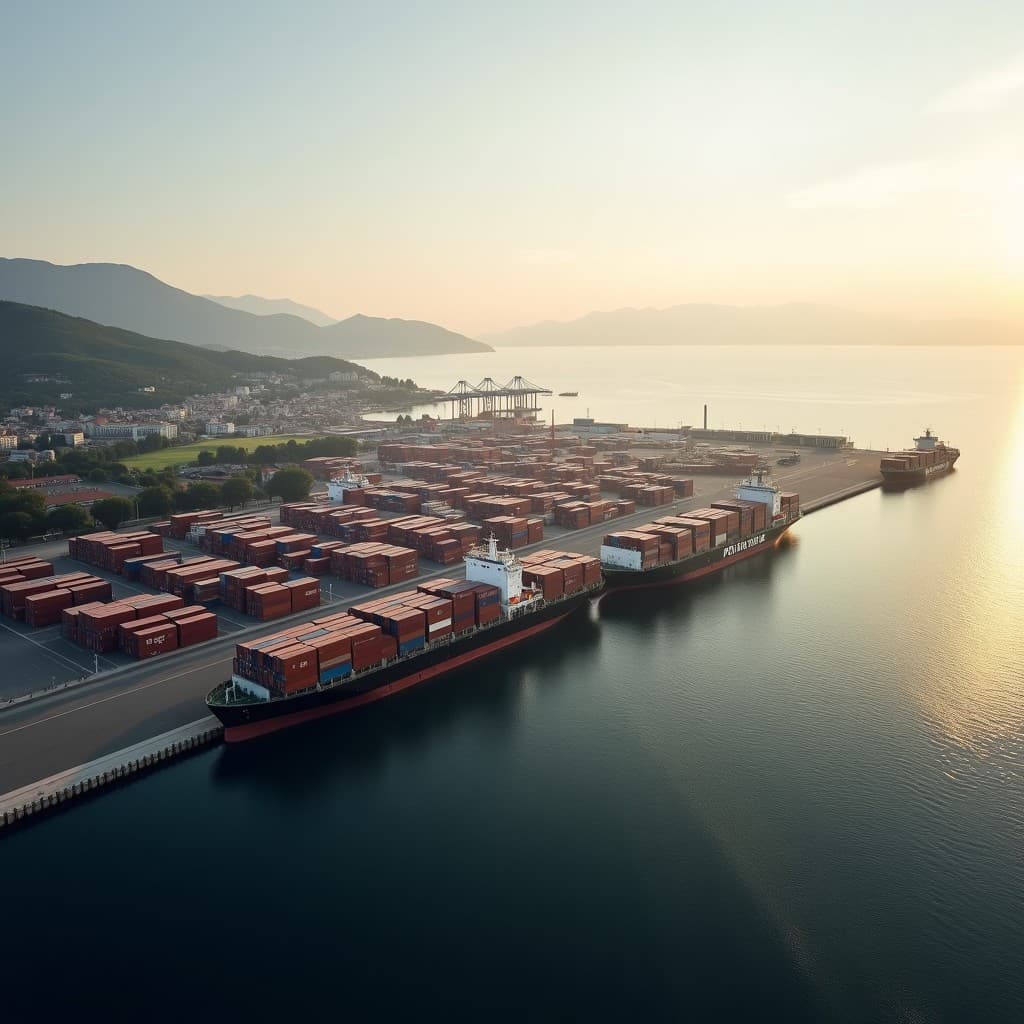
For Friuli-Venezia Giulia, the acceleration of Balkan enlargement carries immediate consequences. Trieste's port, already a critical node in Central European logistics and trade, stands to deepen its role as the gateway through which goods, capital and people flow between the EU and the region. The port's hinterland extends into Slovenia and beyond; as the Balkans move closer to EU membership, the volume and nature of that traffic will shift. Customs procedures will harmonise, transport corridors will formalise, and Trieste's position as the natural maritime outlet for landlocked Central European economies will strengthen.
The enlargement agenda also carries implications for migration and border management. As the AP reported, the summit focused on security threats and economic integration—both areas where Italy and its northeastern region have direct stakes. The Balkans remain a primary transit zone for migrants and asylum seekers heading toward Western Europe; closer EU integration of the region could reshape both the routes migrants take and the enforcement mechanisms available to manage them. For Trieste, which sits on the Alpine migration corridor and serves as a processing point for arrivals from the east, the implications are substantial.
The Tivat summit represents a significant acceleration of EU enlargement policy. According to the AP, the gathering brought together leaders from across the bloc and the region to discuss expansion as a strategic priority. This marks a shift from the more cautious, incremental approach to Balkan membership that characterised EU policy for much of the past two decades. The change reflects a new consensus among European capitals that the geopolitical cost of leaving the region in a state of limbo—vulnerable to Russian and Chinese influence—outweighs the institutional and economic costs of faster integration.
The six Western Balkan candidates—Serbia, Bosnia and Herzegovina, Montenegro, North Macedonia, Kosovo and Albania—have been in various stages of accession negotiations for years. Progress has been uneven, hampered by governance concerns, rule-of-law issues and bilateral disputes. The summit's focus on acceleration suggests the EU is willing to move past some of these obstacles or to address them in parallel with membership rather than as preconditions. For the region's governments, this represents a window of opportunity; for the EU, it signals a strategic decision to prioritise geopolitical positioning over the traditional enlargement criteria.
Trieste's economic and strategic position makes it a natural beneficiary of this shift. The port already handles significant container traffic bound for Central Europe and the Balkans; it serves as the primary maritime outlet for landlocked countries including Austria, Hungary, the Czech Republic and Slovakia. As the Balkans integrate more fully into the EU, the volume of trade flowing through Trieste is likely to increase. Customs barriers will fall, transport regulations will harmonise, and the port's competitive advantage over rival Mediterranean gateways—particularly those in Greece and southern Italy—will grow.
The port authority in Trieste has long positioned itself as the bridge between the EU and Central Europe. According to international shipping and logistics coverage, Trieste competes directly with ports in Hamburg, Rotterdam and Antwerp for Central European hinterland traffic. The difference is geography: Trieste is closer to the landlocked economies of Central Europe and the Balkans than any major northern European port. Faster, cheaper transport from Trieste to Vienna, Budapest or Belgrade makes the port increasingly attractive as the region integrates into EU supply chains. Balkan enlargement accelerates this advantage.
The summit also carries implications for Trieste's role in EU border management. Italy's northeastern region sits at the intersection of three major migration routes: the Alpine corridor from the Balkans and Central Europe, the Adriatic crossing from the eastern Mediterranean, and the overland route from Slovenia. As the Balkans move closer to EU membership, the nature of migration through the region will change. Countries like Serbia and Bosnia, currently outside the Schengen Area, will eventually join it; this will formalise border controls and create new enforcement mechanisms. For Trieste, which currently processes asylum seekers and migrants arriving via multiple routes, the shift will reshape both the volume and the administrative burden of arrivals.
The geopolitical framing of the summit—centred on countering Russian and Chinese influence—also reflects a broader European anxiety about great-power competition in the region. The Balkans have become a contested space where Beijing invests in infrastructure, Moscow maintains political networks, and the EU competes for influence through the promise of membership and economic integration. Italy, as an EU member with a direct land border with the Balkans through Slovenia, has a stake in this competition. Trieste, as a port city with deep historical ties to Central Europe and the Balkans, embodies that stake.
The region's history shapes how the current enlargement push is understood. Friuli-Venezia Giulia was part of the Austro-Hungarian Empire until 1918; Trieste was the empire's primary port. The twentieth century brought Italian rule, Yugoslav occupation, and a complex post-Cold War transition. Today, the region is thoroughly integrated into the EU and NATO, but its cultural and economic ties to Central Europe and the Balkans remain strong. The Balkan enlargement agenda reconnects Trieste to its historical hinterland in a new form—not as subjects of a common empire, but as members of a common union.
The summit's emphasis on security and economic integration also speaks to Italy's broader strategic position. According to the New York Times and other outlets, the EU is increasingly focused on building resilience against external threats. For Italy, this means strengthening ties to Central Europe and the Balkans, both as a source of economic opportunity and as a buffer against instability. Trieste, as the natural gateway between the EU and the region, becomes more strategically important, not less.
The timing of the summit also matters. It comes as the EU grapples with questions about its own future direction, the role of NATO in European security, and the balance between deepening integration among existing members and expanding to new ones. The decision to prioritise Balkan enlargement signals that the EU leadership views expansion as compatible with, and even necessary for, the bloc's long-term stability and security. For Trieste and Friuli-Venezia Giulia, this is good news: it means the region's position as a gateway to Central Europe will only grow in importance.
The economic implications are substantial. Trieste's port authority has invested in infrastructure to handle increased container traffic; the expansion of EU membership to the Balkans will drive demand for that capacity. The region's shipbuilding industry, centred in Monfalcone, may also benefit from increased trade and investment flows. The science institutions based in Trieste—including the International Centre for Theoretical Physics and other research bodies—may find new opportunities for collaboration with Balkan universities and research centres as the region integrates more fully into the EU research ecosystem.
The enlargement agenda also carries risks. Faster integration of the Balkans into the EU could strain the bloc's institutions and budgets; it could also create new pressures on Italy's social and labour markets if migration from the region increases. The summit did not address these concerns directly, according to the AP's reporting, but they remain live issues for Italian policymakers and for the region's governments. For Trieste, which already manages significant migration flows, the implications are complex: enlargement may increase the port's economic importance, but it may also increase the administrative burden of managing arrivals and asylum claims.
The strategic calculus is clear: the EU has decided that the geopolitical benefits of faster Balkan integration outweigh the costs. For Trieste and Friuli-Venezia Giulia, this decision reshapes the region's role within Italy and within Europe. No longer a peripheral border region, it becomes a strategic gateway to a newly integrated Central Europe and Balkans. The port, the research institutions, the business community—all stand to benefit from this shift. The challenge will be managing the transition and ensuring that the region's communities share in the gains.