
BASILICATA
Italy's drought reaches farming heartland as seawater invades longest river
Po Valley's agricultural crisis deepens; southern regions face compounding water stress as heatwave persists
Pietro Lasorsa392 wordsEdition №29Sunday, 28 June 2026 — Edition № 29
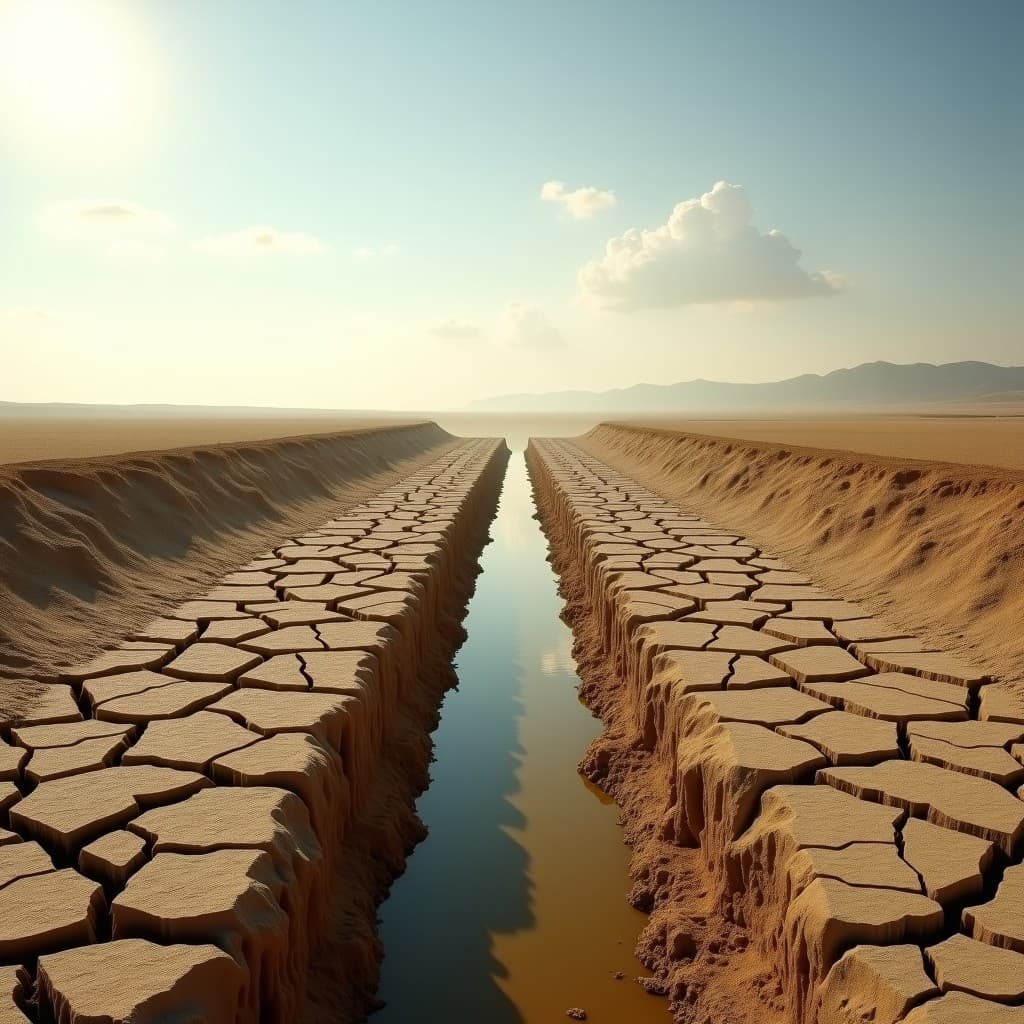
Italy's longest river is running dry as a severe heatwave grips the continent, allowing seawater to penetrate inland and threatening the agricultural heartland that produces milk for Parmesan cheese, according to The Local Italy. The phenomenon, reported on Saturday as temperatures soared across Europe, marks an acute phase of a broader water crisis that has already strained irrigation and power generation across the country.
The Po Valley crisis underscores a pattern now visible from north to south. While the northern agricultural belt faces immediate seawater intrusion, Basilicata and the wider southern regions confront a different but related threat: sustained heat stress on water-dependent crops and livestock. The heatwave, which the Guardian reported has set records across Germany and Italy, compounds existing pressures on agriculture in the south, where irrigation infrastructure is often less robust than in the north and water scarcity is a structural constraint rather than a seasonal anomaly.
The Po's saltwater incursion is not unprecedented—coastal rivers can experience such effects during droughts—but its occurrence during an ongoing heatwave signals the speed at which Italy's water systems are destabilizing. The Local Italy reported Saturday that at least 193 million people across Europe were expected to experience temperatures above 35 degrees Celsius, with Italy among the hardest hit. Scientists cited by The Local Italy on Friday attributed the intensity of the heatwave to human-caused climate change.
For Basilicata, the implications extend beyond the north. The region's agricultural sector, already vulnerable to aridity in its interior and Mediterranean climate zones, faces compounding stress. Migrant farm workers in Puglia, Italy's southeastern region, have already been documented wilting in shanty towns without adequate refuge from the heat, The Local Italy reported Friday. Similar vulnerabilities exist across the south, where irrigation demands spike precisely when water availability contracts.
The broader European context matters here. The Guardian reported Saturday that Germany and Italy were sweltering as a weather system spread eastward, with record temperatures tumbling across the continent. This is not a localized event but a systemic pressure on Mediterranean and continental agriculture alike. For southern Italy, where water infrastructure remains a limiting factor in agricultural expansion and where depopulation has already hollowed out rural capacity, a sustained shift toward hotter, drier conditions raises questions about the viability of traditional farming on marginal lands—precisely the lands that anchor communities in the interior.