
NATIONAL
Global oil surge tests Italy's energy shift as extraction pressures mount
Rising prices revive drilling focus on conventional fields, complicating transition away from fossil fuels in Europe's largest onshore oil region
Pietro Lasorsa483 wordsEdition №43Sunday, 12 July 2026 — Edition № 43
The International Energy Agency's Executive Director Fatih Birol pressed the European Union this week to revisit its moratorium on Arctic oil and gas drilling, according to Oil & Gas 360. The call reflects a broader shift in global energy strategy: as oil prices climbed in recent months, producers worldwide have accelerated drilling in low-cost conventional fields that can bring new production online quickly, rather than investing in long-cycle projects. Canada's Alberta region issued 1,764 drilling licenses as producers raced to develop the Clearwater formation, a conventional play that yields returns in months rather than years.
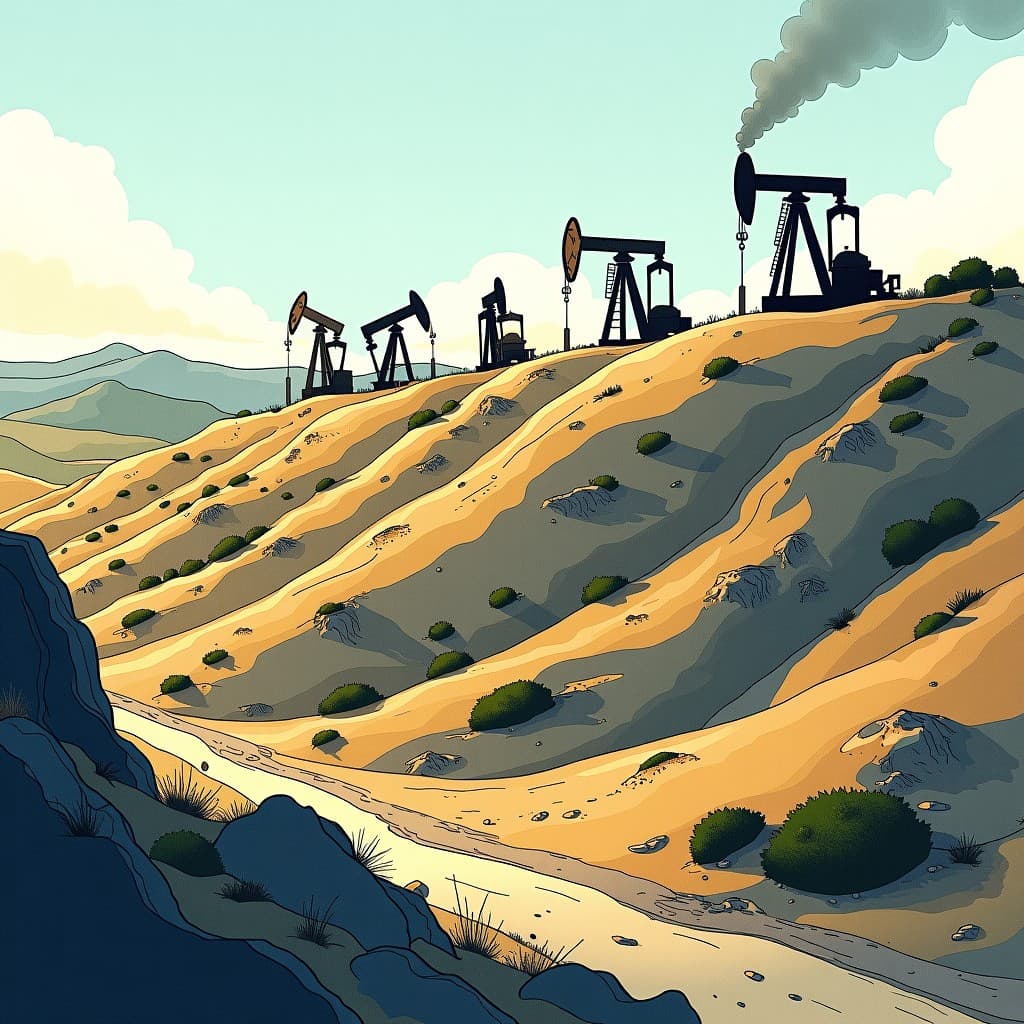
For Basilicata, the message is clear: the window for abandoning onshore oil extraction is narrowing. The region holds Italy's largest onshore oil field, centred in the Val d'Agri. For decades, extraction has been the region's economic anchor—and its environmental burden. Foreign energy analysts covering Italy's climate commitments have noted the tension: the country has pledged to reach net-zero emissions by 2050, yet Basilicata's oil output remains essential to national energy security and regional employment. Rising global prices make extraction more profitable, and thus more politically difficult to phase out.
The IEA's call to relax Arctic drilling restrictions signals a recalibration of European energy strategy driven by geopolitical risk and price volatility. Reuters reported in early July that oil prices jumped sharply following military strikes in the Middle East, underscoring the fragility of global supply. In this context, European policymakers face pressure to secure energy independence by accelerating domestic extraction—including from Basilicata's Val d'Agri field, which has supplied roughly 100,000 barrels per day at peak output.
Basilicata's position is paradoxical. The region is Italy's poorest by most metrics, with chronic unemployment and steady youth emigration. Oil revenue has funded infrastructure and public employment, yet extraction has left environmental scars: contaminated water tables, landscape disruption, and the concentration of industrial activity in a region with limited economic diversification. Foreign environmental correspondents covering Italy have documented the tension between extraction and transition in Basilicata more closely than Italian outlets, noting that the region lacks the capital investment needed to pivot toward renewable energy manufacturing or tourism at scale.
The timing of the IEA's call coincides with Italy's broader energy strategy review. The government has committed to renewable expansion, but coal-to-gas transitions and new offshore wind farms take years to develop and permit. Onshore oil, by contrast, uses existing infrastructure and generates immediate revenue. If global prices remain elevated and the IEA's case for Arctic drilling gains traction in Brussels, pressure on Basilicata to maintain or expand extraction will intensify—complicating the region's already fragile transition toward a post-extraction economy.