
BASILICATA
Italy's onshore fields face reckoning as global energy model shifts
Basilicata's oil production confronts international pressure for rapid decarbonization and infrastructure investment
Pietro Lasorsa1,456 wordsEdition №6Saturday, 6 June 2026 — Edition № 6
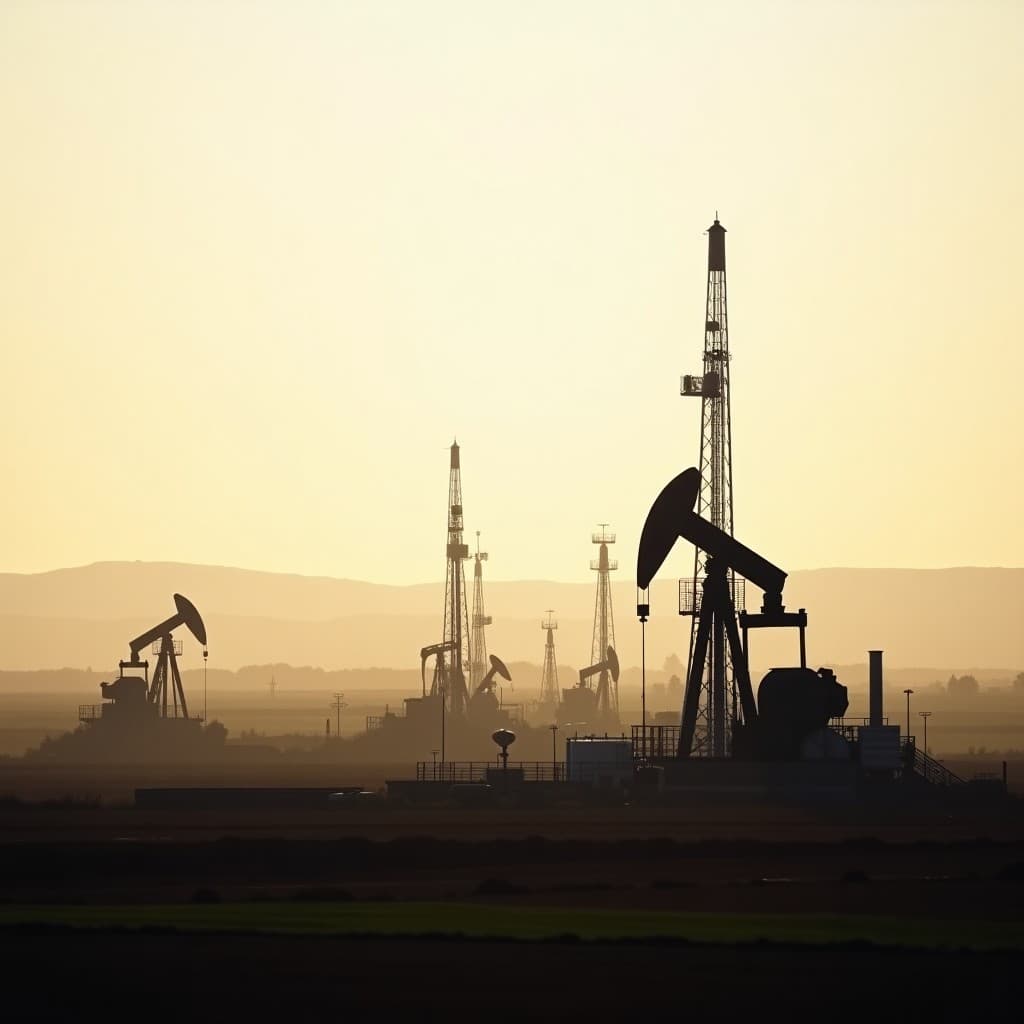
Industry leaders gathered at the ARPEL Conference 2026 have outlined a new model for regional energy development, with Latin American projects like Vaca Muerta emerging as templates for sustained hydrocarbon production alongside infrastructure investment. According to World Oil, the conference highlighted how resource-rich regions can leverage their reserves to become major global energy suppliers. The discussion carries implications for Italy's own onshore extraction, particularly in Basilicata, where the Val d'Agri field remains Europe's largest onshore oil operation.
Basilicata's oil sector has long operated in a state of tension between extraction revenue and environmental cost. The region produces roughly 100,000 barrels per day, generating significant tax revenue for local and national budgets. Yet international energy analysts have increasingly questioned whether onshore oil production in developed economies can coexist with climate commitments. The Vaca Muerta model—which emphasizes infrastructure development and regional economic diversification—suggests a different pathway, one that Basilicata has not yet pursued.
The global energy market remains volatile, with disruptions around the Strait of Hormuz affecting crude prices and supply security. According to Newsweek, the United States cannot rapidly replace the roughly 20 million barrels of oil disrupted by regional tensions, suggesting that established producers like Italy may face sustained demand. However, this demand exists in tension with European Union climate targets and international pressure for energy transition. Basilicata's oil sector must navigate between short-term market opportunity and long-term decarbonization requirements.
The ARPEL Conference 2026 convened energy leaders to discuss Latin America's role in global energy supply. According to World Oil's coverage, industry participants identified Vaca Muerta—Argentina's shale gas and oil formation—as a model for how resource-rich regions can develop infrastructure, attract investment, and sustain production over decades. The Vaca Muerta approach emphasizes not only extraction but also downstream processing, transportation networks, and regional economic development. This integrated model contrasts sharply with Basilicata's approach, where oil extraction has generated revenue but limited broader economic transformation.
Basilicata's Val d'Agri field began production in 1998 and has become the centerpiece of the region's energy economy. The field operates under concessions granted by the Italian state, with production managed by international oil companies including Eni. Annual production has fluctuated between 80,000 and 120,000 barrels per day, making it a significant contributor to Italy's energy independence. However, the field's environmental footprint has grown more visible as climate consciousness has increased, particularly among European policymakers and civil society.
The global energy market context has shifted markedly since Basilicata's oil sector was established. When the Val d'Agri field came online in the late 1990s, climate change was not yet a central concern for energy policy. Today, the European Union has committed to net-zero emissions by 2050, and Italy has pledged to phase out fossil fuel dependence. These commitments create a structural headwind for onshore oil production in developed economies, even as global demand remains substantial.
Newsweek's analysis of U.S. energy policy highlights a broader global pattern: established oil producers face pressure to increase output even as climate policy constrains expansion. The article notes that the United States, despite being a global energy powerhouse, cannot rapidly replace disrupted supplies, suggesting that established producers retain strategic importance. However, this importance is temporary and declining. For Basilicata, the implication is clear: the window for sustained onshore oil production is closing, and the region must prepare for transition.
The Vaca Muerta model offers one pathway forward, though not necessarily the one Basilicata will follow. Vaca Muerta emphasizes infrastructure investment—pipelines, processing facilities, export terminals—that creates regional employment and economic diversification beyond extraction itself. The ARPEL Conference framed this as a way for Latin America to become a major global energy supplier, implying that integrated development can sustain energy production even as global markets mature. Basilicata has not pursued this model; instead, oil revenue has been distributed through the regional budget without corresponding infrastructure investment.
Basilicata's oil sector generates approximately 300 million euros annually in tax revenue for the regional government. This income has funded public services and infrastructure, but it has not created the downstream industries or transportation networks that characterize Vaca Muerta or other mature oil regions. The region lacks refineries, petrochemical facilities, or export infrastructure. Oil is extracted, transported by pipeline to refineries elsewhere in Italy or Europe, and processed outside Basilicata. The region captures revenue but not the economic multiplier effects that integrated development would provide.
Environmental concerns have intensified scrutiny of Basilicata's oil sector. The Val d'Agri field operates in a region of significant natural beauty, including protected areas and agricultural land. Local environmental groups have documented soil contamination, water pollution, and air quality degradation linked to oil operations. International coverage of Italian environmental issues has occasionally noted Basilicata's oil sector, though it receives less attention than larger climate issues like Alpine glacier loss or Mediterranean pollution.
The Israeli nature reserve case cited by Haaretz—where soil restoration is beginning 11 years after an oil spill—illustrates the long-term environmental consequences of oil extraction. The article notes that a similar spill in the 1970s left oil residues in soil for decades, suggesting that contamination from Basilicata's oil operations may persist long after production ends. This temporal dimension complicates the region's energy transition: cleaning up extraction sites will require investment and management decades into the future.
Italy's national energy policy has begun to shift toward renewable sources, but the transition remains incomplete. The country remains dependent on fossil fuel imports and domestic production to meet energy demand. Basilicata's oil sector continues to operate because Italy still requires the crude it produces. However, this necessity is declining as renewable capacity expands and energy efficiency improves. The trajectory is clear: Basilicata's oil will eventually become economically marginal, then uncompetitive, then obsolete.
The ARPEL Conference's emphasis on infrastructure investment suggests that Basilicata might have pursued a different development path had policymakers chosen to do so. Instead of extracting oil and exporting it as crude, the region could have developed refining, petrochemical, or other downstream industries. This would have created more employment and economic resilience. However, such development requires capital investment, technical expertise, and political will that Basilicata lacked in the 1990s and early 2000s. The opportunity may have passed.
The global energy market remains volatile, and short-term disruptions—like those affecting the Strait of Hormuz—can temporarily increase demand for established producers. According to Newsweek, the United States cannot rapidly replace disrupted supplies, implying that Italy's oil production retains some strategic value. However, this value is transient. As renewable energy expands and energy storage improves, the strategic importance of onshore oil production will diminish further.
Basilicata's regional government faces a difficult choice: invest in transition planning now, or wait until market forces make the choice inevitable. The Vaca Muerta model suggests that integrated energy development can sustain production and employment, but that model requires upfront investment and long-term commitment. Basilicata has not made that investment, and the window for doing so may be closing. Instead, the region appears to be drifting toward a future where oil revenue declines without corresponding economic diversification.
The minivan deaths of migrant farmworkers and the energy transition represent two dimensions of Basilicata's economic vulnerability. Both reveal a region dependent on extractive industries—agriculture and oil—that offer limited employment, low wages, and environmental cost. Both also reveal limited regional capacity to manage transition or protect vulnerable populations. As global markets shift and climate policy tightens, Basilicata's economic model faces fundamental stress. The region's future depends on whether policymakers can anticipate and manage that transition, or whether change will be imposed by external forces.