
ECONOMY
Basilicata's oil economy faces headwind as US eases drilling while EU tightens climate rules
Diverging regulatory paths in Washington and Brussels create uncertainty for region dependent on extraction revenue
Pietro Lasorsa487 wordsEdition №30Monday, 29 June 2026 — Edition № 30
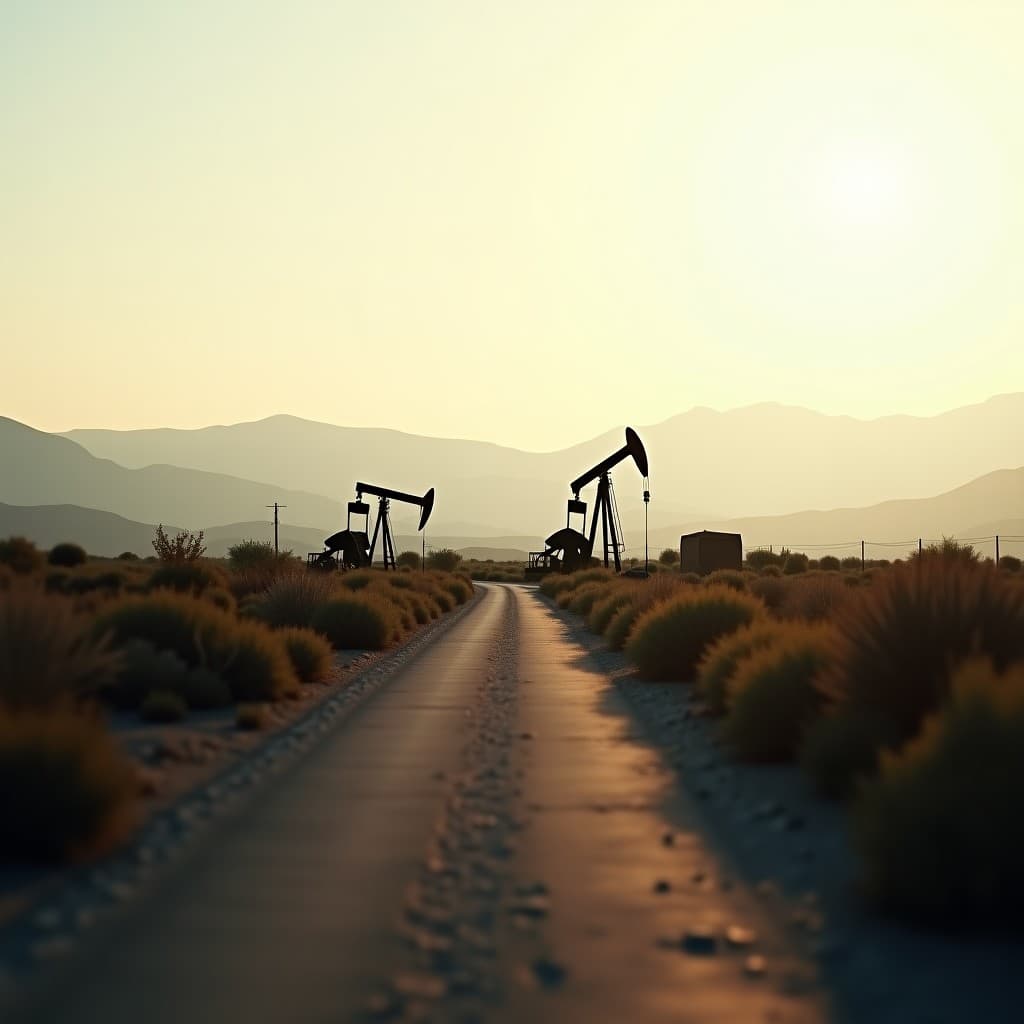
The Trump administration announced this week that it would slash regulatory red tape for oil and gas drillers on federal lands, aiming to reduce costs and encourage expansion. The Interior Department's Bureau of Land Management revised its leasing rules, and California's new drilling permits were cleared, signalling an aggressive pivot toward fossil fuel development in the United States. Simultaneously, the European Union continues to tighten climate regulations and phase out subsidies for carbon-intensive energy, creating a stark divergence in energy policy between Washington and Brussels.
Basilicata, which produces roughly 90 percent of Italy's onshore crude oil from the Val d'Agri field, sits at the intersection of these competing pressures. The region's economy has relied for three decades on extraction revenue that has funded infrastructure, schools and public services across a historically impoverished interior. But as European climate policy hardens and international capital increasingly diverts from fossil fuels to renewable energy, Basilicata's extraction-dependent model faces mounting structural risk.
The regulatory divergence mirrors a broader geopolitical realignment. France 24 reported Thursday that Italian Prime Minister Giorgia Meloni has publicly distanced herself from Donald Trump in recent weeks, citing what she called his 'constant, unprovoked attacks' on her government. Meloni met with French President Emmanuel Macron on the Riviera the same day, signalling a recalibration of Italy's European anchoring at a moment when energy and climate policy sit at the heart of EU-US tension.
For Basilicata, the consequence is acute. The region cannot follow the Trump administration's deregulatory path without violating EU environmental law and the Paris climate commitments that bind Italy. Yet it cannot accelerate a transition away from oil revenue without a credible alternative economic base. Matera, the regional capital of culture and a global film-tourism destination, offers one model of reinvention—heritage and cultural tourism as a driver of employment and tax revenue. But Matera's success, while real, remains concentrated in a single city and cannot absorb the employment and fiscal impact of oil sector contraction across the broader region.
The regional government has begun to articulate a transition strategy centred on renewable energy infrastructure—wind and solar capacity in the interior, potential hydrogen production tied to European green energy initiatives. But these projects require capital investment, skilled labour retraining, and years to reach fiscal maturity. The gap between the revenue oil extraction generates now and the revenue renewable energy infrastructure will generate in five to ten years remains the defining challenge for Basilicata's economic future. The Trump administration's move to ease drilling costs this week underscores how little time the region has to manage that transition before the global energy market shifts decisively away from fossil fuels.