
VENETO
Russia's Biennale return reignites Venice's art-and-politics divide
Activist protests greet Moscow's pavilion as the world's largest art show navigates geopolitical fracture
Tommaso Veronese1,358 wordsEdition №6Saturday, 6 June 2026 — Edition № 6
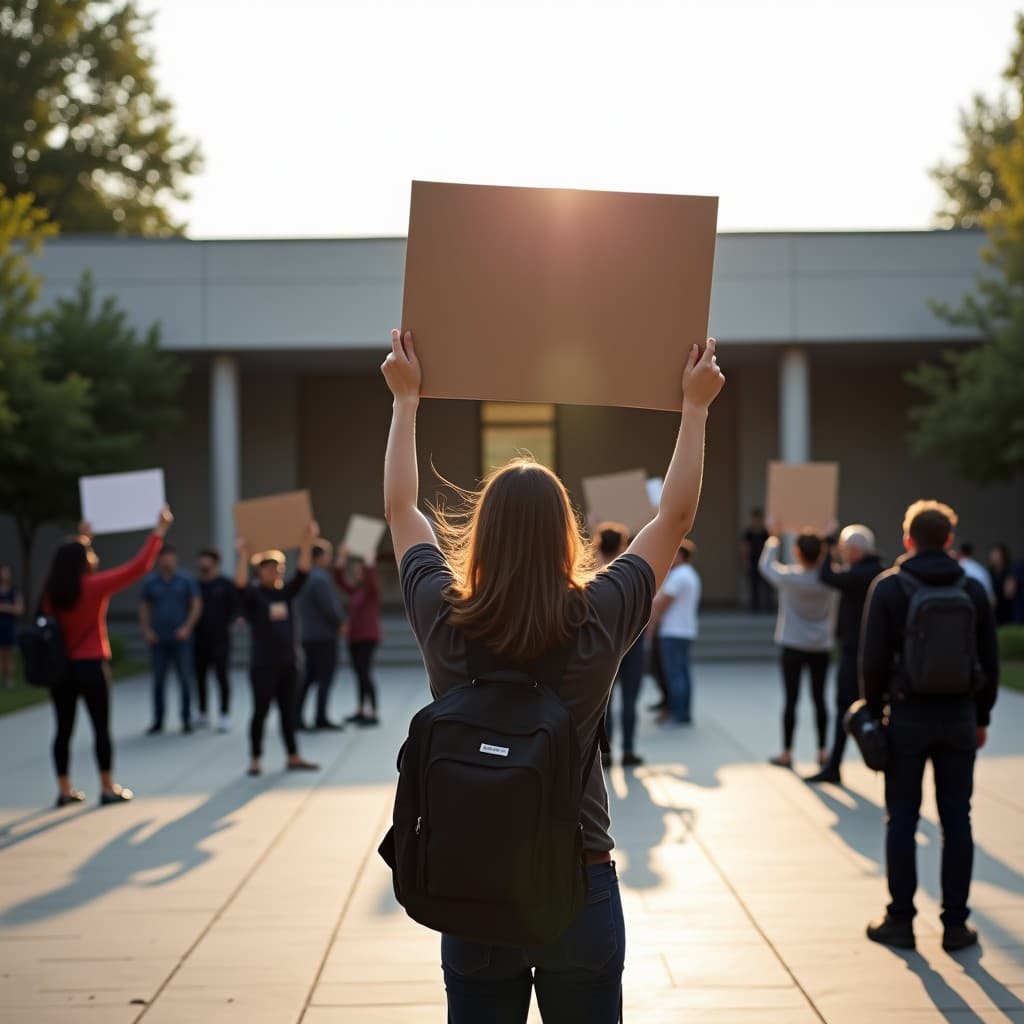
The 2026 Venice Biennale has become a battleground over Russia's place in the international art world. According to Newser, Pussy Riot and FEMEN activists protested outside the Russian pavilion, marking a sharp escalation in the tensions that have surrounded the Biennale since Russia's 2022 invasion of Ukraine. The Russian pavilion's return after a four-year absence—it was closed following the invasion—has forced the Biennale's organisers and the global art establishment to confront questions about whether art institutions can remain politically neutral in an era of geopolitical conflict.
The protest reflects a broader fracture within the international art world. For many artists and activists, Russia's participation in a major international forum legitimises a government that has committed documented war crimes in Ukraine. For others, including some curators and art-world figures, excluding Russia amounts to cultural censorship that contradicts the universal principles that art institutions claim to uphold. The Biennale, which positions itself as a space for global artistic dialogue, finds itself caught between these irreconcilable positions.
Venice's role as host to this conflict is not accidental. The Biennale is the world's oldest and most prestigious international art exhibition, and its decisions carry symbolic weight far beyond the art world. That the Russian pavilion's return should provoke direct action—rather than quiet disapproval or boycotts—signals how charged the question has become. The Biennale, which opened in 1895 as a celebration of artistic progress and international cooperation, has become a venue where geopolitical divisions play out in real time.
The history of Russia's participation in the Venice Biennale reflects the broader arc of post-Cold War European relations. After the Soviet Union's collapse, Russia was gradually integrated into the Biennale's structure, with its own national pavilion established in 1997. For more than two decades, the Russian pavilion was an unremarkable fixture of the exhibition, presenting contemporary artists to an international audience. The pavilion became a symbol of Russia's integration into the Western-dominated international art system—a sign that geopolitical divisions had been overcome.
That integration was abruptly severed in 2022. Following Russia's invasion of Ukraine, the Biennale's board voted to close the Russian pavilion and suspend Russia's participation. The decision was framed as a response to the invasion, but it also reflected pressure from Ukrainian artists, international activists, and sections of the art world who argued that Russia's participation would be unconscionable while the war continued. The closure lasted four years—longer than many observers expected, and long enough to become normalised.
The decision to reopen the Russian pavilion in 2026 was made by the Biennale's board in consultation with the Italian government and international stakeholders. According to available reports, the board concluded that a blanket exclusion of Russian artists was untenable in the long term, and that the Biennale's mission as a space for global artistic dialogue required Russia's eventual return. The timing of the decision—four years into the war, with no resolution in sight—suggests that the board prioritised institutional continuity over political alignment.
Yet the realities of the war have not changed. Ukraine remains under Russian military occupation in significant portions of its territory. The International Criminal Court has issued arrest warrants for Russian officials on charges related to war crimes. Millions of Ukrainians remain displaced. Against this backdrop, the decision to welcome Russia back to the Biennale reads, to many observers, as a capitulation to the idea that geopolitical conflict should not interfere with cultural exchange. For activists like Pussy Riot and FEMEN—both of which have been targets of Russian state repression—the message is intolerable.
The protests outside the Russian pavilion represent a direct challenge to the Biennale's authority to define the boundaries of acceptable participation. Pussy Riot, the Russian feminist punk collective that has been exiled and persecuted by the Russian state, has made opposition to Russian militarism a central part of its artistic practice. FEMEN, a Ukrainian feminist activist group, has similarly positioned itself against Russian imperialism. Their presence at the Biennale transforms the event from a celebration of art into a site of political confrontation.
For Venice and the Veneto region, the Biennale's geopolitical complications carry particular weight. The Biennale is one of the city's major cultural institutions and a significant draw for international visitors and media attention. The event generates substantial economic activity, from hotel bookings to restaurant reservations to gallery sales. Yet it also carries reputational risk: if the Biennale is perceived as complicit in normalising a government accused of war crimes, that perception could damage Venice's standing as a cultural destination and a symbol of cosmopolitan values.
The Biennale's history in Venice is inseparable from the city's own identity as a centre of artistic innovation and international exchange. Venice was, for centuries, a global trading hub where goods, ideas, and cultures intersected. The Biennale, established in the late 19th century, was meant to embody that cosmopolitan spirit in the modern era. Yet Venice's cosmopolitanism was also built on colonial trade and imperial power—a history that contemporary observers are increasingly unwilling to ignore. The question of Russia's participation thus touches on deeper questions about what cosmopolitanism means when it is built on the exclusion or subordination of others.
International art critics and curators have been divided on the Russian pavilion's return. Some have argued that artistic freedom requires the inclusion of Russian artists, regardless of their government's actions. Others have contended that the Biennale's participation in normalising Russia amounts to a betrayal of Ukrainian artists and the broader principle that art institutions should not be neutral about atrocities. This division reflects a fundamental tension in contemporary art-world discourse: the desire to maintain art as a space apart from politics, and the recognition that such separation is impossible.
The Biennale's organisers have attempted to navigate this tension by framing the Russian pavilion's return as a step toward eventual reconciliation and dialogue. Yet this framing rings hollow to many observers, particularly given the absence of any meaningful resolution to the conflict. The pavilion's reopening, in this view, is not a contribution to peace but a capitulation to the idea that enough time has passed that geopolitical divisions should be set aside. For activists, that capitulation is itself a political statement—one that privileges institutional stability over moral clarity.
The protests at the Russian pavilion will likely become a recurring feature of the 2026 Biennale. International media coverage will amplify the activists' message, ensuring that the Biennale's claim to neutrality is repeatedly challenged. The event, which was meant to be a celebration of artistic achievement, will instead be remembered as a site of geopolitical conflict. This outcome reflects a broader shift in how international cultural institutions are being held accountable for their political implications.
For the Veneto region, the Biennale's geopolitical complications present a challenge to its identity as a centre of cultural sophistication. The region prides itself on its artistic heritage—from the Palladian villas of the Renaissance to the contemporary art scene centred in Venice. Yet that heritage is increasingly entangled with questions about power, exclusion, and the politics of cultural representation. The Biennale, as Venice's flagship cultural institution, cannot escape these questions.
Looking ahead, the question of how the Biennale will manage its relationship to geopolitical conflict will likely define its future. Will the institution continue to prioritise institutional inclusivity over political alignment? Or will it develop new frameworks for thinking about participation and exclusion that acknowledge the reality of global conflict while maintaining some commitment to artistic dialogue? The protests at the Russian pavilion suggest that the art world is no longer willing to accept the fiction that culture can be separated from politics. How the Biennale responds to that challenge will shape not only its own future but also the broader question of what role cultural institutions should play in an era of geopolitical fracture.