
NATIONAL
Death in police custody ignites Bologna street protests
Moroccan-born businessman's restraint death draws comparisons to Floyd case, sparks formal investigation
Giulia Benati376 wordsEdition №57Sunday, 26 July 2026 — Edition № 57
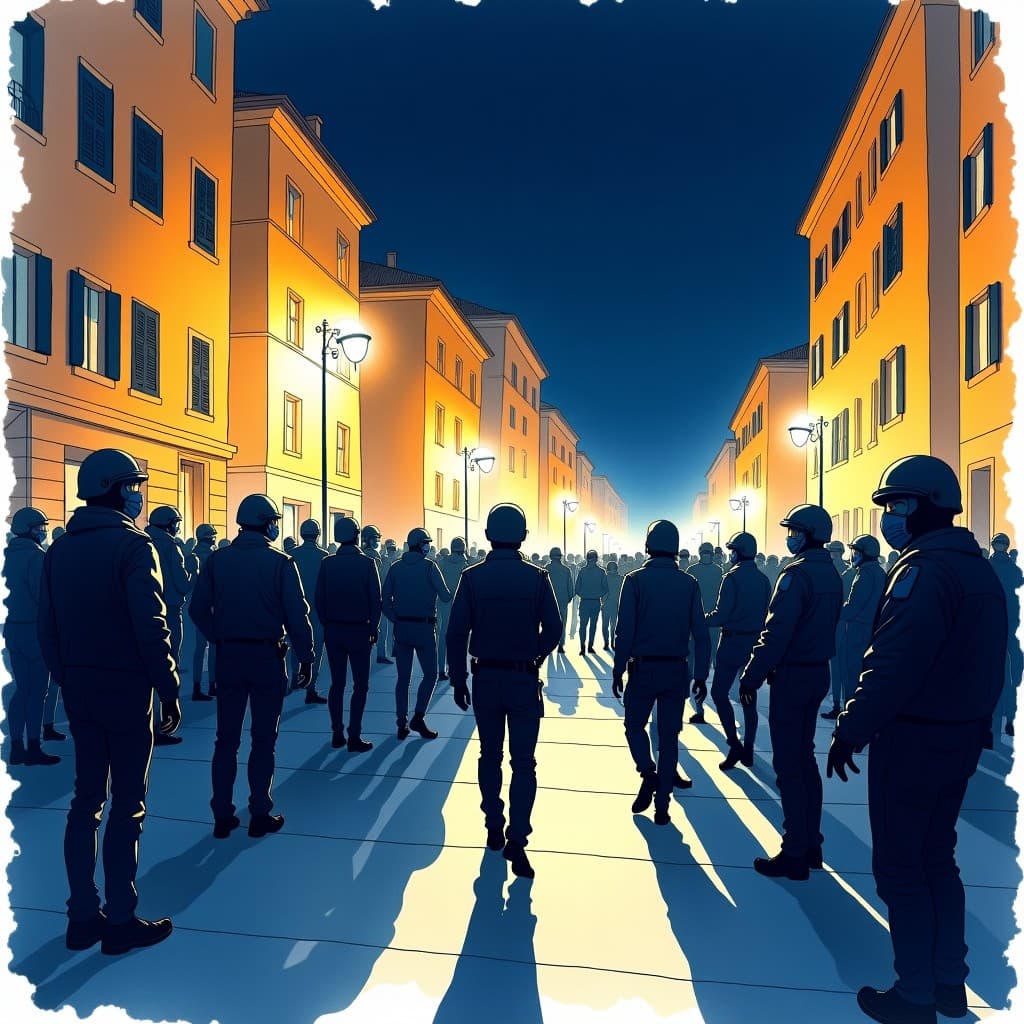
Video footage showing Abderrahim Fakir struggling to breathe while restrained face-down by two police officers in Bologna has set off street protests across Italy's northern city and drawn international comparisons to the death of George Floyd in Minneapolis. According to the BBC, dozens of people were injured during demonstrations that followed the incident, with the Prime Minister Giorgia Meloni stating that "nothing can justify violence against the forces of order" even as she called for a thorough investigation into the circumstances of Fakir's death.
Modern Ghana reported that Fakir, a 42-year-old Moroccan-born entrepreneur, died while being forcibly restrained by the officers. The incident has prompted a formal prosecutorial investigation and reignited debate in Italy over police tactics, immigration policy and accountability in law enforcement. The case has drawn international attention as part of a wider pattern of scrutiny on police use of force in European cities.
Bologna, Italy's cooperative heartland and a city with a long tradition of civic activism, has become the focal point of a broader Italian conversation about policing and migrant integration. The protests underscore tensions that have intensified under Meloni's government, which has campaigned on stricter immigration controls and law-and-order messaging. France 24 has examined how migrants face increasing pressure under the current administration's policies, a backdrop that frames the Fakir case within a wider political context.
The death has exposed fault lines between the government's tough-on-crime posture and the city's civic and left-leaning traditions. Bologna's cooperative movement and history of grassroots accountability have long shaped how the city responds to questions of state power and individual rights. The incident raises questions about police training, the use of restraint techniques, and whether safeguards exist to prevent deaths in custody—issues that extend beyond Bologna to the broader Italian criminal justice system.
The BBC reported that Meloni emphasized the need for investigation while defending law enforcement, a position that reflects the government's broader stance. The formal prosecutorial investigation will likely take months, but the immediate aftermath has already illustrated the depth of public concern over police conduct and the treatment of migrants in Italian cities, particularly in a region with a strong civic tradition of questioning state authority.