
NATIONAL
Bologna's reckoning: Death of Moroccan businessman reignites Italy's police reform debate
The death of Abderrahim Fakir during police restraint has drawn international scrutiny and demands from Morocco, as protests expose deep fractures in Italian policing standards.
Sergio Madrussan481 wordsEdition №54Thursday, 23 July 2026 — Edition № 54
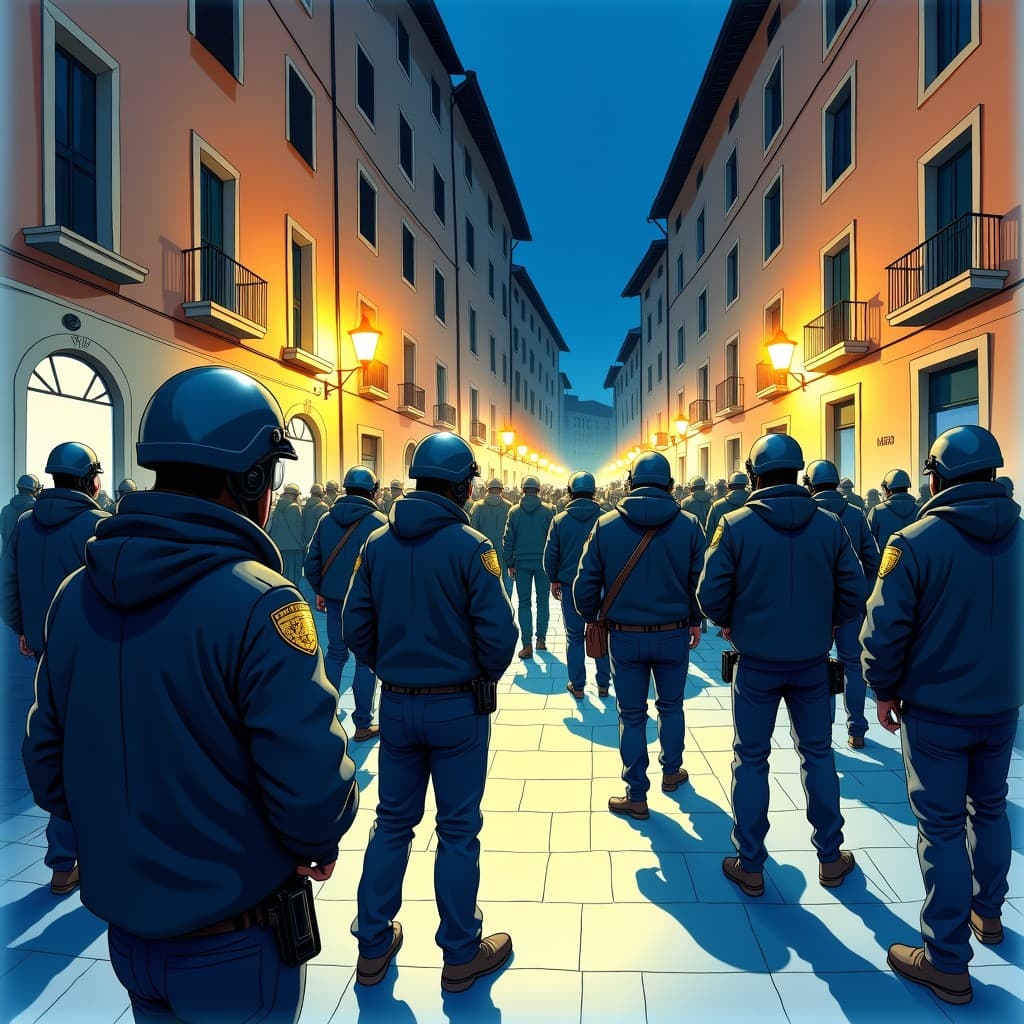
Abderrahim Fakir, a 42-year-old Moroccan businessman, died on Sunday in Bologna while being forcibly restrained by police. Video footage widely shared on social media shows Fakir held face-down on the ground, repeatedly calling for help before falling still, according to France 24. The death triggered immediate protests in Bologna on Monday night, with clashes between security personnel and demonstrators, and has since prompted outcry across Italy and diplomatic intervention from Rabat.
Morocco's government has demanded that Italian authorities explain the circumstances of the death, according to reporting from the Local Italy. The Moroccan kingdom's formal intervention signals the incident's diplomatic weight: Fakir was a national of Morocco, and his death under state custody has become a test of Italy's willingness to reform policing practices. Al Jazeera reported that the death has reignited Italy's police accountability debate, with human rights campaigners and opposition parties demanding answers.
The parallels to George Floyd's death in Minneapolis in 2020 are explicit in international coverage. The Washington Post and France 24 both noted the comparison, which resonates across contexts where police restraint techniques have proven fatal. The incident has also drawn attention to tactics used by U.S. Immigration and Customs Enforcement, according to France 24, widening the frame beyond Italy alone.
Bologna, Italy's seventh-largest city and the capital of Emilia-Romagna, sits in the industrial heartland of the Po Valley—far from Friuli-Venezia Giulia's eastern border. Yet the death and its aftermath carry significance for the northeastern region's own relationship with policing and migration. Friuli-Venezia Giulia has long served as Italy's frontier with the Balkans and Central Europe, with Trieste's port and the region's eastern border towns hosting significant migrant and refugee populations. The Fakir case surfaces questions about police conduct toward non-Italian residents that resonate across all of Italy's border regions.
Italian authorities have not yet released a formal investigation into the circumstances of Fakir's death. The Guardian reported that video evidence shows police restraining him, but the precise cause of death—whether asphyxiation, cardiac event, or another factor—remains under examination. What is clear, according to multiple international outlets, is that Fakir was heard pleading for help during the restraint, a detail that has fueled demands for a full public inquiry.
The incident occurs against a backdrop of broader Italian political division. Le Monde reported that while the government has faced pressure to respond to Fakir's death, part of the government has rallied behind a jeweler who killed two burglars—a posture that signals competing narratives about state force and self-defense. This fracture has made police reform a contested terrain in Italian politics, with opposition parties and human rights groups calling for stricter accountability mechanisms and training standards.
For Friuli-Venezia Giulia, where the region's Slovenian and Central European heritage has historically made it more attuned to minority rights and cross-border governance, the Fakir case raises questions about whether Italian policing standards are adequate for a region that hosts significant populations of foreign-born residents and asylum seekers. The region's ports and border checkpoints handle thousands of migrants and international travelers annually; the conduct and training of police at these frontiers directly affects the region's reputation as a gateway between Italy and the wider European Union.