
CULTURA
Bonalumi's modular vision challenges space at Art Basel
Italian artist's 1970 work returns to view, reframing how viewers encounter sculptural form
Eleonora Vanzetti346 wordsEdition №16Monday, 15 June 2026 — Edition № 16
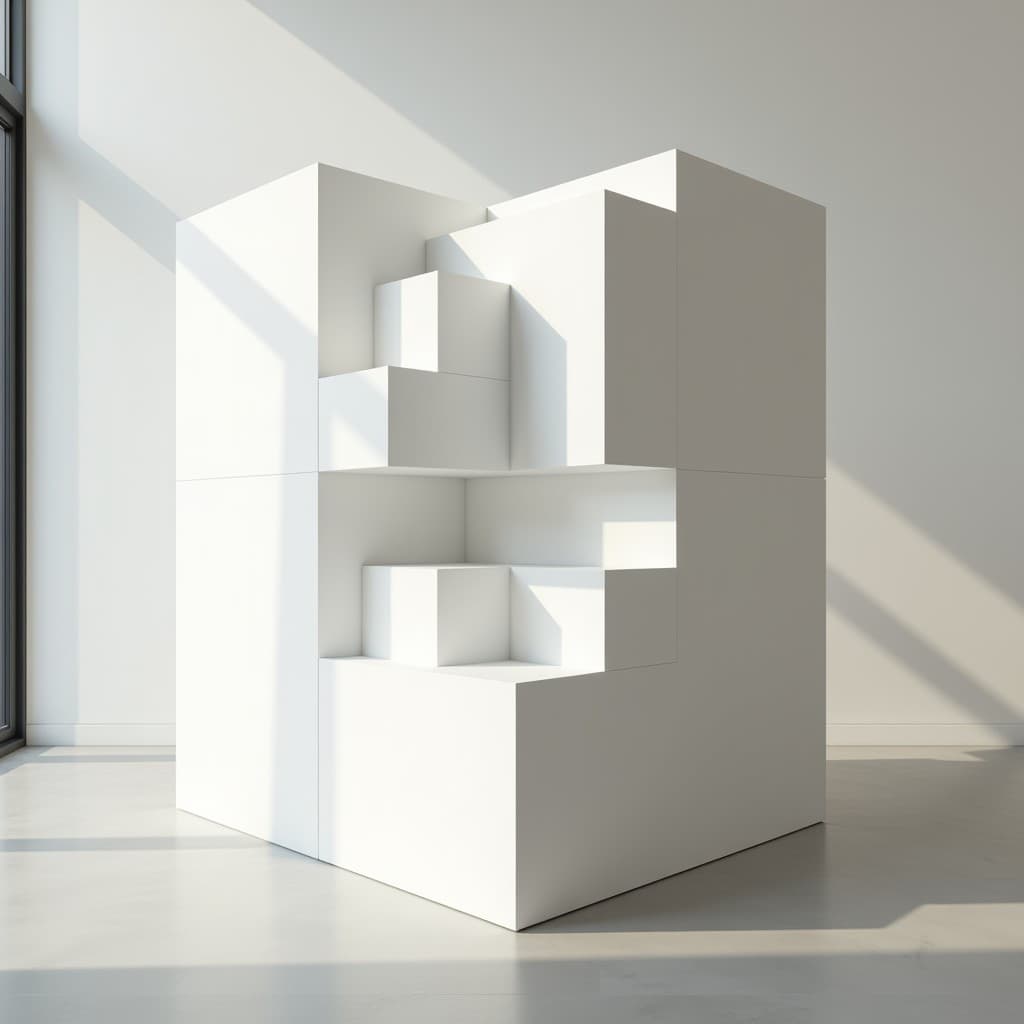
Agostino Bonalumi's *Struttura modulare bianca*, a monumental modular sculpture conceived in 1970, is returning to public view at Art Basel Unlimited this month, according to Artnet News. The work, presented in collaboration with Archivio Bonalumi, employs repetition and rhythm as formal devices to challenge how viewers understand and move through sculptural space. The piece exemplifies a strain of Italian postwar art that treated the gallery or exhibition space not as a neutral container but as an active participant in the work's meaning.
Bonalumi's approach—treating painting and sculpture as instruments to reshape spatial perception—places him within a broader Italian artistic genealogy that emerged in the 1960s and 1970s. The reappearance of *Struttura modulare bianca* at a major international art fair signals renewed international interest in Italian artists of that generation whose work questioned the boundaries between object and environment. For Italy's cultural export market, such moments of rediscovery abroad reinforce the country's standing as a source of formal innovation in modern and contemporary art, even as Italian museums and galleries compete for visibility in an increasingly crowded international calendar.
Art Basel's Unlimited sector, which specializes in large-scale and site-specific works, provides the scale and curatorial framework that Bonalumi's modular vision demands. The sculpture's return to prominence also reflects a broader curatorial trend: major European and American institutions have begun revisiting Italian artists from the postwar period whose work was overshadowed by concurrent developments in American and northern European abstraction. Bonalumi's insistence on the viewer's embodied experience within the work—rather than before it—aligns with spatial and phenomenological concerns that continue to preoccupy contemporary artists and curators.
For Italy's publishing and design sectors, the circulation of such work through international art fairs and institutional exhibitions sustains the narrative of Italian aesthetic sophistication that underpins the country's broader cultural economy. Museums, galleries, and auction houses across Europe and North America have increasingly sought to contextualize postwar Italian art within global narratives of modernism, a shift that benefits both scholarship and the market for works by artists of Bonalumi's stature and era.