
FRIULI-VENEZIA GIULIA
Austrian protests block Brenner Pass as transit tensions rise
Demonstrators shut vital Germany-Italy link over traffic and environmental concerns, disrupting regional trade flows.
Sergio Madrussan1,247 wordsEdition №4Thursday, 4 June 2026 — Edition № 4
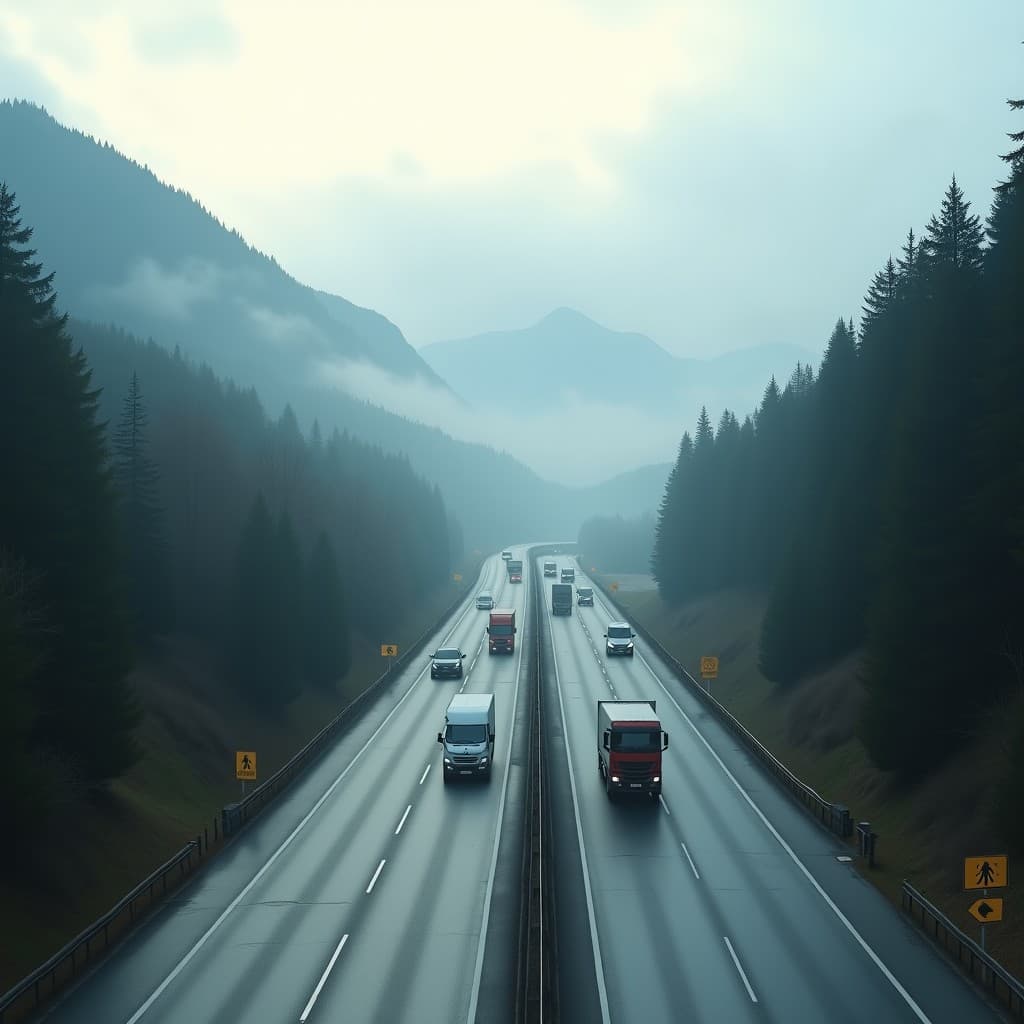
On May 30, Austrian protesters shut the Brenner motorway near Matrei, according to Reuters, blocking the principal route connecting Germany to Italy and disrupting traffic across the Alpine frontier. The action targeted what demonstrators characterised as an unsustainable growth in heavy goods vehicles transiting the pass, a concern that has animated Austrian environmental and local politics for years.
The Brenner corridor carries roughly 60,000 vehicles daily in normal conditions, making it one of Europe's busiest cross-border routes. For Friuli-Venezia Giulia, which sits at the eastern edge of the Alpine system and functions as Italy's primary gateway to Central Europe and the Balkans, the closure underscored the fragility of the region's role as a transit hub. When the northern routes congest or close, pressure shifts eastward toward Trieste and the Slovenian border.
The protest reflects a wider European fracture over transport policy. Austria has long sought to cap or redirect Alpine traffic, citing environmental and infrastructure strain. Italy, by contrast, has resisted restrictions that would divert goods toward its own ports and roads. The dispute sits at the intersection of EU logistics, climate policy, and national economic interest—a tension that has simmered since the 1990s but has sharpened as freight volumes have climbed and environmental scrutiny has intensified.
The Brenner blockade was not an isolated incident but part of a pattern of Alpine activism. Austrian groups have staged similar protests in recent years, and the Austrian government has itself proposed traffic caps and tolling schemes that would raise the cost of transit. Germany, which depends heavily on the Brenner route to move goods to and from Italy, has resisted such measures. Italy, caught between Austrian restrictions and the need to maintain its own competitiveness as a transit economy, has found itself in an awkward middle position.
For the Friuli-Venezia Giulia region, the Brenner closure carried immediate economic consequence. Trieste's port and the road and rail corridors that feed it form part of the broader European logistics network. When Alpine routes jam or close, shippers face a choice: wait for the Brenner to reopen, reroute through the Gotthard tunnel in Switzerland (which carries its own tolls and congestion), or shift cargo toward the eastern gateways—the Slovenian border crossings and Trieste itself. The region's economy is structured around being a fallback route when the main Alpine passes strain.
The regional port authority and transport operators have long understood this dynamic. Trieste's strategic value as a Mediterranean gateway to Central Europe depends partly on the Brenner's congestion and cost. Yet the closure also exposed the fragility of the entire system. If Austrian protests become routine, or if the Austrian government formally restricts transit, shippers will need to invest in alternative infrastructure—new rail lines, expanded port capacity, upgraded roads through Slovenia. That investment would benefit Trieste, but only after years of disruption.
The protest also highlighted a deeper European policy failure. The EU has committed to shifting freight from road to rail, but the Alpine rail infrastructure—particularly the Brenner Base Tunnel, a long-delayed project meant to ease Alpine transit—remains incomplete. According to international transport press, the tunnel has faced cost overruns and scheduling slips for nearly two decades. Until it opens, the motorway remains the primary route, and tensions between transit nations and transit-averse Alpine states will persist.
Austria's environmental argument carries weight in Brussels. The EU's climate commitments require a shift away from road freight, and Austria has framed its transit restrictions as an environmental measure. Italy, however, has countered that restrictions on the Brenner would simply push traffic toward less efficient routes—longer detours through France or the Balkans—and would harm Italian competitiveness without reducing overall emissions. The dispute is thus not merely about Austrian local concerns but about how the EU allocates the costs of decarbonisation.
For Friuli-Venezia Giulia, the longer implication is geopolitical. The region sits at the intersection of three transport corridors: the Brenner to the north, the Slovenian routes to the northeast, and the maritime routes through Trieste to the south. As Alpine transit becomes more contested, the region's role as an alternative gateway grows more valuable—but also more exposed to the whims of Austrian and Slovenian policy. The closure on May 30 was a reminder that the region's prosperity depends on forces beyond its control.
The timing of the protest also mattered. It occurred as the Giro d'Italia cycling race passed through Friuli-Venezia Giulia, with stage 20 running from Gemona del Friuli to Piancavallo in the Dolomites. The race itself is a form of soft power for the region, drawing international media attention and tourism. The Brenner closure, by contrast, signalled the region's vulnerability to transport disruption—a less flattering image.
Austrian officials have not formally proposed closing the Brenner, but the protest suggested that public pressure for restrictions is mounting. The Austrian government has previously floated ideas such as a kilometre-based toll that would make transit more expensive, or a cap on daily vehicle numbers. Any such measure would require negotiation with Italy and the EU, and would likely trigger Italian resistance. The dispute thus remains unresolved, and future protests are likely.
For the EU, the Brenner dispute exemplifies a broader challenge: how to balance climate ambitions, national economic interests, and regional quality of life. Austria wants to reduce traffic; Italy wants to maintain transit volumes; Germany wants unimpeded access to southern markets. The EU has not yet found a policy framework that satisfies all three. The Brenner Base Tunnel, when complete, may ease some of this tension by shifting freight to rail. Until then, the motorway will remain a flashpoint.
The closure also underscored the importance of the eastern corridor for Italian logistics. Trieste and the Slovenian border routes offer an alternative to the Brenner, and shippers are increasingly aware of this. The port authority in Trieste has invested in rail connections to Central Europe, and the region has positioned itself as a gateway to the Balkans and beyond. The Brenner protest, paradoxically, strengthens the case for investing in these eastern alternatives.
In the immediate term, the May 30 closure caused delays for goods in transit and raised freight costs. Longer-term, it signals that the Alpine transit system is under stress and that Austrian public opinion is turning against high-volume road freight. For Italy and the EU, this means either investing heavily in rail alternatives or accepting that Alpine transit will become more expensive and unreliable. For Friuli-Venezia Giulia, it means that the region's role as a fallback gateway is likely to grow in importance—provided the region can invest in the infrastructure to handle it.