
TRENTINO-ALTO ADIGE
Austrian blockade of Brenner Pass exposes Alpine transit crisis
Protesters shut vital corridor between Germany and Italy; Trentino-Alto Adige faces economic and diplomatic fallout
Klara Hofer1,247 wordsEdition №5Friday, 5 June 2026 — Edition № 5
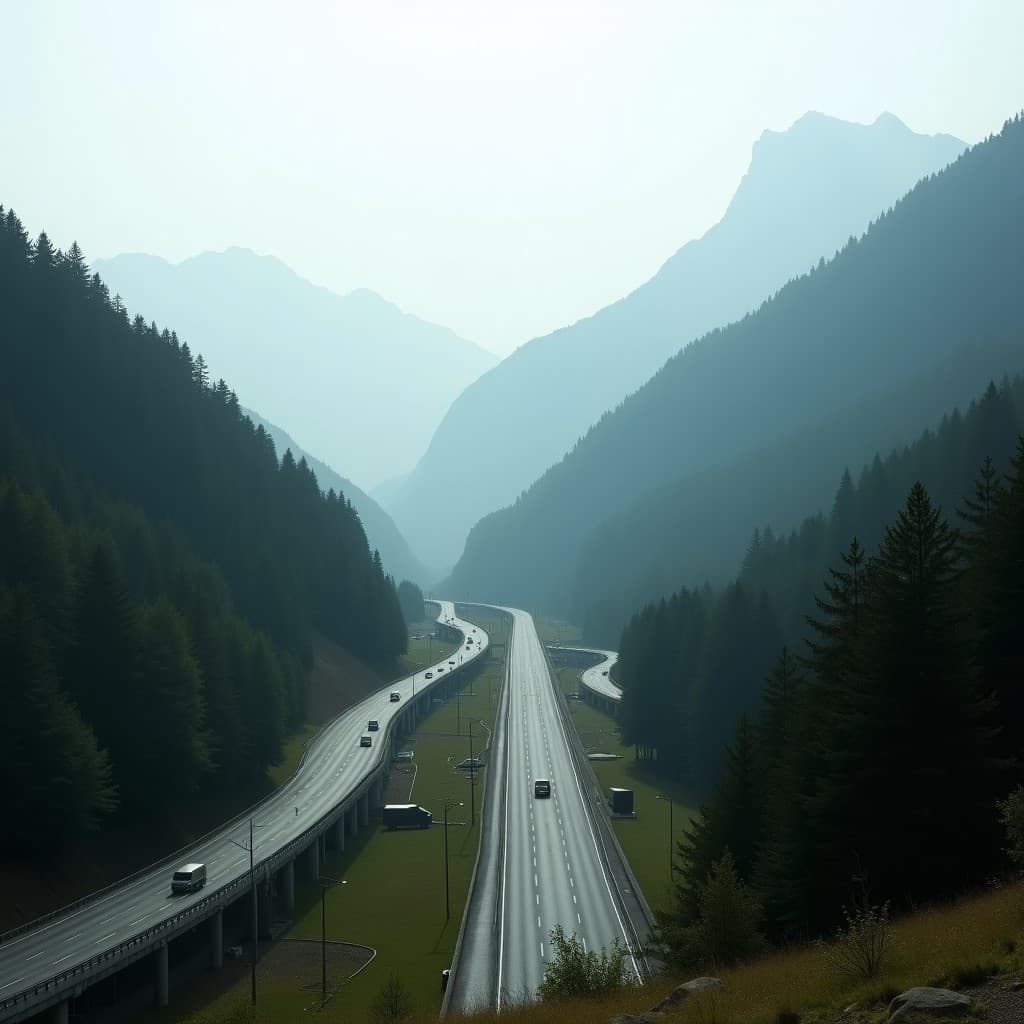
On May 30, Austrian protesters closed the Brenner motorway near Matrei, shutting the vital corridor that carries goods and vehicles between Germany and Italy through the Alps. Reuters reported the blockade was mounted against what demonstrators described as the growing traffic load on the route. The action underscores a long-standing tension: the Brenner Pass, which cuts through Trentino-Alto Adige's mountains, has become a flashpoint in European transport politics, with Austria and environmental groups pressing for rail investment over road freight, while Italy and Germany resist diversion of commercial traffic.
The Brenner is Europe's busiest Alpine crossing. Roughly 60,000 vehicles transit daily in normal conditions, according to foreign transport analysts. For Trentino-Alto Adige, the motorway is both economic lifeline and environmental burden. The region's autonomy, enshrined in its special statute, gives it a say in transport policy, yet the corridor remains contested terrain between Vienna, Rome, Berlin and Brussels.
Austria has long advocated for a modal shift—moving freight from road to rail—and has imposed heavy-vehicle tolls and night-time bans to discourage transit traffic. Italy and German logistics firms have resisted, arguing that Alpine rail capacity remains insufficient and that road transport cannot yet be replaced. The European Union has backed rail investment through the Brenner Base Tunnel project, a 64-kilometre underground rail link under construction since 1999, intended to relieve road congestion. Completion is not expected until the early 2030s.
The May 30 blockade was not the first of its kind. Austrian environmental and local-interest groups have periodically shut the motorway to protest transit volumes and air quality. Each closure exposes the fragility of Alpine transport consensus and the competing interests that shape policy in this corner of Europe.
For Trentino-Alto Adige, the Brenner is central to regional identity and economy. The region sits astride the corridor; its autonomy statute gives it consultation rights on major infrastructure and environmental matters affecting the pass. Yet the region is also caught between larger powers. Austria, which borders South Tyrol to the north, views the motorway as a threat to its Alpine valleys and air quality. Germany and Italy see it as essential to their trade and supply chains. The European Union frames it as a transit corridor for the single market.
The regional government in Trento and Bolzano has historically sought a middle path: supporting the Brenner Base Tunnel as a long-term solution while accepting managed road traffic in the interim. However, Austrian protests and environmental pressure from within Trentino-Alto Adige itself—the region has a strong Green political presence—have complicated that balance.
Foreign coverage of the Brenner typically frames it as a German-Austrian dispute over environmental standards and transit burden-sharing. The Guardian and other European outlets have reported on Austria's unilateral measures, including its truck bans, as violations of EU free-movement principles. Reuters and Deutsche Welle have covered the Brenner Base Tunnel as a flagship EU infrastructure project meant to resolve the conflict by shifting freight to rail.
What foreign media often underscore is that the Brenner is a test case for how the EU manages the tension between free movement of goods and national environmental protection. Austria argues that it has the right to protect its territory from excessive traffic and pollution. Italy and Germany counter that Austrian measures amount to protectionism dressed in green language. The European Court of Justice has ruled on Austrian truck restrictions multiple times, finding some measures compatible with EU law and others not.
For Trentino-Alto Adige specifically, the stakes are economic and political. The region's autonomy is premised on its ability to manage its own affairs—including transport and environment—while respecting Italian sovereignty and EU rules. Heavy reliance on the Brenner corridor for trade and tourism means the region cannot afford to see it closed or severely restricted. Yet the region is also home to German-speaking communities with strong environmental values and ties to Austria. This dual identity shapes how the region's government navigates the dispute.
The Brenner Base Tunnel, when complete, is expected to reduce road traffic by roughly 50 percent, according to project estimates cited in EU transport reports. However, completion is still years away, and Austrian patience with interim road volumes appears to be wearing thin. The May 30 blockade suggests that protest action may intensify if Austria perceives no progress on modal shift.
Trentino-Alto Adige's economy depends partly on just-in-time supply chains and tourism. Disruptions to the Brenner corridor directly affect manufacturing in the region—particularly the furniture, machinery, and food-processing sectors—as well as the flow of tourists from Germany and Austria. A prolonged blockade would have immediate regional consequences.
The regional government has publicly supported the Brenner Base Tunnel and has called for EU funding to accelerate its completion. However, it has also had to manage domestic political pressure from environmental groups and from South Tyrolean communities that oppose further road expansion. The Austrian blockade puts the region in a difficult position: it cannot control Austrian protest action, yet it must negotiate between Vienna's environmental demands and Rome's and Berlin's commercial interests.
Foreign press coverage of the Brenner typically does not foreground Trentino-Alto Adige's autonomy or its role as a mediator. Reuters and Deutsche Welle focus on the bilateral dispute between Austria and Italy, or on EU transport policy writ large. Austrian media, particularly the Tyrolean press, frames the issue in terms of local environmental protection and regional identity—a narrative that resonates with South Tyrolean audiences but is less visible in international outlets.
The May 30 blockade is a reminder that the Brenner remains a live political issue in European transport and environmental policy. For Trentino-Alto Adige, it underscores the region's vulnerability to decisions made in Vienna, Rome, Berlin and Brussels—and the limits of autonomy when larger geopolitical and commercial interests collide. The region's future transit policy will likely depend on how quickly the Brenner Base Tunnel advances and whether interim compromises on road traffic can hold.
What happens next is uncertain. Austrian groups may escalate blockade action if they perceive insufficient progress on rail investment. Italy and Germany may push back through EU channels, arguing that Austria is violating free-movement rules. The European Commission may intervene to mediate or to accelerate Brenner Base Tunnel funding. And Trentino-Alto Adige will continue to navigate between these competing pressures, seeking to protect its economy and environment while respecting its autonomy and its place in the larger European order.