
TRENTINO-ALTO ADIGE
Austrian blockade of Brenner motorway exposes Alpine transit strain
Protesters shut vital Germany-Italy corridor as freight pressure mounts on cross-border infrastructure
Klara Hofer1,247 wordsEdition №3Wednesday, 3 June 2026 — Edition № 3
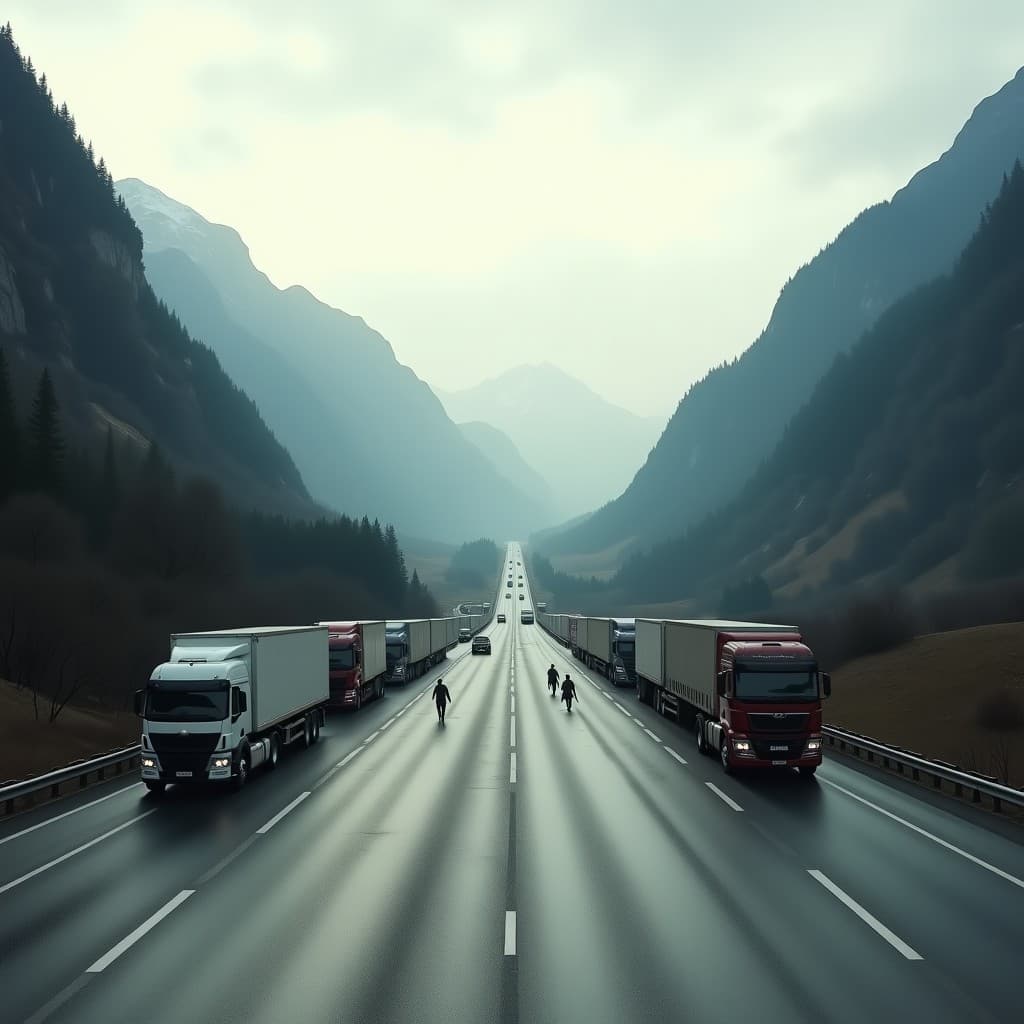
Austrian protesters shut the Brenner motorway on May 30, blocking the vital corridor that connects Germany to Italy and carries freight across the Alps. Reuters reported that demonstrators occupied the road near Matrei, Austria, in opposition to what they characterised as unsustainable growth in traffic load on the crossing. The closure underscored longstanding tensions over the environmental and social cost of heavy transit through the region.
The Brenner is the busiest Alpine crossing in Europe, handling roughly 60,000 vehicles daily according to international transport data. The motorway carries goods between northern Europe and the Mediterranean, making it essential to EU supply chains. Austria and Italy have long negotiated over transit quotas and environmental standards, with Austria repeatedly calling for stricter limits on truck movements.
The blockade arrives as the European Union grapples with post-pandemic freight recovery and the shift toward electrified transport. Austria's Green Party and environmental groups have campaigned for years to shift freight from road to rail, citing air quality and noise pollution in Alpine valleys. The protest signals that grassroots pressure on the issue remains high, even as formal negotiations between governments continue.
The closure on May 30 was not the first such action. Austrian activists have periodically blocked the motorway to draw attention to transit volumes, which have climbed steadily since the 1990s. Reuters noted that protesters framed the action as a response to what they saw as inadequate progress on shifting freight to rail and reducing overall vehicle numbers crossing the Alps.
For Trentino-Alto Adige, the Brenner is both lifeline and constraint. The region's economy depends on goods flowing north to Austria and Germany—apples, wine, and manufactured goods from the valleys move through the corridor daily. At the same time, the region bears the environmental burden of the transit: the Adige valley, which parallels the motorway, experiences air quality stress from diesel emissions, and local communities in South Tyrol have long complained of noise and vibration from heavy trucks.
The Italian government has historically resisted Austrian calls for stricter quotas, arguing that transport restrictions harm the southern European economy. However, the regional government in Bolzano and Trento has taken a more nuanced position, supporting both freight movement and environmental limits. South Tyrol's autonomy gives it some leverage in these discussions; the region can shape local environmental standards and has advocated for rail investment as an alternative to road transit.
The EU's transport policy framework, set out in successive directives and the Trans-European Transport Network (TEN-T) programme, designates the Brenner as a priority corridor. Brussels has invested in rail upgrades, including the Brenner Base Tunnel project, a 64-kilometre underground railway intended to shift freight from road to rail. The tunnel has faced cost overruns and delays; according to international reports, it is now expected to open in the early 2030s, well behind the original schedule.
Austria's position reflects broader Alpine concerns. Switzerland, which faces similar transit pressure, has imposed strict truck limits and invested heavily in rail. Austria has sought comparable measures but lacks Switzerland's legal independence; as an EU member, Austria must balance environmental goals against the EU's commitment to free movement of goods. The tension between these obligations has made the Brenner a recurring flashpoint in EU transport politics.
The May 30 blockade also reflects the wider European debate over climate and freight. The EU's Green Deal and transport decarbonisation targets require a shift away from road haulage. However, the transition is slow; electrified trucks are still expensive, and rail infrastructure in the Alps remains limited outside the main corridors. Protesters argue that without stronger action—quotas, congestion pricing, or mandatory modal shift—the region will continue to absorb unsustainable traffic.
For Trentino-Alto Adige, the stakes are high. The region's mountain economy relies on both connectivity and environmental quality. Over-tourism in the Dolomites, already a concern for international travel media, is compounded by transit traffic. The region's autonomy gives it tools to shape local policy, but it cannot unilaterally restrict the Brenner without EU and Italian government backing.
The Austrian government has not formally endorsed the protest, but it reflects public sentiment that Austrian officials have acknowledged. Austria's transport minister has repeatedly called for EU-wide action to reduce Alpine transit, arguing that the environmental cost is borne disproportionately by Alpine regions. The May 30 action suggests that patience with incremental measures is wearing thin.
The Brenner Base Tunnel, when complete, is expected to absorb a significant share of freight currently on the motorway. However, the tunnel alone will not resolve the transit question; road traffic will likely continue to grow as long as trucking remains cheaper than rail. The international transport sector has noted that the tunnel's success will depend on pricing mechanisms that make rail competitive with road—a political challenge in both Italy and Austria.
For the coming months, attention will focus on EU transport negotiations and the progress of the Brenner tunnel project. Austria is likely to continue pressing for stricter quotas or congestion pricing on the motorway. Italy and Trentino-Alto Adige will need to balance freight interests against environmental pressure from both Austrian partners and their own communities.
The May 30 blockade, though brief, signals that the Brenner corridor remains a flashpoint in European transport politics. As climate policy tightens and Alpine communities grow more vocal about environmental costs, the pressure for change will likely intensify. The outcome will shape not only the region's economy but also the viability of the EU's broader transport and climate goals.
International observers have noted that the Brenner dispute is emblematic of larger Alpine challenges: how to maintain economic connectivity while protecting fragile mountain environments. The resolution will require sustained cooperation between Austria, Italy, the EU, and regional authorities—and a willingness to invest in alternatives to road transit. The May 30 protest underscores that without such commitment, grassroots pressure will continue to disrupt the corridor that Europe depends on.