
VALLE D'AOSTA
Austrian protests block Brenner Pass as Alpine transit strain peaks
Demonstrators shut vital Germany-Italy corridor; Valle d'Aosta faces supply and tourism ripple effects
Camille Bréan1,247 wordsEdition №4Thursday, 4 June 2026 — Edition № 4
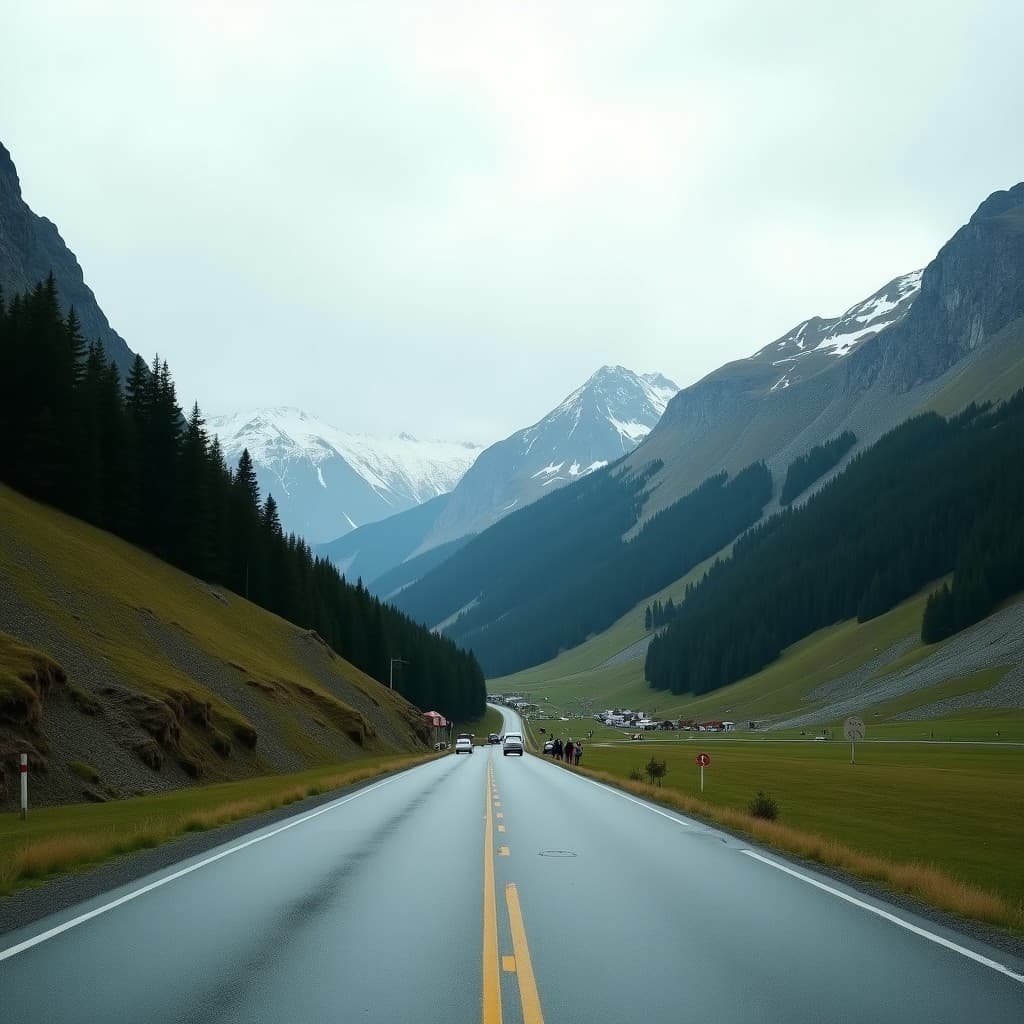
On May 30, Austrian protesters shut the Brenner motorway near Matrei, Austria, according to Reuters, blocking the principal corridor for traffic between Germany and Italy. The closure, driven by complaints over mounting congestion on the pass, underscores a widening European dispute over the environmental and logistical cost of moving goods and people through the Alps.
The Brenner Pass sits 65 kilometres northeast of the Valle d'Aosta, across the Italian border in South Tyrol. Yet the regional economy — dependent on cross-border trade, hydroelectric exports to the EU, and Alpine tourism — feels the closure acutely. Trucks rerouted from the Brenner seek alternate passes, including the Mont Blanc tunnel and the Simplon, both of which feed traffic through or near the valley.
The protest reflects a broader Alpine crisis. Austria, Switzerland, and northern Italy have all faced years of pressure from environmental groups and residents over heavy-vehicle transit. Austria has long imposed restrictions on trucks; Switzerland caps transit permits. The Brenner, by contrast, remains largely unregulated, making it the default route for Central European freight heading south to Mediterranean ports and northbound Italian exports.
The May 30 blockade was not the first such action. Reuters reported that demonstrators have repeatedly targeted the Brenner over the past several years, citing air quality, noise, and the wear on Alpine infrastructure. The Austrian government has signalled sympathy for local grievances while resisting unilateral restrictions that might divert traffic to Swiss or Italian passes — a political calculation that leaves the corridor vulnerable to periodic disruption.
For the Valle d'Aosta, the Brenner's congestion is both threat and opportunity. A sustained shift in traffic patterns could ease pressure on the Mont Blanc tunnel, which links the valley to France and has itself been a flashpoint for environmental and safety concerns. Yet any major rerouting would likely increase truck volumes on Alpine roads within the region, compounding noise and emissions in a territory already sensitive to air quality and climate stress.
The valley's economy rests on three pillars: tourism, energy, and trade. Tourism depends on the perception of pristine Alpine scenery; heavy transit traffic undermines that brand. Energy — the region exports hydroelectric power across Europe — requires stable cross-border infrastructure and EU market access. Trade, though less visible than tourism, matters: the valley sits on the historical trade route between northern Europe and the Mediterranean, and any disruption to that flow affects local logistics and supply chains.
The Brenner closure also exposes a structural problem in European Alpine policy. The EU has committed to shifting freight from road to rail, yet rail capacity through the Alps remains limited. The Brenner railway, modernised over decades, still cannot absorb all the traffic that road closures or restrictions might force onto it. The Gotthard Base Tunnel in Switzerland, opened in 2016, was meant to relieve Alpine pressure; it has helped, but demand continues to grow.
Austria's environmental movement has framed the Brenner protests as a climate and health issue. Reuters noted that demonstrators emphasised the growing traffic load, a complaint that resonates across the Alpine arc. The Valle d'Aosta, as a small autonomy within Italy, has limited power to regulate transit on its own territory, yet it bears the environmental cost. French and Swiss Alpine regions face similar constraints; coordination between them remains weak.
The Italian government's position on the Brenner is complicated. Rome has sought EU flexibility on fuel duties and energy costs, citing economic pressures; it has been less vocal about transit regulation. The Austrian protests, however, may force Italy's hand. If the Brenner becomes unreliable, pressure will mount on Rome to negotiate transit agreements or invest in alternative routes — including the Mont Blanc tunnel, which the Valle d'Aosta controls and which France has long sought to expand.
The Mont Blanc tunnel itself is a flashpoint. France and Italy have disputed its management and capacity for years. A sustained diversion of Brenner traffic could accelerate those negotiations, potentially bringing investment to the tunnel but also raising the risk of increased heavy-vehicle transit through the valley. The region's autonomy gives it some leverage in such talks, but its small population and economy mean it often loses out to larger national interests.
Tourism operators in the Valle d'Aosta watch these developments closely. The region attracts visitors from across Europe, many of whom drive through the Alps. Congestion, delays, and the perception of environmental degradation all deter visitors. Conversely, if transit traffic can be reduced, the valley's appeal as a pristine Alpine destination strengthens. The Brenner protests, in that sense, represent a potential win for the region — if the disruption leads to lasting restrictions on heavy vehicles.
The broader European context matters too. The EU has set ambitious climate targets, including a shift away from road freight. The Brenner protests are partly a symptom of that tension: environmental activists are pushing for restrictions that EU transport policy has not yet mandated. If the EU moves toward stricter Alpine transit rules, the Valle d'Aosta could benefit from reduced traffic, though it would need to adapt its logistics and trade relationships accordingly.
Local authorities in the valley have not yet issued public statements on the Brenner closure, according to available international reporting. Yet the event will likely feature in discussions over the region's energy and transport strategy. The valley's government, which enjoys significant autonomy over regional policy, may use the Brenner crisis to argue for investment in alternative routes or for a stronger voice in EU Alpine transport negotiations.
The closure also highlights the fragility of Alpine infrastructure under climate stress. Permafrost melt, rockfall, and extreme weather all threaten mountain passes. The Brenner, like other Alpine corridors, faces increasing maintenance costs and seasonal closures. A more resilient European transport network would distribute traffic across multiple routes and modes — rail, pipeline, and road — rather than concentrating it on a few vulnerable passes.
For now, the Brenner remains open, but the May 30 protest signals that the status quo is unsustainable. Austrian activists have shown they can disrupt traffic; if they do so again, and if other Alpine regions join the pressure, European transport policy may shift. The Valle d'Aosta, positioned at the intersection of these pressures, stands to be reshaped by whatever comes next.