
ESTERO
EU Commission challenges Italy's fuel duty cuts amid energy crisis
Brussels argues Rome's subsidy strategy fails to target vulnerable households and risks fiscal discipline across the bloc.
Adriana Sole1,289 wordsEdition №4Thursday, 4 June 2026 — Edition № 4
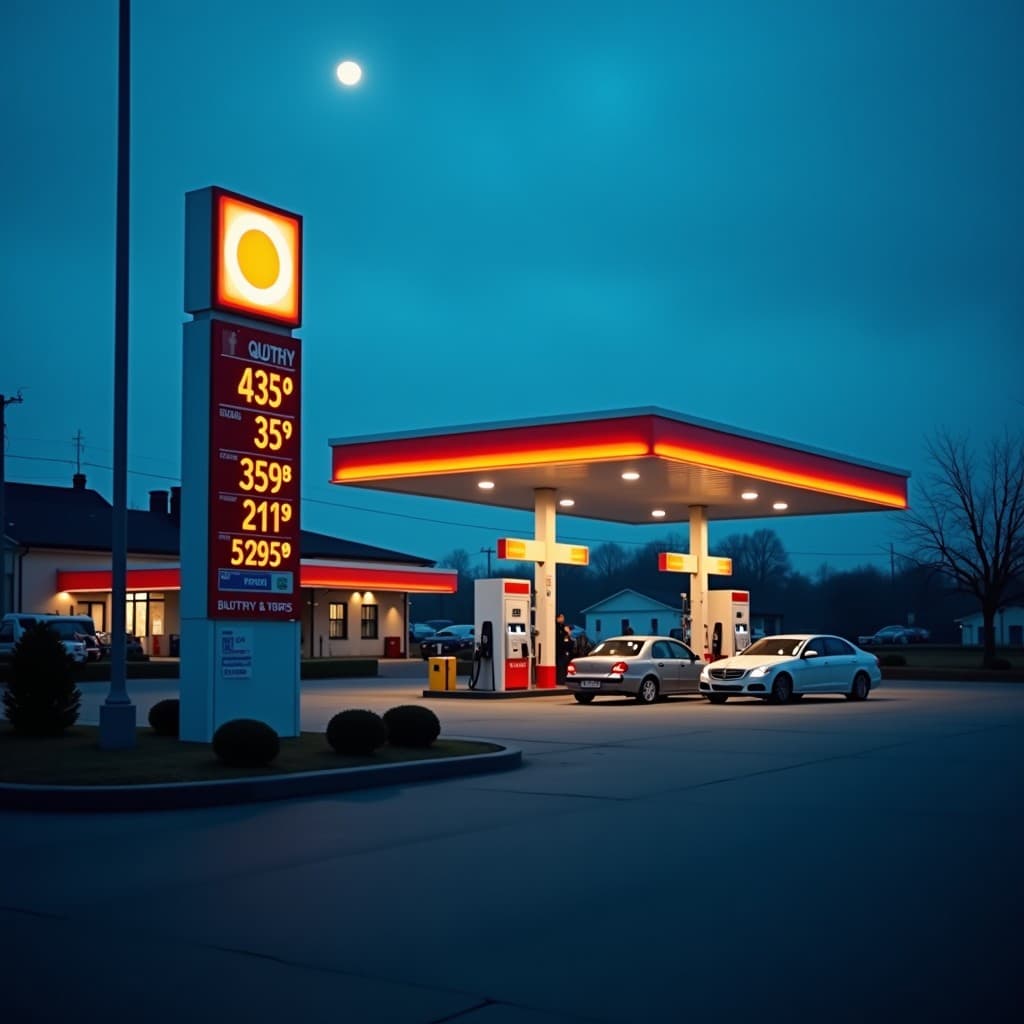
The European Commission is set to criticize Italy's reduction in excise duties on fuels in a report to be published this week, according to Euronews. The dispute centers on how Rome has chosen to respond to energy price volatility. Brussels argues that fiscal flexibility should be directed at vulnerable families and industries rather than applied as broad fuel subsidies, a position that reflects the Commission's broader framework for managing the energy crisis across the EU.
Italy has been requesting greater fiscal latitude from Brussels to address energy pressures, a demand rooted in the country's exposure to global energy markets and its reliance on imported fuel. The fuel duty cuts represent Rome's chosen response to these pressures, but the Commission views the approach as misaligned with EU priorities for targeted social support and fiscal restraint. The dispute reflects a recurring tension between national governments seeking autonomy in economic policy and Brussels' insistence on coordinated, rules-based fiscal management.
The timing of the Commission's criticism is significant. Energy prices have spiked across Europe in recent months, creating political pressure on governments to provide relief. Italy's decision to reduce fuel excise duties is a visible, immediate response that appeals to voters and businesses dependent on transportation. However, the Commission's forthcoming report will argue that such broad subsidies are inefficient, costly, and inconsistent with the fiscal discipline the EU expects from member states.
The European Commission's planned criticism of Italy's fuel duty cuts represents a broader clash over fiscal autonomy and energy policy coordination within the EU. According to Euronews, the Commission will argue in its report that Rome's approach to managing energy costs fails to align with EU priorities. The Commission contends that fiscal flexibility should be reserved for targeted support to vulnerable households and energy-intensive industries, not applied as blanket reductions in fuel excise duties.
Italy's position reflects the particular vulnerabilities of the Italian economy to energy price shocks. As a country with limited domestic energy production and heavy dependence on imported oil and gas, Italy faces acute pressure when global energy markets tighten. The fuel duty cuts are a direct response to this vulnerability, designed to shield consumers and businesses from the full impact of price increases. From Rome's perspective, the measure is a legitimate exercise of fiscal policy in response to an external shock.
The Commission's counterargument rests on principles of fiscal discipline and efficient targeting. According to Euronews, Brussels argues that broad fuel subsidies are economically inefficient because they benefit all consumers regardless of income or need. A household with high income and multiple vehicles receives the same duty reduction as a low-income family dependent on public transport. From the Commission's standpoint, the same fiscal resources could provide more effective relief if directed toward means-tested support for vulnerable populations or subsidies for energy-intensive industries facing genuine hardship.
The dispute also reflects broader EU concerns about fiscal sustainability. Italy carries one of the highest public debt levels in the eurozone, a fact that shapes Brussels' approach to Italian fiscal policy. The Commission has long insisted that Italy demonstrate fiscal discipline and structural reform to reduce its debt burden. Broad fuel subsidies, in this context, appear to the Commission as a step backward—an expansion of spending that diverts resources from debt reduction and structural improvement.
Energy policy coordination has become increasingly fraught within the EU since the 2022 energy crisis triggered by Russia's invasion of Ukraine. Member states have pursued divergent strategies to manage energy costs, with some implementing broad price caps or subsidies while others have focused on targeted support. The Commission has struggled to enforce a coherent approach, and the result has been a patchwork of national policies that sometimes work at cross-purposes. Italy's fuel duty cuts fit into this pattern of national divergence.
The political economy of fuel subsidies in Italy is complex. Fuel prices are highly visible to consumers and businesses, making them a potent political issue. A government that allows fuel prices to rise sharply faces immediate electoral consequences. Conversely, a government that cuts fuel duties can claim credit for providing relief. The Commission's preference for targeted support to vulnerable households is fiscally more efficient, but politically less visible and therefore less electorally rewarding for the government implementing it.
The Commission's forthcoming report will likely include specific recommendations for how Italy should restructure its energy support. According to Euronews, Brussels is expected to argue that Italy should redirect resources toward vulnerable families and energy-intensive industries. This might take the form of direct cash transfers to low-income households, subsidies for heating fuel in winter months, or targeted support for manufacturing sectors dependent on energy inputs. Such measures would be more narrowly tailored and, in theory, more cost-effective than blanket fuel duty reductions.
The dispute also touches on questions of EU fiscal governance. The Commission has authority to review member state fiscal policies under the Stability and Growth Pact and related frameworks. Italy's fuel duty cuts fall within the scope of this oversight. The Commission's criticism signals that Brussels intends to scrutinize how member states deploy fiscal flexibility, particularly in response to energy crises. This oversight is intended to prevent a race to the bottom in which member states compete to offer the most generous subsidies, a dynamic that could undermine fiscal discipline across the bloc.
Italy's relationship with the Commission on fiscal matters has been contentious in the past. The country has repeatedly clashed with Brussels over spending plans, deficit targets, and structural reforms. The fuel duty dispute is the latest iteration of this ongoing tension. From Italy's perspective, the Commission is overly rigid in its fiscal requirements and insufficiently attentive to the real economic pressures facing member states. From the Commission's perspective, Italy requires external discipline to ensure fiscal sustainability and structural reform.
The energy crisis itself provides context for understanding both Italy's and the Commission's positions. Global energy prices have been volatile, driven by geopolitical tensions, supply disruptions, and demand fluctuations. Member states facing high energy costs have legitimate reasons to seek relief for their populations and businesses. However, the Commission's concern is that uncoordinated national responses to energy crises can create inefficiencies and undermine the coherence of EU energy policy. A coordinated approach, in theory, would distribute the burden of adjustment more fairly across the bloc.
The Commission's report will be published this week, according to Euronews, and will likely include not only criticism of Italy's fuel duty cuts but also recommendations for alternative approaches. Italy will then face a choice: modify its policy in response to Commission pressure, defend its approach and risk further friction with Brussels, or seek a compromise that addresses some of the Commission's concerns while maintaining elements of the fuel duty reduction. The outcome will depend partly on the political strength of Italy's government and partly on how much pressure the Commission is willing to exert.
The broader implication of this dispute is that energy policy and fiscal policy are becoming increasingly intertwined in EU governance. Member states cannot simply choose energy policies in isolation; they must also satisfy Commission requirements for fiscal discipline and structural reform. This constraint limits the autonomy of member states to respond to energy crises in ways that their governments and electorates might prefer. The tension between national autonomy and EU coordination will likely persist as long as energy markets remain volatile and member states face divergent pressures.
Looking ahead, the Commission's criticism of Italy's fuel duty cuts may influence how other member states approach energy support. If the Commission successfully pressures Italy to restructure its approach, it may signal to other governments that broad fuel subsidies are not acceptable under EU fiscal rules. Conversely, if Italy resists Commission pressure and maintains its fuel duty cuts without significant modification, it may embolden other member states to pursue similarly autonomous energy policies. The outcome of this dispute will therefore have implications beyond Italy alone.