
ECONOMY
The hidden cost of cheap harvests in southern Italy
International coverage of the Calabria killings forces a reckoning with the labour system that keeps Italian produce affordable
Economy Desk592 wordsEdition №5Friday, 5 June 2026 — Edition № 5
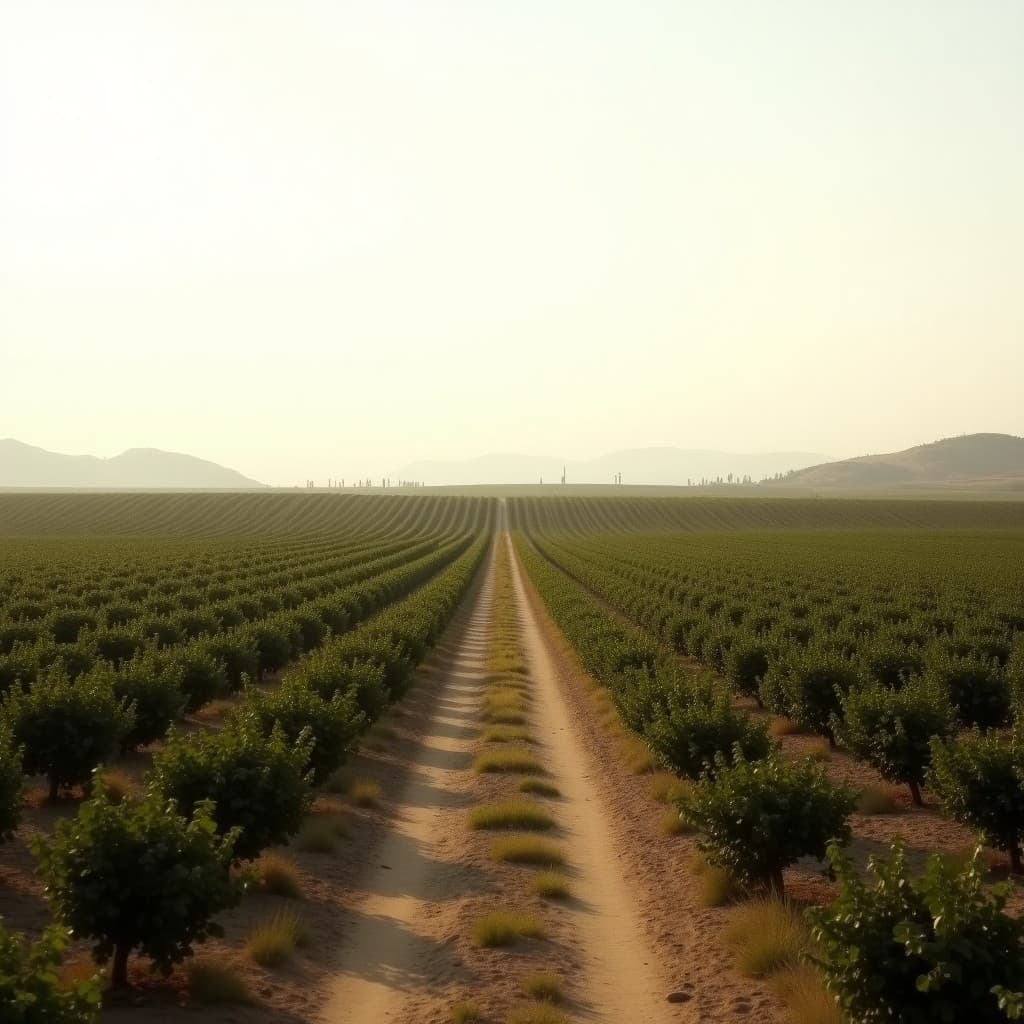
The murders of four men — three Afghans and one Pakistani, reportedly employed as fruit pickers — at a petrol station in Amendolara, Calabria, have drawn sustained attention from the international press this week. The Guardian, France 24, the New York Times and Politico Europe all reported the case within twenty-four hours of one another, each framing it not as an isolated crime but as a window into a structural feature of Italy's rural economy: the caporalato, a system of criminal gangmaster labour that supplies cheap, largely undocumented workers to farms across the Mezzogiorno.
Politico Europe noted that two men have been arrested in connection with the killings, and that investigators are examining links to organised crime. France 24 described the conditions the men had been living under as 'slave-like'. The New York Times placed the episode within what it called 'a system of criminal labour trafficking'. What unites the international coverage is the insistence that this is an economic story as much as a criminal one: the caporalato exists because it is cheap, and it is cheap because it is tolerated.
The macroeconomic backdrop matters here. Italy's GDP grew by just 0.69 percent in 2024, according to data from the World Bank. In an economy expanding at that pace, the pressure on agricultural margins is real and persistent. The Mezzogiorno, which accounts for a disproportionate share of Italy's fruit and vegetable output, has long operated with labour costs that formal employment rules would make unviable for many small producers. The caporalato fills that gap — and the gap, in turn, is partly a product of the country's broader growth problem.
Unemployment stood at 6.39 percent in 2025, a figure that looks moderate by historical Italian standards but conceals wide regional divergence. Youth unemployment and underemployment in Calabria and neighbouring regions run far higher than the national average, which is one reason migrant workers — often without legal status and therefore without recourse — are so easily substituted for local labour. The supply of vulnerable workers is, in effect, a subsidy to producers who cannot or will not pay regulated wages.
The euro's current strength adds a further layer of complexity. With the EUR/USD rate at 1.1614 as of early June 2026, and the euro having traded above 1.17 against the dollar as recently as a month ago, Italian agricultural exports face a quiet competitiveness squeeze in dollar-denominated markets. That pressure does not excuse the exploitation the international press has documented, but it helps explain why the incentive to cut labour costs remains so powerful in the sector.
Inflation in Italy ran at under one percent in 2024 — 0.98 percent on the World Bank measure — which kept consumer food prices low and, paradoxically, reduced the urgency felt by buyers and retailers to ask questions about supply chains. When prices are stable, the political economy of scrutiny weakens. The international coverage of Amendolara may change that calculus, at least temporarily, by making the human cost of low-price produce visible in a way that aggregate statistics do not.
What the foreign press is, in effect, arguing — across outlets as different as the Guardian and Politico Europe — is that Italy's agricultural south is running a labour market that the formal economy pretends does not exist. The Italian government has legislated against caporalato before; enforcement is the persistent failure. Whether the international attention generated by this week's killings translates into sustained institutional pressure, or fades as the news cycle moves on, is the question that the Economy Desk will continue to track.