
LIGURIA
Ceuta crisis tightens Schengen, a test for Genoa's ferry links
Italy's suspension of Schengen with Spain hits air and sea travel
Marina Doria424 wordsEdition №66Monday, 3 August 2026 — Edition № 66
Italy said Friday it had suspended its Schengen agreement with Spain, following the influx of migrants into Madrid's Ceuta enclave in North Africa, bordering Morocco, according to The Local Italy.
The Guardian reported the measure will impact people travelling by plane or boat between the two countries, as the EU grapples with one of its largest migrant crises in recent years.
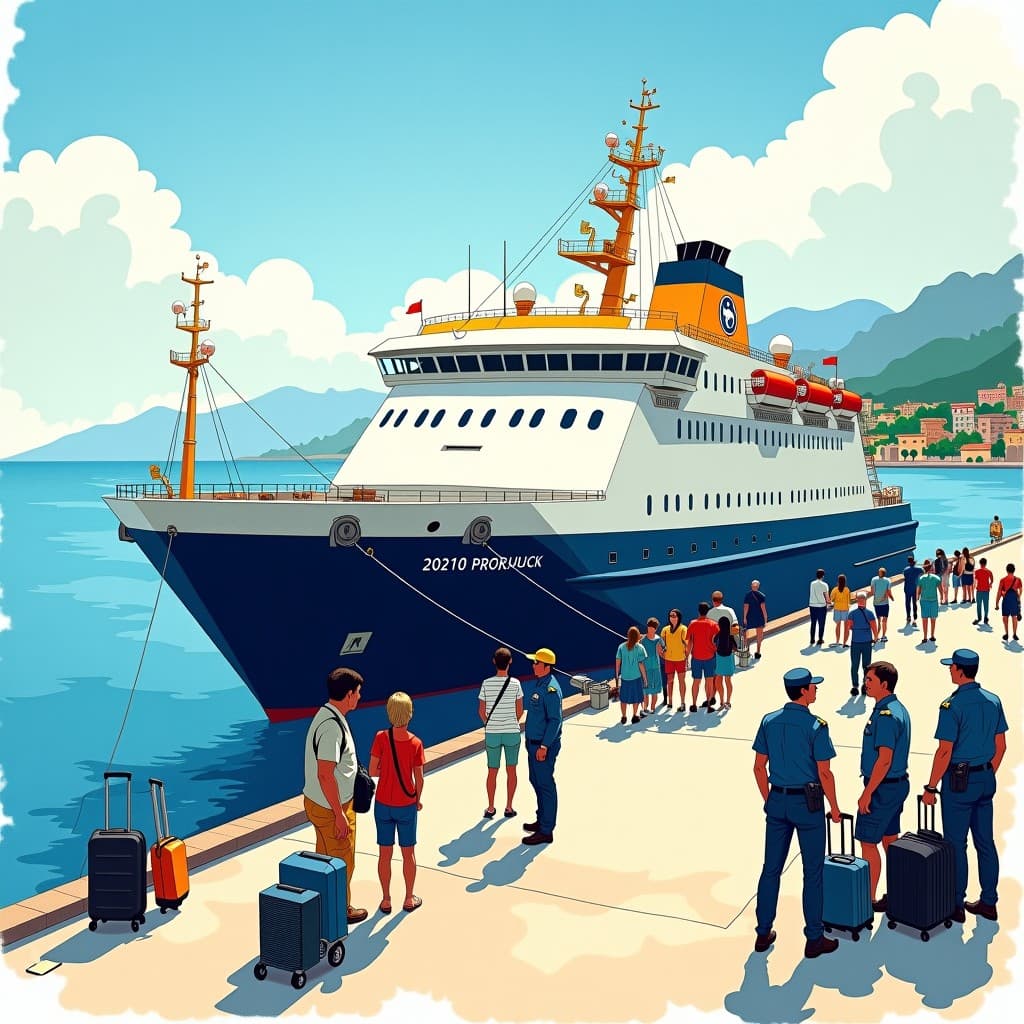
For Genoa, the suspension carries direct weight: the city's port is a major terminal for ferry and cruise traffic along the Western Mediterranean, with regular sailings connecting the Ligurian coast to Spanish ports.
France 24 reported that France has also tightened border checks and increased police numbers at its Spanish border, as the EU responds to an influx that officials said Saturday had left at least 67 people dead. The Guardian's live coverage noted Spanish Prime Minister Pedro Sánchez visited the Tarajal border crossing in Ceuta, decrying a 'violation of territorial integrity' as other EU countries criticised Madrid over the incident.
The Schengen suspension means travellers between Italy and Spain will face passport checks at airports and ports, a reversal of the border-free travel that has defined the zone. The Local Italy noted that a majority of EU countries have called for emergency talks on the sudden inflow of tens of thousands of migrants into Ceuta, with some members floating the idea of shutting Spain out of the zone entirely — a question The Local Italy examined separately, asking whether an EU member state can be kicked out of Schengen at all.
For the port of Genoa, the practical effect is likely to be slower passenger processing at ferry terminals, where summer schedules bring thousands of travellers daily to and from Spain. The Guardian's coverage did not specify how port operators in Genoa or elsewhere would implement the checks, but the suspension adds friction to a corridor that also carries commercial freight between Italy and the Iberian peninsula.
The crisis traces to a surge of migrants crossing from Morocco into Ceuta, with the Guardian reporting at least 57 deaths and as many as 50,000 entries in a single push. France 24 put the number at about 60,000, noting Spain's decision to deploy military to restore order. Italy's move, announced Friday, was framed as a response to the pressure on the EU's external border, a stance that resonates in Genoa, a city historically attentive to Mediterranean migration routes.
The longer-term question, as The Local Italy's analysis noted, is whether the Schengen framework can absorb such shocks. For now, the suspension stands as a concrete disruption to normal travel, and the Genoa waterfront — a hub for both passengers and cargo — will be among the first places where its effects are visible.