
LAZIO
Chicago Mayor Finds Papal Ally in Social Justice Push
Brandon Johnson's Vatican meeting with Pope Leo XIV signals the Church's engagement with U.S. urban politics on migration and inequality.
Davide Ruspoli1,356 wordsEdition №5Friday, 5 June 2026 — Edition № 5
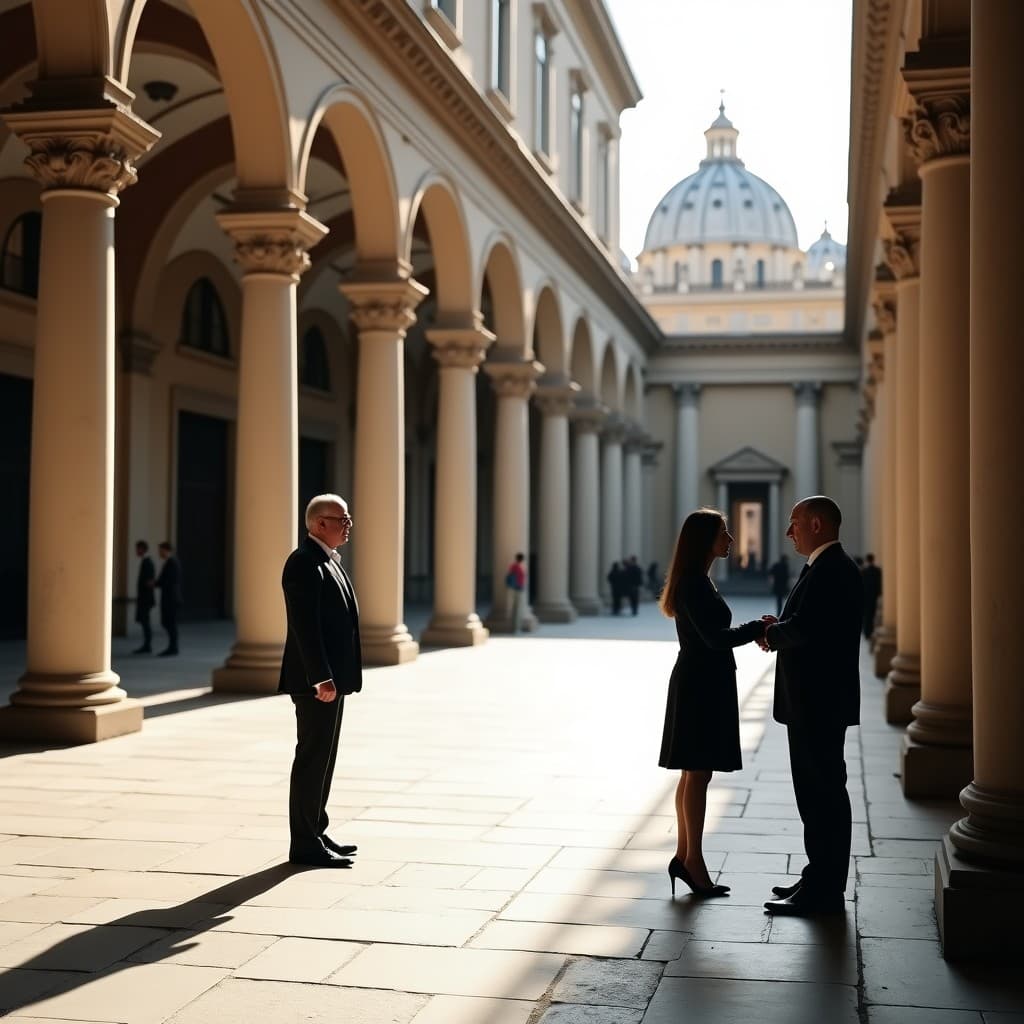
Chicago Mayor Brandon Johnson visited the Vatican in late May and emerged describing Pope Leo XIV as a key ally in advancing social justice, migration reform, and reparations. According to reporting from the Associated Press and the Chicago Tribune, Johnson presented the Pope with Chicago-themed gifts and emphasized their shared roots and priorities. The meeting signals a new phase of Vatican engagement with U.S. urban politics, particularly on issues affecting vulnerable communities.
Johnson told the Associated Press that he was "incredibly elated and proud" of the Pope, a fellow Chicagoan who ascended to the papacy in 2024. The mayor framed the encounter not as a ceremonial courtesy but as a strategic alignment between a major American city and the global Church on questions of economic justice and migration. The Chicago Tribune reported that Johnson predicted a "revival of faith" in Chicago following the trip, suggesting he views the Pope's moral authority as a resource for his own political agenda.
The visit underscores how Pope Leo XIV, despite his position as head of a 2,000-year-old institution, is actively cultivating relationships with contemporary political leaders. His willingness to meet with Johnson and to discuss reparations—a contentious issue in American politics—indicates a papacy prepared to engage with secular governance on terms set by modern social movements rather than traditional Church teaching alone.
The Vatican meeting occurred at a moment when migration and social inequality dominate political discourse in both the United States and Europe. Johnson, elected mayor of Chicago in 2023, has made migration and racial justice central to his platform. Chicago has absorbed thousands of asylum seekers bused from the U.S. southern border in recent years, straining city services and becoming a flashpoint in national debate over immigration policy.
By meeting with Johnson and affirming his priorities, Pope Leo XIV positioned the Vatican as a moral voice supporting sanctuary cities and migrant protection. The AP reported that Johnson cast the Pope as a "powerful global ally," language that elevates the encounter beyond diplomatic courtesy into a statement of shared purpose. This framing matters: it suggests that the Church's institutional weight backs Johnson's policy positions, not merely his personal faith.
The Pope's Chicago origins are central to the meeting's significance. Leo XIV was born in the city and served as a priest and bishop there before his election to the papacy. This biographical fact allows Johnson to claim a special relationship: two Chicagoans, separated by vast institutional power but united by place and purpose. The Chicago Tribune's coverage emphasized this connection, reporting that Johnson presented the Pope with Chicago-themed gifts and met with the Pope at the American University of Rome, a setting that bridged the Vatican and the American context.
Johnson's prediction of a "revival of faith" in Chicago following the trip is a political calculation as much as a spiritual claim. Chicago is a city with a long Catholic tradition but also one where church attendance has declined, particularly among younger and working-class populations. By associating himself with the Pope and the Pope's moral authority, Johnson seeks to rebuild the Church's institutional presence in urban politics. He is, in effect, recruiting the papacy as a partner in his governance agenda.
The Vatican's receptiveness to this partnership reflects Pope Leo XIV's broader strategy of re-engaging the Church with secular power structures. Previous popes, particularly John Paul II and Benedict XVI, maintained a more cautious distance from political leaders, emphasizing the Church's independence from state interests. Leo XIV, by contrast, appears willing to collaborate with elected officials on shared policy goals, provided those goals align with Catholic social teaching on dignity, justice, and the common good.
From Rome's institutional perspective, the Johnson meeting serves multiple purposes. It demonstrates the Pope's relevance to contemporary American politics. It signals to other mayors and governors that the Vatican is open to dialogue on migration and social justice. It also provides the Pope with a platform to influence U.S. policy indirectly: Johnson's invocation of papal support for his positions carries weight with Catholic voters and community organizations in Chicago and beyond.
The meeting also reflects the Vatican's evolving stance on migration. The Church has long taught that migrants deserve protection and dignity, but under Leo XIV, this teaching is being actively deployed in support of specific political positions. The Pope's engagement with Johnson suggests that the Vatican sees migration policy not as a technical matter for governments to decide but as a moral issue on which the Church should take sides.
Chicago's role as a sanctuary city and a destination for asylum seekers makes it a natural focal point for Vatican attention. The city has become a symbol of American urban resistance to restrictive immigration policy. By meeting with Johnson, the Pope aligns the Church with that resistance, at least rhetorically. Whether this alignment translates into concrete Vatican action—such as mobilizing Catholic organizations to support Johnson's policies or issuing papal statements on U.S. migration law—remains to be seen.
The reparations dimension of the meeting is particularly significant. Johnson has made reparations for slavery a policy priority in Chicago, an issue that remains marginal in mainstream American politics. By discussing reparations with the Pope and receiving papal affirmation, Johnson gains moral authority for a position that many political leaders avoid. The Vatican's engagement with reparations as a justice issue could influence how Catholic organizations and voters approach the question.
The meeting also has implications for the Vatican's relationship with the U.S. government more broadly. The State Department and the White House maintain formal diplomatic relations with the Holy See. By cultivating relationships with mayors and other subnational leaders, the Pope is building a parallel network of influence that does not depend on federal-level diplomacy. This approach allows the Vatican to shape American politics at the grassroots level, where migration and social justice issues are most acutely felt.
From Lazio's perspective, the Johnson visit demonstrates how Rome—the seat of both the papacy and the Italian state—functions as a stage for global political theater. The Vatican's engagement with American urban leaders reflects the Church's claim to universal moral authority. It also shows how the Pope uses his position in Rome to influence politics thousands of miles away, a form of soft power that complements and sometimes complicates the Italian government's own foreign policy.
The Chicago Tribune's coverage noted that Johnson presented the Pope with gifts and that members of a Chicago delegation entered the Vatican gates. These details underscore the ceremonial dimension of the visit: it was not a private audience but a public event designed to generate media coverage and political legitimacy. Johnson's prediction of a "revival of faith" in Chicago is thus both a spiritual claim and a political strategy, using the Pope's moral authority to reinvigorate the Church's role in urban governance.
Looking forward, the Johnson-Leo XIV meeting may establish a template for how contemporary mayors and governors engage with the Vatican. If other leaders follow Johnson's example and seek papal endorsement for their social justice agendas, the Vatican will face choices about which causes to support and how far to go in aligning itself with specific political figures. The Pope's willingness to meet with Johnson suggests he is prepared to take those risks, viewing the Church's moral influence as worth the complications that come with political entanglement.