
TOSCANA
China's Tourism Boom Reshapes Global Competition for Visitors
As Chinese destinations attract record numbers, European heritage sites like Tuscany face pressure to compete for a shrinking pool of international travellers.
Costanza Bardi1,389 wordsEdition №5Friday, 5 June 2026 — Edition № 5
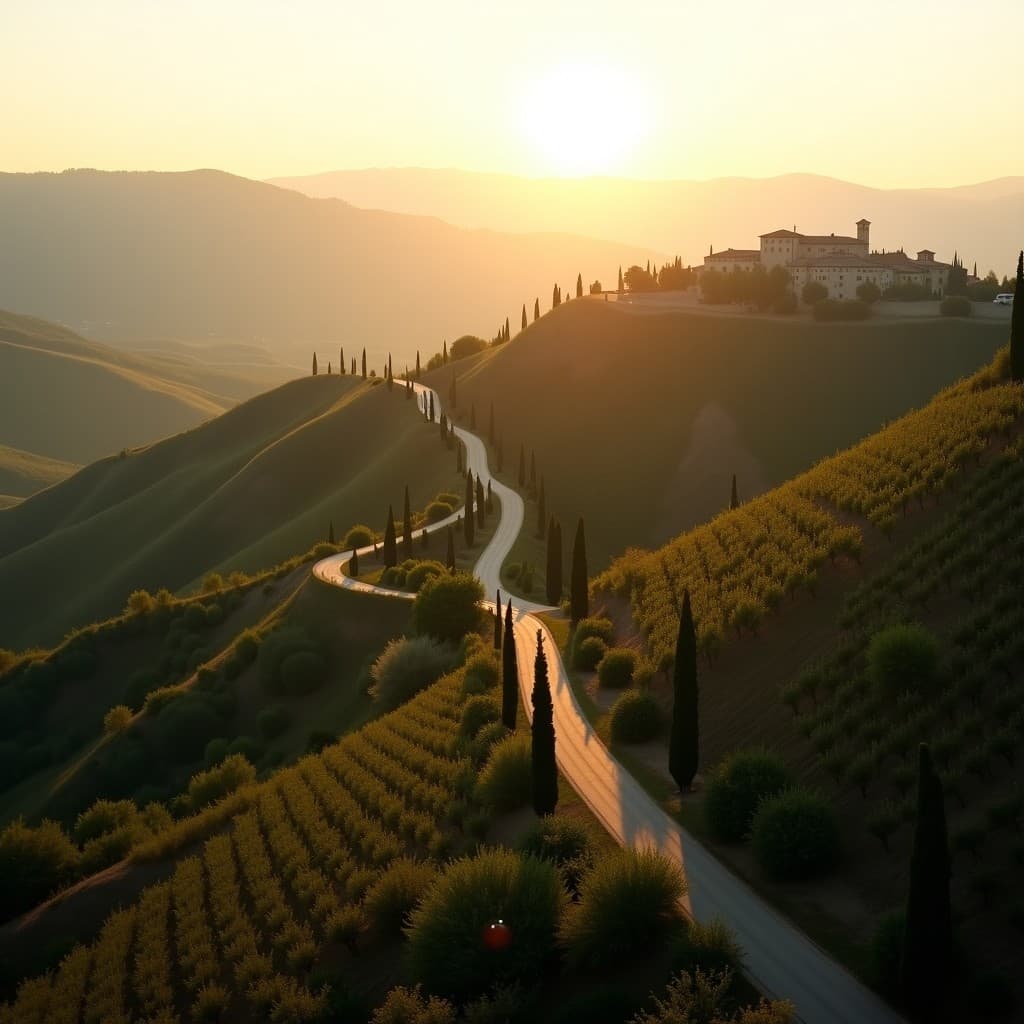
China is on track to become the world's leading tourism economy, according to Travel Weekly Australia. The country welcomed a record 68 million international visitors in 2025, with arrivals surging nearly three times the global growth rate. This represents not merely growth but a structural reordering of global tourism flows—one that has direct consequences for destinations like Tuscany that have long assumed their position in the international traveller's itinerary.
The scale of China's tourism expansion is historically significant. Pre-pandemic, China ranked third globally in international visitor arrivals; it is now consolidating a position at the top. The surge reflects both China's economic recovery and a deliberate strategy to market itself as a destination. For European heritage regions, the implication is clear: the pool of international tourists is not infinite, and the competition for them is intensifying.
Tuscany's tourism economy rests on a particular assumption: that wealthy international travellers will prioritise European cultural heritage, that the Renaissance will always draw visitors, that the postcard countryside will remain desirable. China's tourism boom suggests this assumption is no longer safe. Travellers with rising incomes are choosing China; the traditional European circuit is becoming one option among many, not the default.
Travel Weekly Australia reported that China's visitor arrivals in 2025 surged nearly three times the global growth rate, with spending surpassing pre-pandemic levels for the first time. This is not a recovery; it is an expansion into new territory. The foreign press has begun to analyse what this means for the global tourism hierarchy. For decades, Europe—and particularly destinations like Italy, France, and Spain—occupied the apex. The assumption was that cultural tourism, heritage tourism, the Grand Tour tradition, would always draw the world's wealthiest and most educated travellers.
China's strategy has been to compete on multiple fronts simultaneously. Tourism-review.com reported that China's tourism boom is being driven by cultural intellectual property and digital empowerment—new engines that are attracting both domestic and international visitors. The country is not simply offering heritage; it is offering a narrative of cultural continuity, technological sophistication, and scale that appeals to contemporary travellers. The Forbidden City, the Great Wall, the Terracotta Army—these sites have the same historical weight as the Uffizi or the Duomo, but they are being marketed with modern tools and embedded in a story of national renewal.
The regional impact on Tuscany is already visible in the data. International visitor numbers to Florence have plateaued in recent years, even as global tourism has grown. This is partly due to overtourism—the city has reached saturation—but it is also due to competition. Travellers who might once have spent two weeks in Italy now spend one week in Italy and one week in China. The pie is not growing; it is being divided differently.
What makes China's competition particularly acute is that it targets the same demographic as Tuscany: educated, affluent, culturally curious travellers. These are not backpackers or budget tourists; they are the high-value visitors that heritage destinations depend on. They stay in good hotels, eat in restaurants, visit museums, buy local products. They are the visitors who sustain the economy while theoretically doing less environmental damage than mass tourism. If they choose China instead, the impact is significant.
The foreign press has begun to frame this as a broader shift in global power and cultural influence. China's tourism boom is not separate from its economic and geopolitical rise; it is an expression of it. As China's wealth and confidence grow, so does its ability to market itself as a destination. The narrative that Europe is the inevitable centre of cultural tourism—that Paris, Rome, Florence are the pilgrimage sites of the educated world—is being challenged. China is offering an alternative narrative, and travellers are listening.
For Tuscany specifically, the challenge is compounded by the region's dependence on a particular kind of tourism. Wine tourism, agritourism, heritage tourism—these are all built on the assumption that visitors will come for the experience of a particular place, that authenticity and tradition are the draw. But China is also offering authenticity and tradition, and it is doing so at scale. The Tuscan countryside cannot compete with China on visitor numbers; it can only compete on the quality of the experience and the depth of the cultural engagement.
The foreign travel press has noted that China's tourism infrastructure is improving rapidly. High-speed rail networks, luxury hotels, digital payment systems, multilingual guides—the practical barriers to visiting China are falling. At the same time, Tuscany's infrastructure is straining under current visitor pressure. The Uffizi has limited capacity; the roads are congested; the housing market is distorted by tourism. From a traveller's perspective, China is becoming easier to visit, while Tuscany is becoming harder.
There is also a generational dimension. Younger affluent travellers, particularly from Asia and the Middle East, may have less attachment to the European Grand Tour narrative than their parents. For them, China is not an alternative to Europe; it is simply another destination, perhaps more novel, perhaps more aligned with their own cultural reference points. The assumption that heritage tourism flows inevitably toward Europe is being tested.
The economic consequence for Tuscany is not yet catastrophic, but it is concerning. Tourism accounts for roughly 12 per cent of the region's GDP; a sustained shift in visitor flows would be significant. The wine industry, which depends partly on wine tourism and on the prestige associated with Tuscan heritage, would also be affected. If international visitors are choosing China, Tuscan wine loses some of its cultural cachet.
What the foreign press has not yet fully explored is how Tuscany might respond. The region could attempt to compete on scale—building more hotels, expanding capacity—but this would only accelerate the overtourism problem. It could attempt to compete on exclusivity—positioning itself as a high-end, limited-access destination—but this would reduce visitor numbers and thus revenue. Or it could attempt to compete on authenticity and depth, offering experiences that China cannot match. This would require investment in cultural programming, in the preservation of working landscapes, in the maintenance of the communities that give Tuscany its character.
The irony is that the very things that make Tuscany attractive—its small scale, its historical continuity, its sense of a lived place rather than a destination—are the things that make it difficult to scale up to compete with China. China can build new museums, new hotels, new infrastructure at will. Tuscany can only preserve what it has. The competition is not symmetrical.
For now, Tuscany remains a major destination. But the trajectory is clear: the global tourism market is diversifying, and Europe's historical monopoly on cultural tourism is ending. Destinations that depend on that monopoly will need to adapt. The question is whether Tuscany will do so before the change becomes irreversible.