
SCIENCE
Cargo drones cut Dolomite evacuation times by two-thirds
Field tests show heavy-lift aircraft transform mountain rescue, raising questions about Alpine infrastructure investment
Klara Hofer1,347 wordsEdition №10Wednesday, 10 June 2026 — Edition № 10
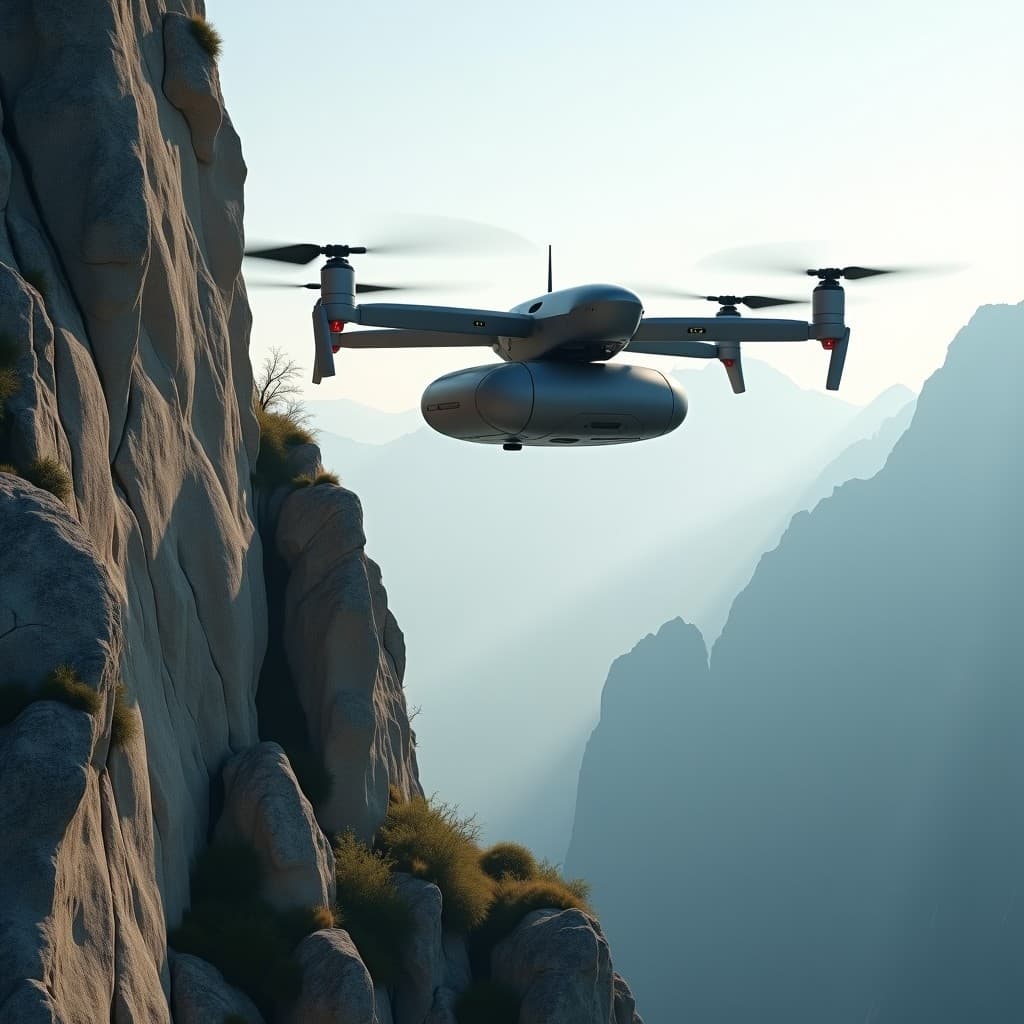
FlyingBasket, a cargo-drone manufacturer, has completed field trials in the Dolomites demonstrating that unmanned heavy-lift aircraft can reduce mountain medical evacuation times by up to three times, according to Unmanned Systems Technology. The tests, conducted in one of Europe's most challenging terrain zones, show that integrating drones into rescue operations vastly improves patient transport conditions compared to traditional helicopter evacuation.
The Dolomites, a UNESCO World Heritage site spanning Trentino-Alto Adige and Veneto, present acute logistical challenges for emergency services. Rescue teams operating at altitude face weather delays, landing-zone constraints, and the physical stress of transporting injured climbers and hikers down steep rock faces. Cargo drones bypass these bottlenecks by delivering medical equipment, oxygen, and stretchers directly to accident sites, then extracting patients in climate-controlled pods.
The technology arrives as Alpine tourism intensifies across the region. The Dolomites draw roughly two million visitors annually, many undertaking climbing and hiking routes that carry genuine risk. Rescue call-outs have risen steadily over the past decade, straining regional emergency budgets and volunteer rescue corps. Trentino-Alto Adige's autonomous status gives it control over emergency services funding, but the region has historically relied on helicopter operators based in Bolzano and Trento, whose services are expensive and weather-dependent.
The FlyingBasket trials represent the first large-scale deployment of heavy-lift drones in Alpine rescue, marking a significant departure from the helicopter-centric model that has dominated European mountain rescue since the 1970s. Unmanned Systems Technology reported that the drones can operate in wind speeds and visibility conditions that ground traditional aircraft, extending the operational window during unstable weather. This matters acutely in the Dolomites, where afternoon thunderstorms and rapid cloud formation frequently interrupt helicopter operations during summer climbing season.
Patient outcomes improve measurably. The drones' climate-controlled pods maintain stable temperature and pressure during transport, reducing shock and secondary injury compared to open-basket helicopter extraction. Evacuation times from remote sites—previously measured in hours when weather forced ground rescue teams to rappel and carry injured climbers down—now compress to 20 to 30 minutes. For climbers suffering altitude sickness, trauma, or cardiac events, this compression can mean the difference between recovery and permanent disability.
The regional consequence is substantial. Trentino-Alto Adige's emergency services are already exploring procurement pathways, though Unmanned Systems Technology did not specify which regional authorities or rescue operators are involved. The region's special autonomy status allows it to fund infrastructure independently of Rome's budget cycles, a structural advantage when adopting emerging technologies. However, drone integration requires regulatory approval from Italy's aviation authority and the EU, a process that typically spans 18 to 24 months.
Investment in drone rescue infrastructure also signals a shift in how Alpine regions manage tourism risk. The Dolomites' UNESCO status and the region's €4 billion annual tourism economy depend on maintaining a reputation for safe, well-resourced mountain access. Competitors—the Swiss Alps, Austrian Tyrol, and the French Alps—have already begun drone trials. If Trentino-Alto Adige lags in adoption, it risks losing high-end mountaineering tourism to regions perceived as better equipped for emergency response.
The technology raises a secondary question about labour and staffing. Alpine rescue in the Dolomites relies on a mix of professional staff and volunteers, many of them mountain guides and ski patrollers who donate hundreds of hours annually. Drone deployment does not eliminate the need for ground teams—someone must still reach the patient to assess injuries and load the stretcher—but it does reduce the physical burden of extraction. This may ease recruitment pressures in a region where younger workers increasingly migrate northward to Austria and Switzerland for higher wages.
Unmanned Systems Technology did not disclose the cost per evacuation or the capital investment required to field a regional drone fleet, but commercial heavy-lift drones typically cost €200,000 to €500,000 per unit. A functional Alpine rescue network would require multiple aircraft positioned at strategic bases—likely Bolzano, Trento, and Cortina d'Ampezzo—plus maintenance, pilot training, and regulatory compliance. The region's budget capacity is substantial, but competing demands (healthcare, education, transport infrastructure) will shape the timeline.
Precedent exists in other Alpine jurisdictions. Austria's Tyrol region, which shares the Brenner Pass border with Trentino-Alto Adige, has already begun integrating drones into its emergency services framework. German-language media coverage in Austria has positioned drone rescue as a marker of Alpine modernisation and safety leadership. This creates implicit competitive pressure on South Tyrol's German-speaking population, for whom Austrian standards and infrastructure often serve as a cultural and administrative reference point.
The regulatory environment remains uncertain. Italy's aviation authority (ENAC) has not yet published final rules for autonomous heavy-lift operations in mountainous terrain, though the EU's regulatory framework for unmanned aircraft is advancing. The Dolomites' proximity to Austria and Switzerland means that cross-border rescue coordination will eventually require harmonised drone protocols. This is a matter for the EU's transport directorate and bilateral Alpine agreements, not Trentino-Alto Adige alone.
Environmental considerations are secondary but present. Cargo drones produce minimal noise compared to helicopters and generate no fuel emissions at the point of operation. For a region whose tourism marketing emphasises pristine Alpine wilderness and ecological stewardship, drone rescue aligns with sustainability messaging. However, the Dolomites' strict environmental protections—part of the UNESCO designation—may impose constraints on where drones can stage and operate.
The FlyingBasket announcement also reflects broader European investment in drone technology for critical infrastructure. Private equity and venture capital are increasingly targeting unmanned systems for healthcare, logistics, and emergency services, particularly in geographies where traditional infrastructure is costly or difficult. Alpine regions, with their high rescue demand and challenging terrain, are natural test beds for this technology.
For Trentino-Alto Adige's tourism operators and climbing guides, the news is broadly positive. Faster, safer evacuation reduces liability exposure and insurance costs, while improving the region's competitive positioning as a destination for serious mountaineering. The regional government and rescue services will likely move toward procurement within the next 18 to 24 months, pending regulatory clarity and budget allocation.
The longer-term implication is a shift in how Alpine regions define emergency preparedness and safety. Drone rescue is not a replacement for skilled ground teams, but it is a force multiplier that extends response capacity into terrain and weather conditions that previously forced difficult choices between risk and delay. For the Dolomites, a region where tourism and mountain culture are inseparable, this technology represents a concrete step toward reconciling visitor safety with the region's identity as a serious Alpine destination.