
MARCHE
6.2 Quake Strikes Tyrrhenian Sea; Marche Braces for Aftershocks
Strong tremor off southern coast revives memories of 2016 central Italy disaster and tests reconstruction efforts still underway
Elena Marcheggiani1,247 wordsEdition №5Friday, 5 June 2026 — Edition № 5
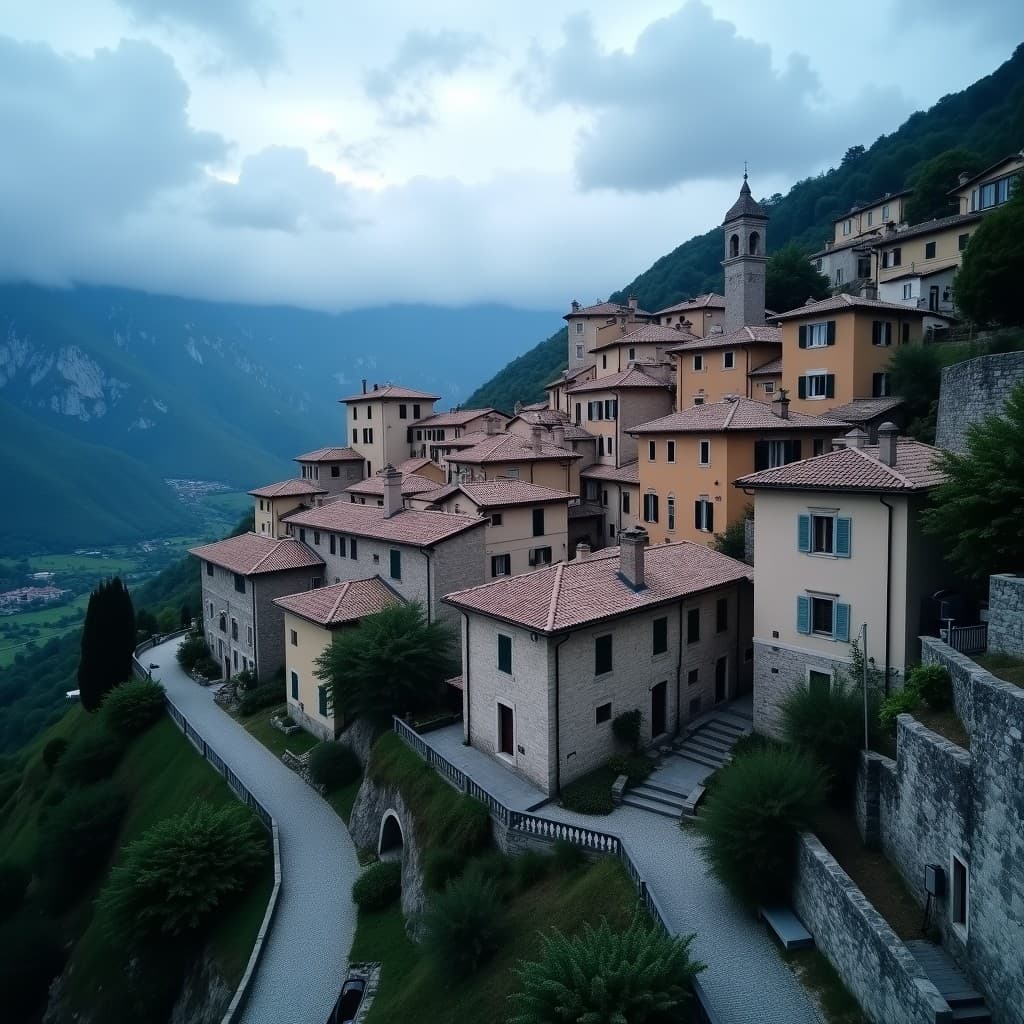
A 6.2-magnitude earthquake struck the Tyrrhenian Sea at 12:12 a.m. Central European time on Tuesday, June 1, about 11 miles southwest of Scarcelli, according to the United States Geological Survey. The temblor occurred in waters off southern Italy, well south of the Marche region, but seismologists cautioned that available data remained preliminary and subject to revision.
The quake arrived as central Italy continues to rebuild from the devastating 2016 earthquake sequence that killed nearly 300 people and left thousands homeless across Umbria, Lazio, and the southern Marche. That disaster exposed the fragility of the region's dispersed medieval towns and rural settlements, many of them constructed before modern building codes.
Foreign seismologists and disaster-management experts have long noted that Italy sits atop one of Europe's most active seismic zones, where the African and Eurasian tectonic plates collide. The Tyrrhenian Sea, where Tuesday's quake occurred, lies along a subduction zone that has produced major tremors throughout recorded history.
The New York Times's interactive earthquake tracker documented the event in real time, noting that the tremor's depth and location placed it outside the immediate risk zone for populated areas. However, the timing renewed focus on Italy's vulnerability to seismic events and the pace of reconstruction in regions still recovering from earlier disasters.
In Marche, the 2016 quakes caused significant damage to the province of Macerata and surrounding areas, destroying or severely damaging hundreds of buildings in small towns like Accumoli, Amatrice, and Visso. The region's economy—built on dispersed manufacturing districts, small family firms, and rural tourism—depends on the stability and connectivity of these small settlements. Reconstruction has proceeded unevenly, with some towns rebounding faster than others.
The earthquake sequence of 2016 killed 299 people in total and left approximately 25,000 homeless. In the months and years that followed, foreign correspondents covering Italy's recovery noted that the region's industrial-district model—where production is spread across many small towns rather than concentrated in large urban centers—made reconstruction both more complex and more essential to the regional economy.
Marche's shoe and leather manufacturers, furniture makers, and mechanical-engineering firms are embedded in the fabric of these small communities. When infrastructure is damaged, supply chains fragment. When housing stock is destroyed, workers and their families leave. Foreign economic analysts have tracked how the 2016 quakes accelerated emigration of younger workers from central Italy, a trend that compounds the region's already steep demographic decline.
The reconstruction effort in Marche has been overseen by a special commissioner appointed by the Italian government, with funding from the European Union's structural funds and the Italian state budget. Progress has been documented by international observers, including the European Commission's regional-development office, which has monitored how central Italy rebuilds while competing for investment and labor in a shrinking national population.
Tuesday's Tyrrhenian quake, though geographically distant from Marche, revived questions about the region's long-term seismic preparedness. Foreign disaster-management experts have noted that Italy's building codes, while strengthened after 2016, still leave older structures vulnerable. Many towns in Marche contain Renaissance-era buildings—including structures of international cultural significance, such as those in Urbino—that are difficult to retrofit without compromising their historical integrity.
The 2016 earthquakes also exposed gaps in Italy's disaster-response coordination. Foreign journalists covering the aftermath reported delays in aid distribution, bureaucratic obstacles to reconstruction permits, and frustration among residents waiting for housing assistance. The European Union's structural-fund reviews highlighted these administrative bottlenecks as a persistent challenge to recovery in peripheral regions.
Marche's fishing industry, centered on the Adriatic coast around Ancona, also depends on stable infrastructure. Ports, refrigeration facilities, and distribution networks were disrupted by the 2016 quakes. Recovery in the fishing sector has been slower than in manufacturing, partly because maritime infrastructure requires specialized expertise and partly because the sector faces separate pressures from EU fisheries regulations and climate-driven changes in fish stocks.
The regional tourism economy, built on Renaissance heritage sites, coastal resorts, and agritourism, similarly depends on stable towns and reliable transportation. Foreign travel writers and tourism analysts have noted that the 2016 quakes damaged cultural attractions and reduced visitor confidence in the region's stability. Recovery in tourism has been gradual, with some heritage sites still undergoing restoration.
Seismologists quoted in international media have emphasized that earthquakes of 6.2 magnitude, while significant, do not necessarily cause widespread damage if they occur in sparsely populated areas or at sufficient depth. The Tyrrhenian quake's location and depth meant that coastal towns in Campania and Calabria experienced the tremor but no major damage was immediately reported. However, the event underscored the reality that Italy remains in a state of constant seismic flux.
The broader context for Marche's vulnerability is demographic. The region's population has declined from about 1.5 million in 2010 to roughly 1.49 million today, with the steepest losses in inland towns most affected by the 2016 quakes. Young people have emigrated to northern Italy, other European countries, or abroad in search of stable employment and housing. Reconstruction efforts, while necessary, cannot reverse this outflow on their own.
Foreign economists studying Italy's regional disparities have noted that peripheral regions like Marche face a compounding crisis: aging populations, emigration of the young, infrastructure damage, and limited access to capital for private investment. Seismic risk adds another layer of uncertainty that deters both business investment and population retention.
The Italian government's reconstruction commissioner has reported progress to European Union officials, citing the completion of temporary housing, the reopening of schools, and the restoration of some historic buildings. However, foreign observers have noted that the pace remains slower than residents and businesses hoped. The Tyrrhenian quake, though distant, serves as a reminder that the region's recovery remains incomplete and that seismic risk is not a problem that reconstruction alone can solve.