
UMBRIA
6.2 Quake Rattles Tyrrhenian Sea; Inland Italy Braces
Strong tremor off western coast revives seismic anxiety in hill towns far from epicenter
Niccolò Mariani1,247 wordsEdition №5Friday, 5 June 2026 — Edition № 5
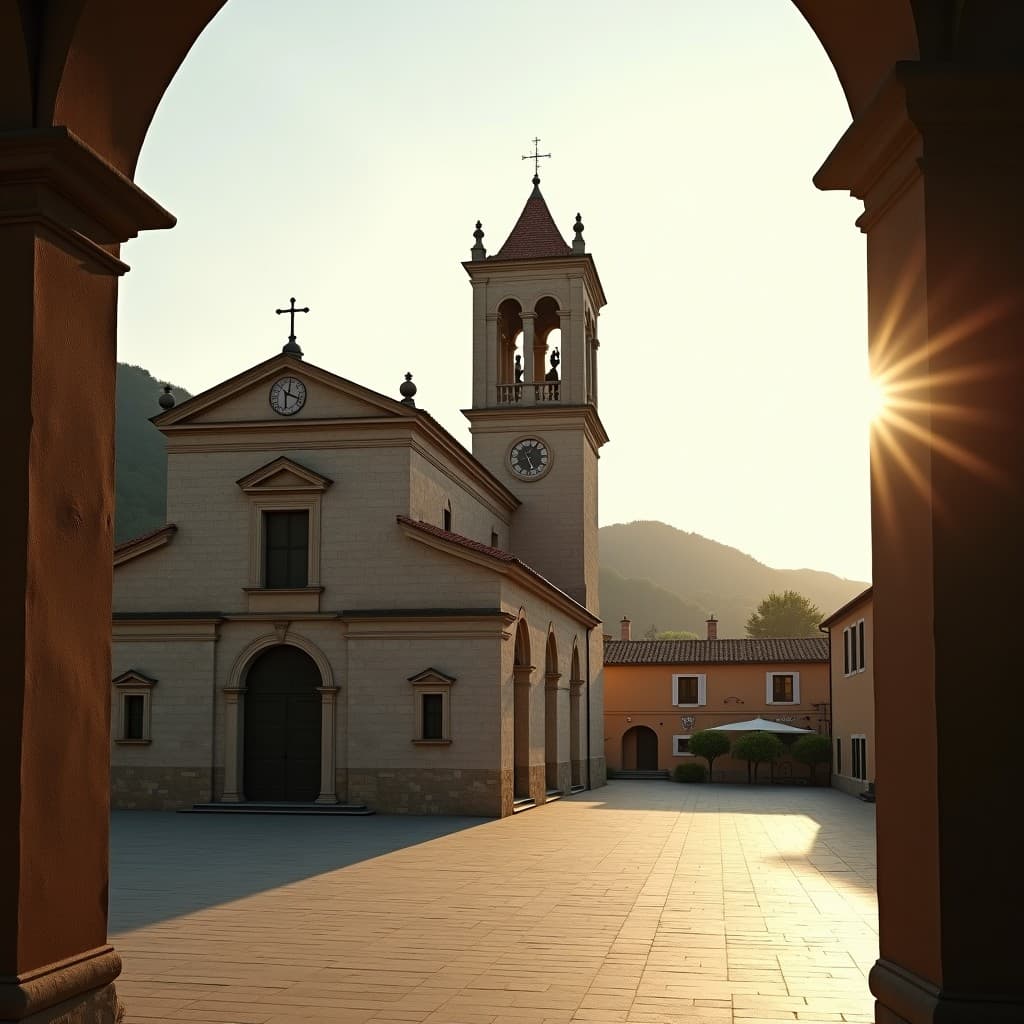
A strong earthquake measuring 6.2 on the magnitude scale struck the Tyrrhenian Sea early Tuesday, about 11 miles southwest of Scarcelli on Italy's western coast, according to the United States Geological Survey. The temblor occurred at 12:12 a.m. Central European time. Seismologists said they would continue to review available data and may revise the preliminary assessment as more information becomes available.
The epicentre lay in open water, far from major population centres, and no immediate reports of casualties or significant damage emerged from the coastal regions nearest the strike. Yet the event reverberated through the consciousness of communities across central Italy, where seismic memory runs deep and the built heritage — medieval churches, Renaissance palaces, hill-town piazzas — sits on foundations laid centuries before modern earthquake science.
In Umbria, the inland region where hill towns cluster in the Apennines, the tremor was felt as a reminder of fragility. Assisi, the Franciscan pilgrimage site that draws hundreds of thousands of visitors each year, experienced the shaking. The town's basilica complex, a UNESCO World Heritage site and one of the world's most visited religious monuments, survived intact, but the event stirred the region's long institutional memory of seismic catastrophe.
Italy sits on one of Europe's most active seismic zones. The Apennine Mountains, which run the length of the peninsula, mark the collision boundary between the African and Eurasian tectonic plates. Earthquakes are not rare; they are part of the geological fabric. Yet each tremor, especially one of this magnitude, revives the spectre of the 1997 Umbrian earthquakes, which damaged the Basilica of St. Francis in Assisi and killed dozens across the region.
The 1997 sequence — a series of powerful shocks centred near Foligno and Nocera Umbra, both in Umbria — caused structural damage to some of Italy's most precious religious buildings. The dome of the Basilica of St. Francis cracked; frescoes by Giotto and Cimabue were imperilled. The restoration effort took years and cost millions. The event became a watershed moment in Italian heritage conservation, forcing a reckoning with how to protect medieval and Renaissance structures in an active seismic zone.
Tuesday's quake, though offshore and preliminary in its assessment, landed in a region already acutely aware of seismic risk. The Tyrrhenian Sea, which separates mainland Italy from Sardinia and Corsica, is geologically active. Earthquakes there do not typically propagate inland with the same force they would if centred beneath the Apennines themselves. Yet the psychological impact of any significant tremor in Italy reverberates far beyond the epicentre, particularly in towns where cultural patrimony and public safety intersect.
Umbria's hill towns — Assisi, Perugia, Spoleto, Orvieto, Gubbio — depend heavily on tourism and pilgrimage. The Basilica of St. Francis alone receives more than a million visitors annually, many of them drawn by faith, art history, or both. The Spoleto Festival, one of Europe's premier summer arts events, draws international audiences to the region each June. Any disruption to the safety or accessibility of these sites carries economic and cultural consequences that ripple through the region's fragile inland economy.
The foreign press has long tracked Italy's seismic vulnerability as part of its broader coverage of the country's infrastructure challenges and cultural preservation efforts. Reuters, the Guardian, and the BBC have all reported extensively on how Italy balances earthquake preparedness with the conservation of irreplaceable heritage. The 1997 Umbrian earthquakes featured prominently in international coverage as a case study in the collision between natural hazard and human cultural legacy.
Tuesday's tremor, though centred offshore, prompted local authorities across central Italy to conduct routine safety checks on historic structures. In Umbria, officials at the Basilica of St. Francis and other major religious sites initiated standard post-earthquake protocols. No structural damage was reported, but the exercise itself underscored the permanent state of vigilance that seismic zones demand, especially where tourism and pilgrimage depend on visitor confidence in the safety of iconic buildings.
The broader context is one of demographic and economic fragility. Umbria, like much of inland Italy, has experienced steady population loss over the past two decades as young people migrate to larger cities or abroad. The region's economy rests substantially on tourism, agriculture, and small manufacturing. Any event — whether a natural disaster, a pandemic, or a security concern — that disrupts visitor flows poses an existential threat to small towns already struggling with depopulation.
The United States Geological Survey, which monitors global seismicity, will continue to analyse the Tuesday earthquake as more data arrives from Italian seismic networks and international monitoring stations. Preliminary magnitude assessments sometimes shift as fuller datasets become available. The USGS noted that revisions to the initial 6.2 reading were possible, though the broad characterisation of a strong, offshore event was unlikely to change substantially.
For Umbria's heritage custodians and tourism operators, the immediate concern was reassurance. The region's tourism boards and cultural institutions moved quickly to communicate that sites remained open and safe. The Spoleto Festival, scheduled to begin later in June, proceeded with no announced disruptions. Yet the tremor served as a reminder that seismic risk is not historical; it is present and ongoing.
Italy's relationship with earthquake preparedness has evolved significantly since 1997. Building codes have been strengthened, particularly for new construction in seismic zones. Heritage conservation practices now routinely incorporate seismic reinforcement techniques designed to protect historical structures without altering their appearance or integrity. Yet the challenge remains acute: how to preserve buildings that are centuries old, architecturally irreplaceable, and situated in zones where the earth itself is unstable.
The international conservation community has watched Italy's efforts closely. UNESCO, which oversees the World Heritage status of sites like the Basilica of St. Francis, has supported research into seismic resilience for historic structures. The European Union has funded heritage conservation projects in Italy that incorporate earthquake-resistant design principles. These efforts reflect a global recognition that some places — culturally, spiritually, and historically significant — must be protected not just from the ravages of time but from the geological forces that underlie them.
Tuesday's earthquake, though it caused no reported harm, underscored the permanent tension in which Umbria and other seismic regions of Italy exist: the need to welcome the world to fragile places while maintaining the infrastructure and preparedness to protect both visitors and heritage in the face of natural forces beyond human control.