
SICILIA
Etna's lava lights the summer sky as Europe's giant stirs
Mount Etna sends rivers of bright orange lava down its slopes, captured in drone footage as the volcano enters a new eruptive phase.
Concetta Vassallo322 wordsEdition №33Thursday, 2 July 2026 — Edition № 33
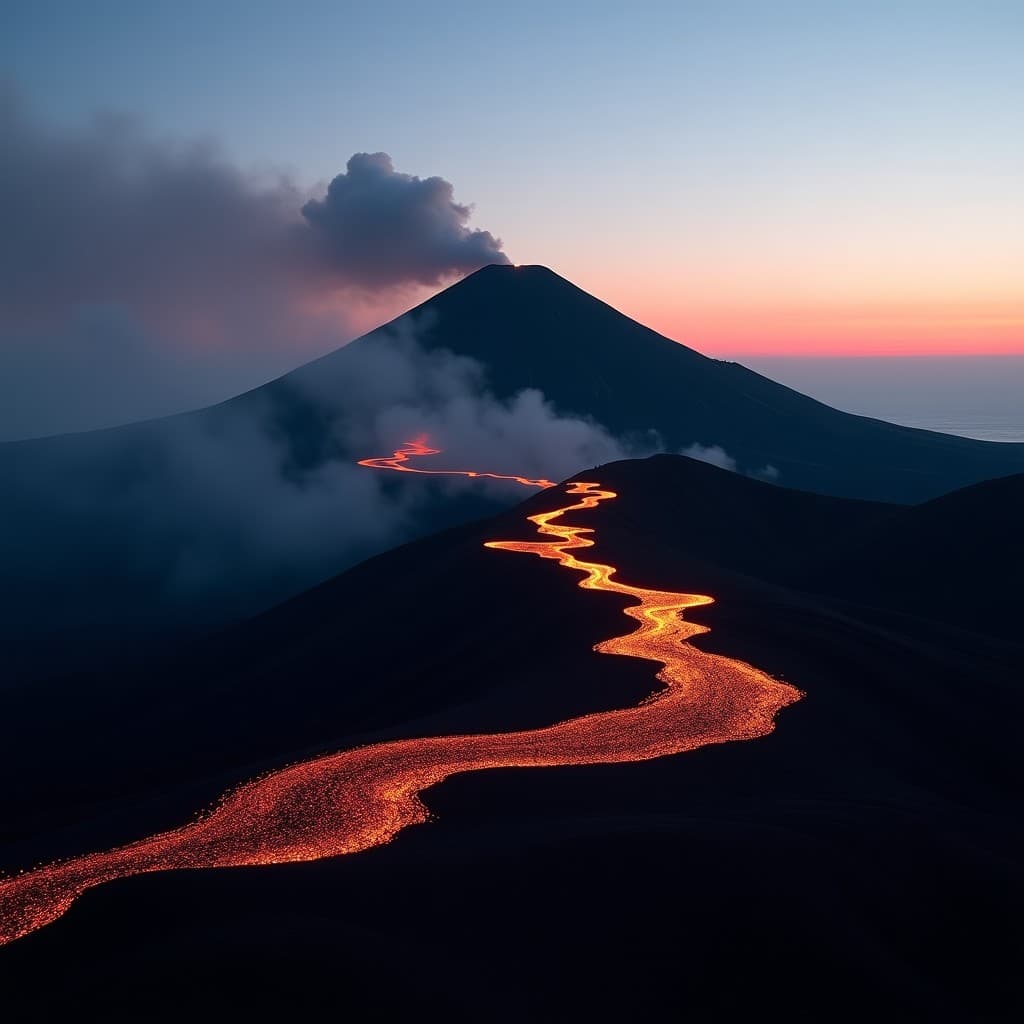
Mount Etna, Europe's largest active volcano, entered a fresh eruptive phase on 29 June, according to the Guardian and Euronews. Lava flowed from an eruptive vent at roughly 3,000 metres altitude, lighting up the night sky above eastern Sicily. Drone footage from 27 June captured the spectacle: rivers of bright orange lava snaking down the volcano's slopes in the darkness, a sight that has become increasingly familiar to those living in Etna's shadow.
The National Institute of Geophysics and Volcanology, according to the Guardian, reported the lava gush. Such eruptions are routine for Etna, which sits on Sicily's east coast and has been in nearly continuous activity for decades. Yet each eruption carries a double meaning for the island: a reminder of the geological forces that shape the Mediterranean, and a test of how Sicilian communities adapt to living atop one of the world's most volatile volcanoes.
For the residents of towns and villages on Etna's flanks—Catania, Acireale, Taormina—such activity is woven into the fabric of daily life. The volcano has shaped Sicilian culture, economy and settlement patterns for millennia. The fertile volcanic soils that surround it support agriculture; the dramatic landscape draws tourists year-round. Yet eruptions also carry risk. Lava flows can destroy infrastructure, ash falls disrupt air travel, and the volcano's unpredictability demands constant vigilance from civil protection authorities.
The June eruption occurred as Sicily braced for what the Local Italy described as a turning point in the nation's heatwave, with 14 regions under storm alerts. Etna's volcanic emissions add another layer of atmospheric complexity to a summer already marked by extreme heat. The mountain's activity is monitored continuously by geophysicists, but its behaviour remains fundamentally beyond human control—a humbling reminder of the forces that define this island's place at the Mediterranean's centre.