
CALABRIA
Mount Etna erupts as lava illuminates Sicily's night sky
Europe's largest active volcano sends rivers of orange lava down slopes as Italian authorities monitor activity
Saverio Gallo286 wordsEdition №33Thursday, 2 July 2026 — Edition № 33
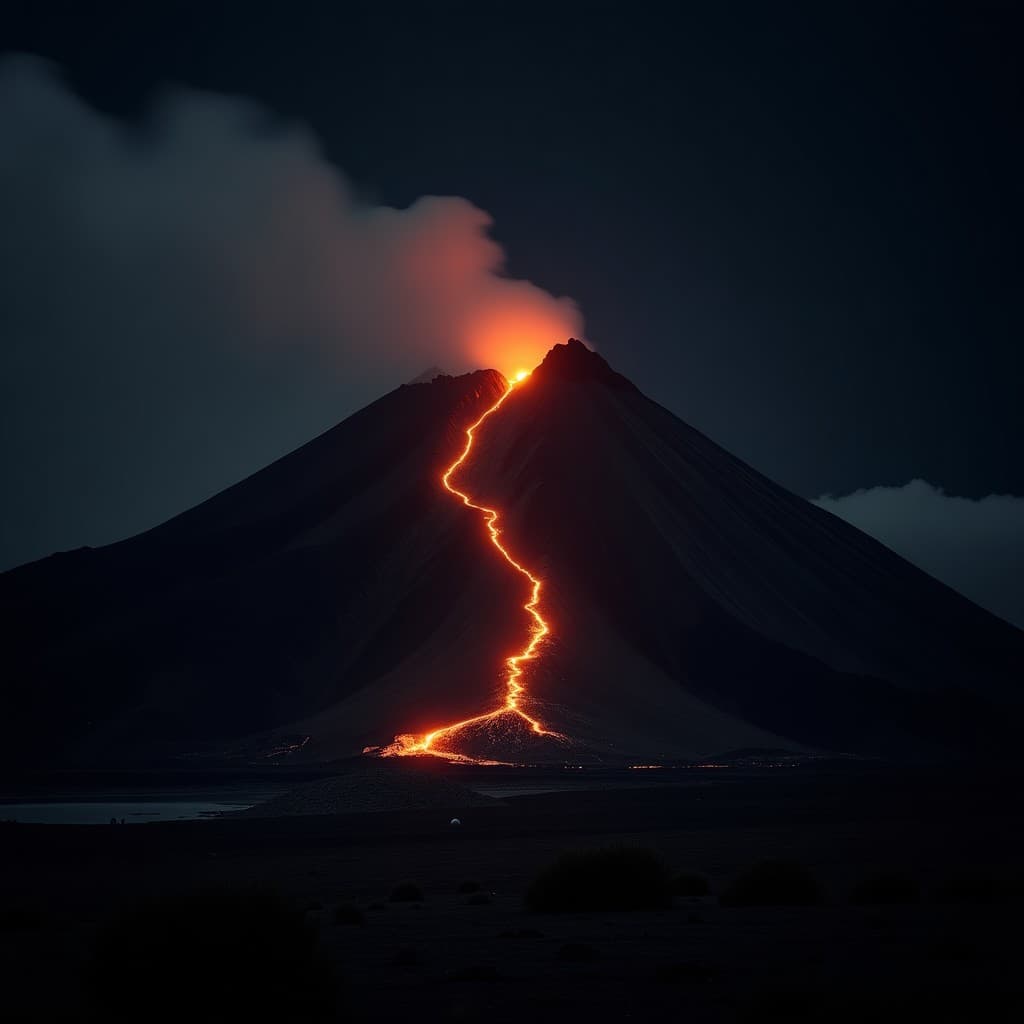
Mount Etna erupted on June 29, with lava gushing from an eruptive vent at approximately 3,000 metres altitude, according to the Guardian and BBC coverage. Drone footage captured thick orange lava snaking down the mountain's slopes, creating a visible glow across the night sky. The eruption marks the latest activity from Europe's largest active volcano, located on Sicily's east coast.
Etna's activity carries significance across southern Italy, including Calabria. The volcano sits within the same Mediterranean seismic and volcanic system that shapes the region's geology and climate. While Etna's eruptions typically remain contained to Sicily, the broader volcanic activity across the Mediterranean—from Etna to Stromboli—forms part of the natural hazard landscape that southern Italian communities navigate. The monitoring systems that track Etna inform regional civil protection planning.
The National Institute of Geophysics and Volcanology, according to the Guardian, reported the eruption details. Euronews and the BBC both captured drone imagery of the lava flows, providing international audiences with visual documentation of the volcano's power. Such eruptions, while visually dramatic, are part of Etna's normal activity cycle; the volcano has been in near-continuous eruption since 2011.
For Calabria, Etna's behaviour is monitored as part of broader Mediterranean volcanic surveillance. The region sits within the same tectonic and volcanic framework, though Calabria's own seismic risk stems from different fault systems. The international attention to Etna's eruptions reflects the volcano's status as a natural wonder and scientific research site, drawing volcanologists and tourists alike. The Guardian's video coverage and BBC reporting emphasise the spectacle, framing Etna as a natural phenomenon of global interest rather than an immediate regional threat.