
FRIULI-VENEZIA GIULIA
EU-Balkans Summit in Montenegro signals trade shift for Trieste's eastern corridor
As Brussels pushes enlargement to counter Russia and China, Friuli-Venezia Giulia ports face new competition and opportunity from regional integration.
Sergio Madrussan478 wordsEdition №13Friday, 12 June 2026 — Edition № 13
The EU-Western Balkans summit held in Tivat, Montenegro, on June 5 brought together European leaders to discuss enlargement of the bloc to include countries in the region, according to the Associated Press. The gathering was framed explicitly as a response to security and economic threats posed by Russia and China, positioning the Balkans as strategically vital to European cohesion. This diplomatic push toward integration carries concrete consequences for border regions like Friuli-Venezia Giulia, which sits at the junction between the EU and the Central European and Balkan hinterland.
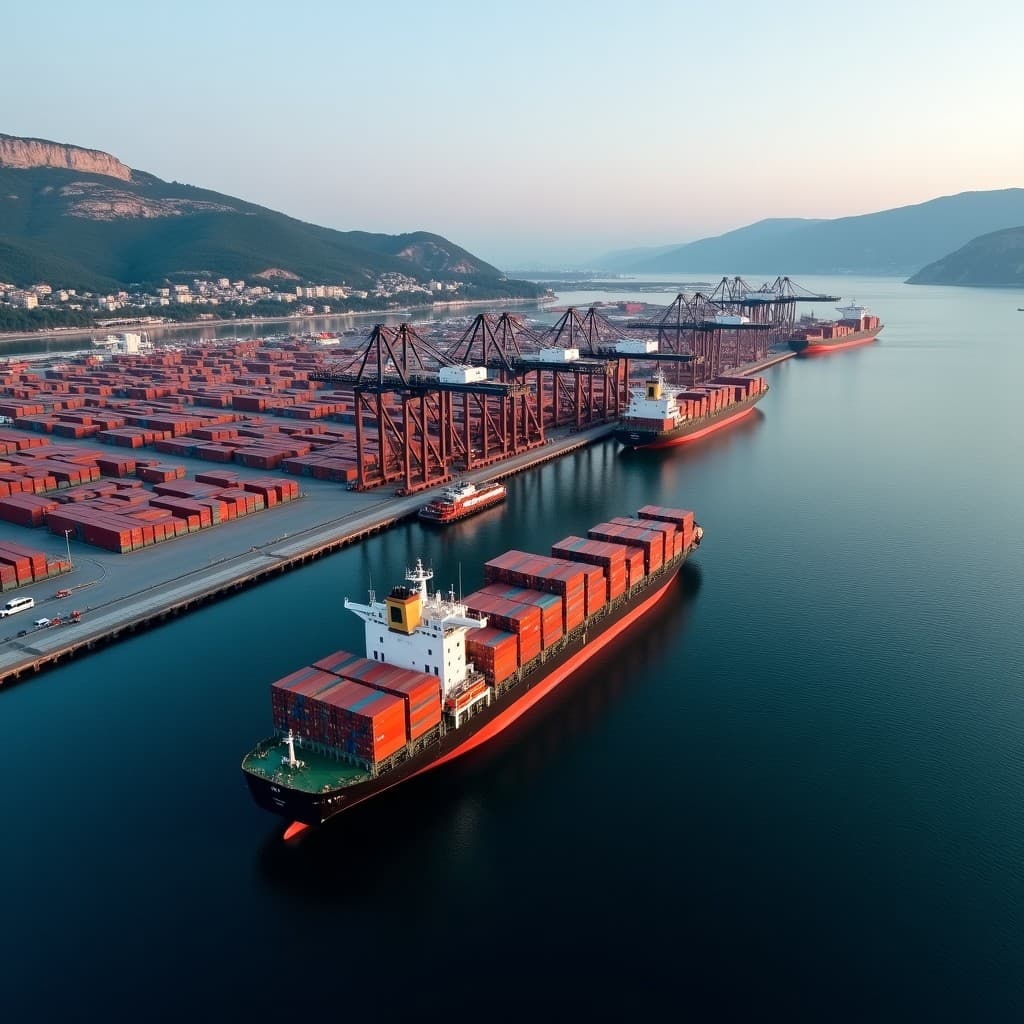
Trieste's port and the region's transport infrastructure have long served as Italy's primary conduit for trade with the Balkans and beyond. As the AP reported, the summit underscored Brussels' determination to deepen economic and political ties with the region—a process that typically accelerates infrastructure investment, border harmonization, and logistics corridors. Faster EU accession for countries like Serbia, Bosnia, and North Macedonia would lower tariffs, align customs procedures, and redirect supply chains through established gateways. For Trieste, this could intensify competition from other EU ports seeking to capture Balkan trade, but it also offers the region a chance to position itself as the preferred Italian node in a more integrated European-Balkan economic zone.
The summit's timing reflects urgency in Brussels. The EU has long pursued Balkans enlargement as a geopolitical tool, but recent years have seen the region become contested ground between Western institutions and Russian and Chinese interests. By accelerating integration, the EU aims to secure the region's alignment with Western standards and reduce its exposure to external pressure. For Friuli-Venezia Giulia, this shift has dual implications: the region stands to benefit from increased trade flows and investment in border infrastructure, but it also faces pressure to modernize port facilities and logistics networks to remain competitive as other EU members eye the same Balkan markets.
Trieste's Free Port status and its historical role as a Central European trading hub position it well to capture trade from a more integrated Balkans. However, the region's advantage depends on investment in multimodal transport—rail, road, and sea connectivity—and on maintaining regulatory alignment with EU standards. The summit's emphasis on countering Russian and Chinese economic influence in the Balkans also signals that geopolitical competition for regional gateways will intensify. Chinese investment in Balkan ports and infrastructure has grown substantially in recent years, and EU enlargement is partly a response to that presence. Trieste's port authority and regional government have begun positioning the port as a counterweight to Chinese-backed alternatives, emphasizing its EU membership and Western institutional anchoring.
The enlargement process, if accelerated as the summit suggested, typically takes years to complete. But the political signal from Tivat indicates that Brussels is committed to deepening ties now, through pre-accession instruments and bilateral trade agreements. For Friuli-Venezia Giulia, this means the next phase of competition for Balkan trade is already underway. The region's ability to capture that traffic will depend on its capacity to offer faster, cheaper, and more reliable transport corridors than competitors in Greece, Croatia, and Austria.