
INTERNATIONAL
EU delays travel scheme as border checks strain Alpine crossings
ETIAS rollout pushed to 2027 amid biometric system problems affecting Brenner and mountain entry points
Klara Hofer361 wordsEdition №41Friday, 10 July 2026 — Edition № 41
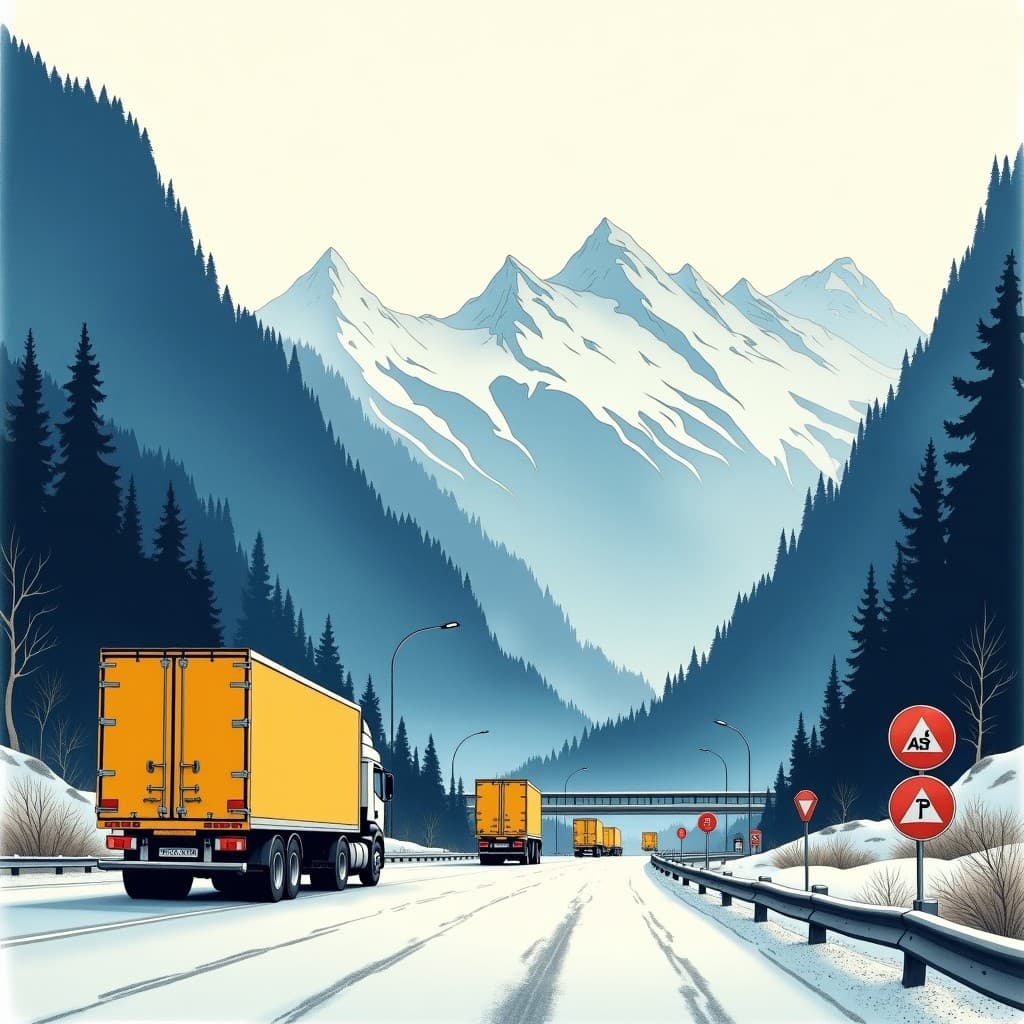
The European Commission is expected to delay the launch of its European Travel Information and Authorisation System (ETIAS) until 2027, according to reporting from the European press this week. The postponement stems from ongoing problems with the rollout of the Entry-Exit System (EES), a biometric border-checking mechanism that has already begun creating friction at European Union external frontiers. The delay signals a reprieve for Alpine border regions, including the Brenner Pass—Europe's busiest mountain crossing—where the new procedures have created congestion and uncertainty.
The EES system, designed to digitally record the entry and exit of non-EU citizens, has encountered technical and logistical difficulties since its introduction. Border authorities across the EU have reported longer processing times and system failures, particularly at high-traffic crossing points. The Brenner corridor, which handles hundreds of thousands of transits annually between Italy and Austria, has experienced notable delays as customs and immigration officials adapt to the new requirements.
For Trentino-Alto Adige, the postponement of ETIAS offers practical relief. The region sits astride one of Europe's most economically vital transit routes, and the Brenner Pass is essential to both regional commerce and tourism. Freight traffic from southern Europe to northern markets depends on smooth passage through the corridor; delays cascade through Alpine logistics networks and affect small and medium enterprises that rely on just-in-time delivery. The region's tourism economy—particularly in the Dolomites and around Lake Garda—also depends on seamless travel for visitors from Austria, Germany, and beyond.
The Austrian and German press have noted the administrative challenges posed by the EES rollout, with some outlets questioning whether the EU's timeline for implementing new border technology adequately accounts for the complexity of managing high-volume crossings in mountainous terrain. The Brenner region's special status within the Alpine convention framework adds another layer of complexity: the pass is subject to both EU border rules and bilateral Austrian-Italian agreements on transit and customs.
The ETIAS scheme, when it does launch, will require non-EU visitors to register and pay a small fee before entering the Schengen Area. For now, the EU's decision to defer implementation provides breathing room for border infrastructure to mature and for the EES system to stabilize. Regional authorities in Trentino-Alto Adige have expressed cautious approval, though they remain focused on ensuring that any future travel authorisation system does not impede the cross-border economic and cultural ties that define the Alpine region.