
ABRUZZO
Brussels prepares rebuke of Italy's fuel duty cuts
Commission report signals clash over energy policy as Rome seeks fiscal flexibility amid price spike
Marco Di Sante1,247 wordsEdition №3Wednesday, 3 June 2026 — Edition № 3
The European Commission will publish a report on Wednesday criticising the Italian government's decision to cut excise duties on fuels, according to Euronews. Rome has been pressing Brussels for greater fiscal flexibility to manage the energy crisis, but the Commission contends that relief measures should be directed at households and businesses most exposed to price volatility, not applied across the board.
The dispute reflects a wider tension within the EU over how member states respond to energy shocks. The Commission's position suggests that blanket fuel duty reductions, while politically popular, may not meet the bloc's criteria for proportionate and targeted fiscal intervention during periods of market stress.
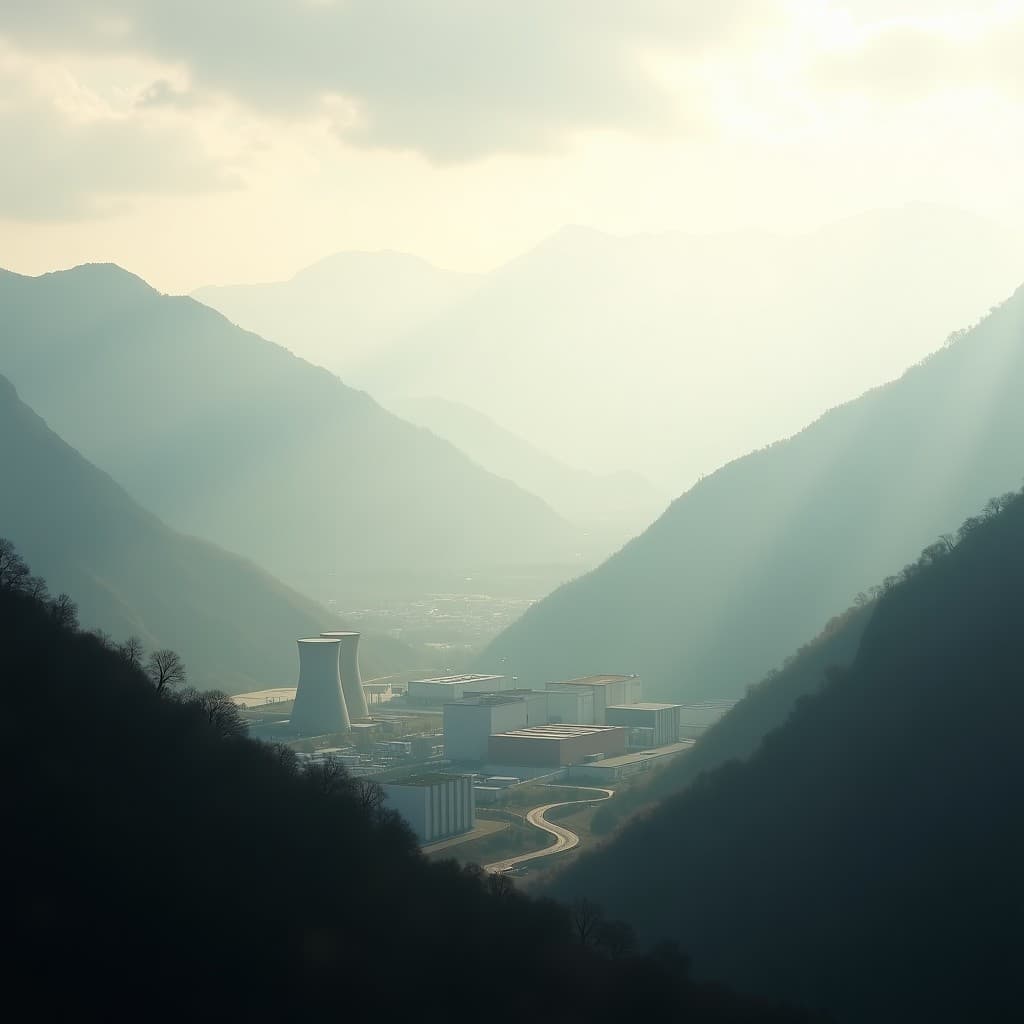
For Abruzzo, where manufacturing and pharmaceuticals depend on stable energy costs, the outcome of this dispute carries direct weight. The region's industrial base — concentrated in the valleys around Teramo and Pescara — relies on predictable fuel and electricity pricing to remain competitive within European supply chains.
The Commission's forthcoming criticism marks an escalation in the dialogue between Rome and Brussels over energy policy. Euronews reported that the Italian government has sought exemptions from EU fiscal rules to justify the fuel duty cuts as a response to energy price spikes. The Commission's counter-argument — that such relief should be means-tested and directed at vulnerable populations and energy-intensive industries — reflects the bloc's preference for targeted rather than universal subsidies.
Italy's energy position is structurally precarious. The country imports roughly 85 per cent of its natural gas, making it acutely sensitive to global price movements and supply disruptions. When energy costs spike, the political pressure to provide relief is immediate and intense. Fuel duty cuts are a blunt instrument: they reduce prices at the pump for all consumers, regardless of need, and they erode tax revenue at a moment when Italy's public debt — already among the highest in the eurozone — constrains fiscal space.
The Commission's preference for targeted measures reflects economic orthodoxy: subsidies to vulnerable households or energy-intensive industries are deemed more efficient than broad-based cuts. A household that can absorb higher fuel costs gains the same relief as one that cannot; a manufacturing firm already profitable gains the same benefit as one struggling with margins. The Commission's report will likely argue that Italy could achieve greater social protection and industrial support by redirecting the same fiscal outlay toward direct transfers or sector-specific support.
Abruzzo's economy sits at the intersection of these tensions. The region is home to pharmaceutical manufacturing — Chiesi, Angelini, and smaller producers — that depends on reliable energy costs. It also has a significant ageing population, concentrated in rural areas, where transport costs and heating expenses weigh heavily on household budgets. The region's interior, depopulating for decades, is particularly vulnerable to energy price shocks: villages in the Apennines have limited public transport, and residents often travel long distances to work or access services.
Manufacturing in the region is energy-intensive but not uniformly so. Pharmaceutical production requires precise climate control and clean-room conditions, driving electricity demand; food processing and small-scale engineering are less so. A blanket fuel duty cut benefits all users equally, while a targeted programme could be calibrated to support the sectors and populations where energy costs pose the greatest constraint to competitiveness or living standards.
The Commission's fiscal orthodoxy also reflects concern about precedent. If Italy is granted flexibility to cut fuel duties without corresponding revenue measures or spending cuts, other member states will demand similar treatment. The eurozone's fiscal rules — already strained by the pandemic and subsequent crises — rest on the assumption that member states will not use energy shocks as justification for permanent expansions of the deficit. A cascade of fuel duty cuts across the bloc would undermine that discipline.
Italy's public debt stands at roughly 140 per cent of GDP, the second-highest ratio in the eurozone after Greece. The Commission's scrutiny of Italian fiscal moves is therefore not arbitrary: it reflects the bloc's concern that Italy's debt trajectory limits its capacity to absorb further revenue losses. A fuel duty cut that reduces tax intake by, say, two billion euros annually is a permanent structural change to the budget, not a temporary measure.
The regional consequence is complex. Abruzzo's pharmaceutical sector benefits from lower input costs if fuel duties fall; but if the cut is reversed or offset by other fiscal measures — spending cuts or tax increases elsewhere — the benefit may be short-lived. More fundamentally, a protracted dispute between Rome and Brussels over energy policy creates uncertainty for firms making investment decisions. A manufacturer considering whether to expand capacity in Abruzzo or elsewhere in Europe will factor in the stability of the regulatory and fiscal environment.
The Commission's report will also likely address the distributional impact of fuel duty cuts. Abruzzo's interior villages, where car ownership is near-universal and public transport minimal, benefit disproportionately from lower fuel costs. But so do wealthier households and firms. If the Commission's criticism prompts Rome to replace the broad cut with targeted support — direct transfers to low-income households, or subsidies to energy-intensive industries — the regional impact could shift.
Historically, Italy has chafed under EU fiscal constraints. The country's political class has long argued that rigid rules do not account for structural vulnerabilities — high debt, regional disparities, exposure to energy shocks — that require flexibility. The fuel duty dispute is the latest iteration of this argument. Rome's position is that energy crises are exogenous shocks that justify temporary departures from fiscal rules; Brussels's position is that such departures, if granted, must be carefully circumscribed and targeted.
The outcome will likely be a negotiation. The Commission may accept a modified version of Italy's fuel duty cuts if Rome commits to offsetting measures — spending restraint or revenue-raising elsewhere — that keep the overall fiscal impact neutral. Alternatively, Rome may be required to redirect the relief toward specific populations or sectors, narrowing its scope. Either way, the dispute signals that energy policy and fiscal policy are now intertwined in EU governance, and that member states cannot treat fuel duties as purely domestic decisions.
For Abruzzo, the immediate stakes are modest but real. A permanent fuel duty cut would lower input costs for manufacturers and transport costs for residents; a reversal or narrowing of the cut would negate that benefit. The deeper issue is predictability. Firms and households need to know whether energy costs will be stable or volatile, and whether the state will intervene to cushion shocks. The Commission's forthcoming report will clarify the boundaries of what Brussels will tolerate, and that clarity matters for planning and investment decisions across the region.