
BASILICATA
Brussels Rebukes Italy's Fuel Cuts as Energy Crisis Deepens
Commission report criticises Rome's excise duty reductions; Basilicata's oil sector faces scrutiny over transition strategy
Pietro Lasorsa1,247 wordsEdition №4Thursday, 4 June 2026 — Edition № 4
The European Commission will publish a report on Wednesday criticising the Italian government's decision to cut excise duties on fuels, according to Euronews. Rome has sought greater fiscal flexibility to manage the energy crisis, but Brussels contends that such relief should be directed toward families and industries most affected by price spikes, not broad fuel subsidies.
The dispute reflects a deeper tension within the EU over how member states should respond to energy volatility. Italy's approach—lowering the tax burden on fuel consumption—runs counter to the Commission's preferred strategy of targeted support and accelerated transition away from fossil fuels. The criticism comes as energy prices remain elevated across Europe, straining both households and industrial competitiveness.
For Basilicata, Italy's largest onshore oil-producing region, the Commission's stance carries particular weight. The region's economy has long depended on extraction and refining, yet the EU's energy transition framework increasingly pressures member states to reduce fossil fuel subsidies and accelerate renewable investment. The tension between Rome's fiscal relief and Brussels' environmental priorities will shape how Basilicata navigates its energy future.
The Commission's forthcoming report signals a widening rift between the Italian government and European regulators over energy policy. Euronews reported that Rome has repeatedly requested flexibility in its fiscal rules to address what officials describe as an energy crisis. The Commission's response—that such measures should be narrowly targeted rather than broadly applied—reflects the EU's commitment to ensuring that public spending on energy supports the most vulnerable while avoiding market distortions that could delay the transition to renewables.
Italy's fuel duty cuts represent a form of energy subsidy that the EU increasingly views as counterproductive. By lowering the cost of petrol and diesel at the pump, the government reduces the price signal that would otherwise incentivise consumers and businesses to shift toward electric vehicles and alternative energy sources. The Commission's critique echoes concerns raised by climate economists across Europe: broad fuel subsidies prop up consumption of fossil fuels rather than hastening their replacement.
The timing of the Commission's criticism is significant. Energy prices in Europe have remained volatile since the 2022 supply shocks, and member states have deployed various fiscal tools to cushion the impact. Some, like Germany, have used temporary measures; others, like Italy, have opted for broader excise reductions. The Commission's report will likely recommend that Italy redirect its fiscal support toward renewable energy infrastructure, grid modernisation, and assistance to low-income households rather than subsidising fuel consumption across the board.
Basilicata sits at the centre of this policy collision. The region produces roughly 90 percent of Italy's onshore crude oil, concentrated in the Val d'Agri field near Potenza. For decades, extraction revenue has underpinned the regional economy, funding infrastructure and public services in a historically poor area. Yet the EU's energy transition targets—binding on all member states—require Italy to reduce fossil fuel extraction and investment. The Commission's criticism of fuel duty cuts signals that Brussels will scrutinise not only Rome's fiscal choices but also the underlying energy infrastructure that those choices protect.
Foreign energy analysts have noted the contradiction embedded in Italy's position. The country is a net energy importer and has committed to the EU's climate targets, including carbon neutrality by 2050. Yet it continues to rely on domestic oil production and has resisted rapid phase-outs of fossil fuel subsidies. The fuel duty cuts, in this context, appear to be a short-term response to political pressure rather than a coherent energy strategy aligned with the EU's long-term framework.
The regional consequence for Basilicata is complex. If the Commission's criticism prompts Rome to reverse or narrow the fuel duty cuts, the government may face pressure to find alternative sources of fiscal relief—potentially including reduced support for the oil sector itself. Conversely, if Rome maintains the cuts despite EU objections, it risks triggering formal infringement procedures or sanctions under the EU's fiscal governance rules. Either path constrains the region's ability to rely on extraction revenue as a stable source of public funding.
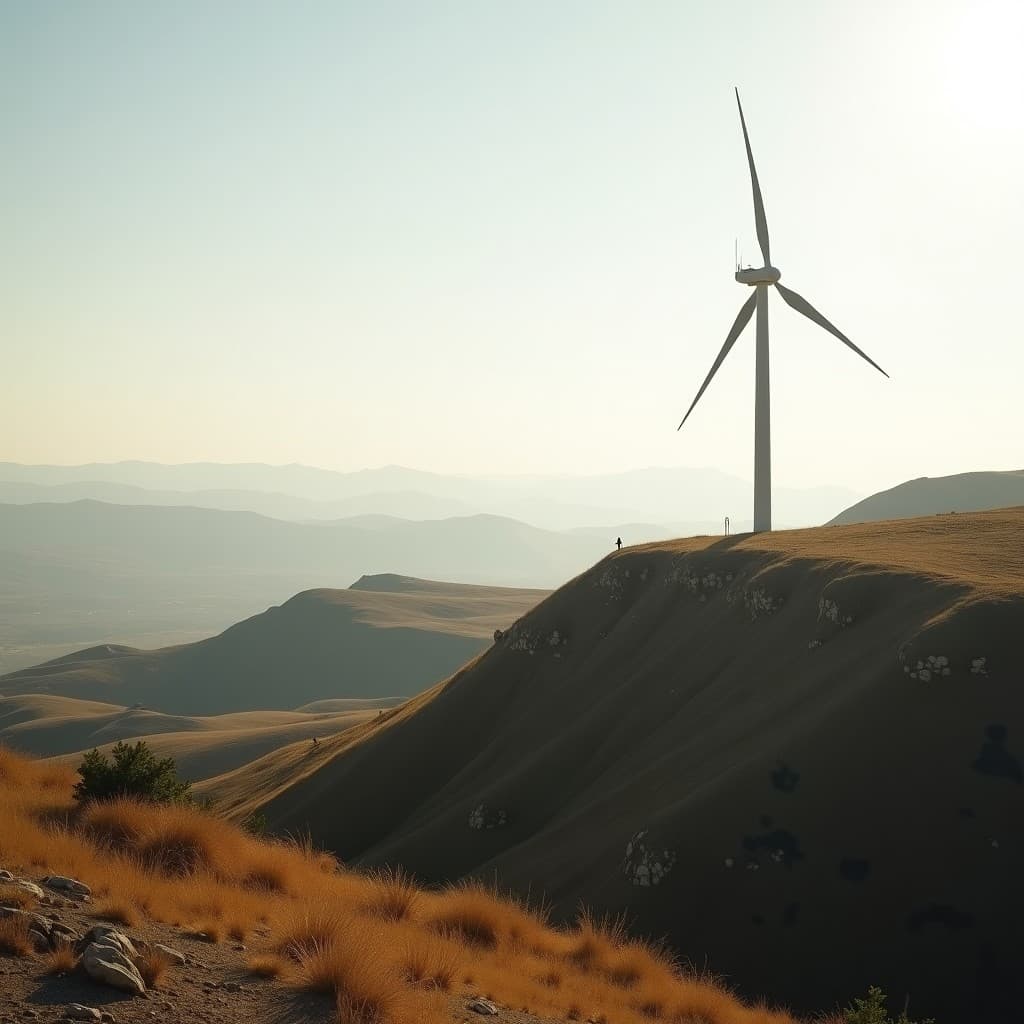
Basilicata's transition away from oil dependency remains incomplete. The region has begun to diversify into renewable energy, particularly wind and solar, and has attracted some investment in automotive manufacturing and agro-industrial processing. Yet unemployment remains above the national average, and the interior continues to experience depopulation as younger residents migrate northward. The energy transition, if managed poorly, could accelerate that exodus by reducing extraction-related employment without creating sufficient alternative jobs.
The Commission's report will likely propose that Italy accelerate investment in renewable energy infrastructure, grid modernisation, and industrial decarbonisation. For Basilicata, this could mean opportunities in wind and solar development, but only if the region receives adequate EU cohesion funding and if Rome coordinates a credible transition plan. The current fuel duty cuts, by contrast, appear to the Commission as a defensive measure that delays rather than enables that transition.
Foreign observers have also noted that Italy's fiscal constraints limit its room for manoeuvre. The country carries a large public debt relative to GDP, and the Commission closely monitors Italian fiscal policy. Any expansion of fuel subsidies risks triggering warnings from Brussels about debt sustainability. The fuel duty cuts are thus caught between two pressures: the political need to provide relief to voters and businesses facing high energy costs, and the fiscal and environmental constraints imposed by EU membership.
The regional press in Basilicata has historically framed energy policy as a matter of economic survival. Oil extraction has provided stable employment and tax revenue for the provincial government in Potenza and the municipal government in Matera. Yet the EU's energy transition framework is rewriting that narrative, casting extraction as a legacy industry that must be managed down rather than sustained. The Commission's criticism of fuel duty cuts reinforces that reframing, signalling that Brussels will not tolerate fiscal measures designed to prop up fossil fuel consumption.
Looking ahead, the Commission's report may prompt Rome to negotiate a transition plan with Brussels that combines fiscal support for vulnerable households with accelerated renewable investment and managed decline of the oil sector. Such a plan would need to address Basilicata's particular circumstances: high unemployment, limited economic diversification, and dependence on extraction revenue. Without a credible transition strategy backed by EU funding, the region faces the risk of economic contraction as the energy transition accelerates.
The fuel duty cuts thus represent more than a fiscal dispute between Rome and Brussels. They reflect a fundamental tension between Italy's short-term energy security needs and its long-term commitment to climate neutrality. For Basilicata, that tension is acute: the region's prosperity has depended on the very fossil fuel infrastructure that the EU is now pressuring Italy to abandon. How Rome responds to the Commission's criticism will shape not only Italy's energy future but also the economic trajectory of one of southern Europe's most fragile regions.