
PUGLIA
Brussels criticises Italy's fuel duty cuts amid energy row
The EU Commission warns Rome's tax relief favours broad consumption over targeted support for vulnerable households and industry.
Francesca Lazzari1,389 wordsEdition №4Thursday, 4 June 2026 — Edition № 4
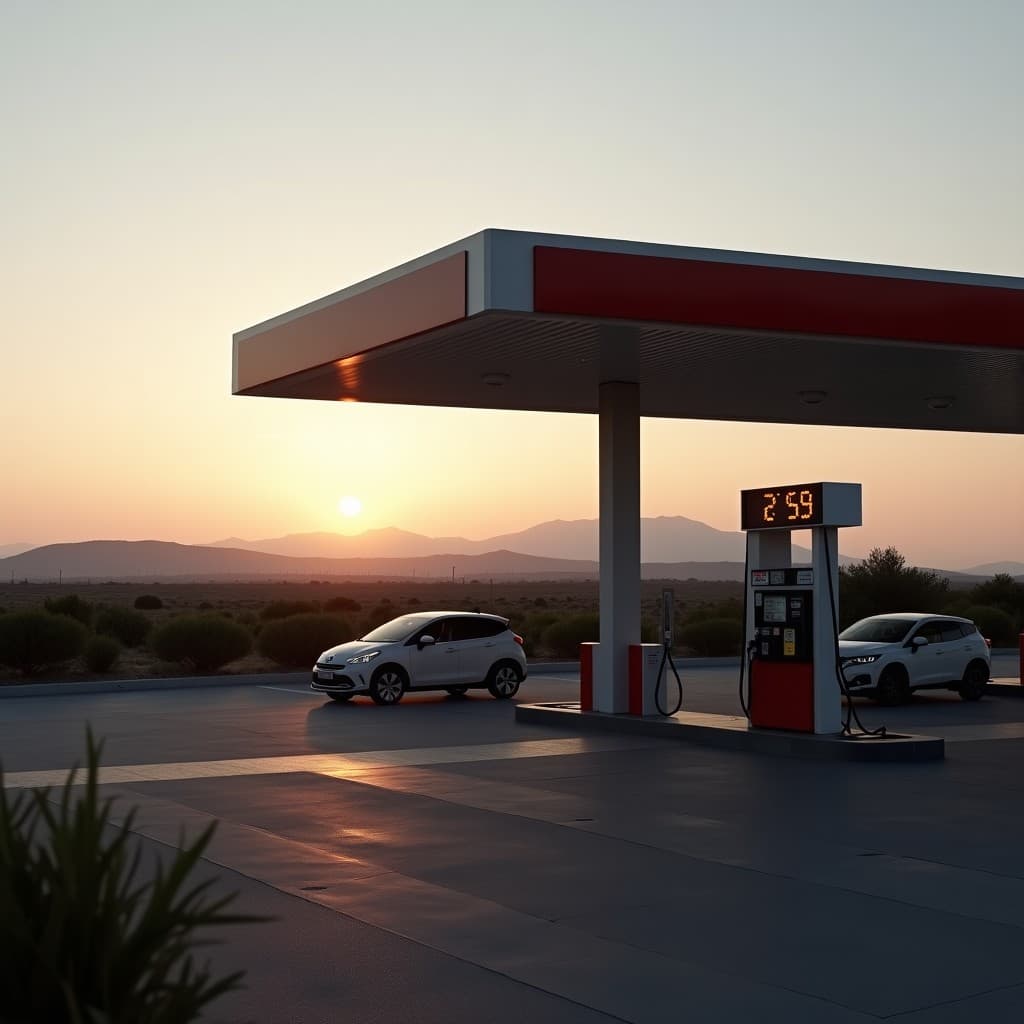
The European Commission is preparing to rebuke the Italian government's decision to cut excise duties on fuels, according to Euronews. Brussels argues that Rome's approach—reducing the tax burden on fuel broadly—fails to target energy relief where it is most needed: among vulnerable households and energy-intensive industries struggling with high prices. The criticism is expected to appear in a Commission report due Wednesday.
Italy has sought greater fiscal flexibility from the EU to address the energy crisis that has gripped Europe since 2022, pushing up costs for heating, transport and production. The Italian government's response has been to reduce the excise duties that make up a significant portion of the pump price. Brussels, however, views this as a blunt instrument that benefits all consumers equally rather than concentrating support where hardship is greatest.
For Puglia, the dispute carries particular weight. The region's economy depends heavily on energy-intensive sectors—agriculture, tourism, the Taranto steelworks—and on transport infrastructure that connects the region to northern markets and European ports. How Rome and Brussels resolve this disagreement over fuel taxation will shape the region's industrial competitiveness and the cost of living for ordinary Pugliese.
The tension between Rome and Brussels reflects a deeper disagreement about how European governments should respond to energy shocks. The EU's fiscal rules, tightened again after the pandemic, constrain member states' ability to spend freely. At the same time, energy prices have created genuine hardship for households and real competitive pressure on industries. Italy's government has chosen to use tax cuts as its primary tool; the Commission prefers targeted subsidies that concentrate relief on those most vulnerable to price spikes.
Italy's fuel duty cuts are not new. The Italian government has repeatedly reduced excise duties on petrol and diesel since energy prices began rising sharply in 2021 and 2022, a pattern documented in international reporting on European energy policy. Each cut has been presented as temporary relief for consumers and businesses. The cumulative effect, however, has been to reduce the tax revenue available to the state while failing, in Brussels's view, to address the root problem: the need to shield vulnerable populations from energy poverty.
Puglia's position in this debate is complex. The region is southern Italy's industrial heartland, home to the Taranto ILVA steelworks, one of Europe's largest integrated steel mills. Steel production is extraordinarily energy-intensive, and high electricity and fuel costs directly threaten the mill's profitability and its ability to compete with producers in Germany, France and Eastern Europe. A fuel duty cut, therefore, offers real relief to the steelworks and the thousands of workers it employs.
At the same time, Puglia is also a region of small farms, fishing communities and tourism-dependent towns. For these sectors, broad fuel tax relief does matter: a farmer buying diesel for tractors, a fishing boat refuelling at port, a tourism operator running shuttles and transport services all benefit from lower pump prices. The region's agricultural sector, in particular, operates on thin margins and is sensitive to input costs.
Yet the Commission's argument has force too. Broad fuel tax cuts are expensive—they reduce state revenue without necessarily reaching those most in need. A household in central Rome with a car and a heating bill faces the same pump prices as a pensioner in a Puglian village, but their ability to absorb the cost differs vastly. Targeted support—cash transfers to low-income households, subsidised energy prices for the poorest, direct support to energy-intensive industries—would concentrate relief more efficiently and leave the state with more fiscal room to invest in other priorities.
The dispute also reflects differing views on how to manage the transition away from fossil fuels. The EU's Green Deal and its energy transition strategy assume that energy prices will remain elevated as carbon pricing and renewable energy investment reshape markets. In that context, broad fuel tax cuts are seen as counterproductive: they reduce the price signal that encourages consumers and businesses to invest in efficiency and renewables, and they lock governments into permanent revenue losses that make the transition harder to finance.
For Puglia specifically, this matters because the region is investing heavily in renewable energy. The Salento peninsula, in particular, has become a centre for wind and solar development, with foreign investors and Italian companies building large wind farms and solar installations. Higher fossil fuel prices, paradoxically, make these renewables more competitive economically. A government policy that artificially suppresses fuel prices undermines the business case for renewable investment and slows the transition that Puglia's economy increasingly depends on.
The Taranto steelworks adds another layer of complexity. The mill has long been a symbol of the tension between industrial jobs and environmental health in southern Italy. It is also one of Europe's most energy-intensive industrial facilities. The EU's carbon border adjustment mechanism and its broader climate policies will increasingly pressure the mill to decarbonise, a process that requires substantial investment and access to cheaper renewable energy. Fuel duty cuts do not address this structural challenge; targeted industrial policy and investment in green steel technology do.
International reporting on European energy policy has noted that Italy's approach—using tax cuts to manage energy prices—is less sophisticated than some alternatives. Germany, for example, has used a combination of temporary price brakes, direct subsidies to vulnerable households, and support for business investment in efficiency. France has relied partly on state ownership of energy companies to cap prices. These approaches involve more direct government intervention but also more precise targeting of relief.
The Commission's criticism is also a signal about fiscal discipline. Italy carries one of the highest public debt burdens in the eurozone, and Brussels has long pressed the Italian government to improve its fiscal position. Permanent or semi-permanent fuel tax cuts, which reduce revenue without corresponding spending cuts, move in the opposite direction. The Commission's report is likely to frame the fuel duty cuts not just as poor energy policy but as fiscally irresponsible.
What happens next remains uncertain. The Italian government could defend its position, arguing that energy relief is a legitimate use of fiscal flexibility and that the Commission's preference for targeted subsidies is bureaucratically cumbersome and politically difficult to implement. Alternatively, Rome could negotiate a compromise: perhaps maintaining some fuel duty relief while introducing targeted support for vulnerable households and energy-intensive industries, a middle path that would address some of Brussels's concerns while preserving some of the government's preferred approach.
For Puglia, the outcome matters. If the Commission successfully pressures Rome to abandon broad fuel tax cuts in favour of more targeted support, the region's farmers, fishers and tourism operators could face higher pump prices. The Taranto steelworks, however, might benefit if targeted industrial support becomes available. The region's renewable energy sector would likely benefit from a policy shift that allows fossil fuel prices to rise, making wind and solar more competitive.
The dispute also reflects a broader question about how the EU manages regional inequality. Puglia is poorer than northern Italy and more dependent on agriculture, fishing and energy-intensive industry. A policy that works well for wealthy northern regions may create hardship in the south. The Commission's preference for targeted support assumes that member states have the administrative capacity and political will to implement such programmes effectively—an assumption that does not always hold in practice, particularly in regions with weaker state capacity.
In the coming weeks, as the Commission's report is published and Rome responds, the debate will likely intensify. The stakes are not merely technical or fiscal; they touch on fundamental questions about how Europe manages energy transitions, supports vulnerable populations and balances industrial competitiveness with climate goals. For Puglia, watching from the periphery, the outcome will shape the region's economic prospects for years to come.