
EMILIA-ROMAGNA
Ferrari Goes Electric While Motor Valley Watches and Waits
Maranello's EV leap signals a shift in how the world's supercars will be built—and what it means for Emilia-Romagna's engineering future.
Giulia Benati1,547 wordsEdition №8Monday, 8 June 2026 — Edition № 8
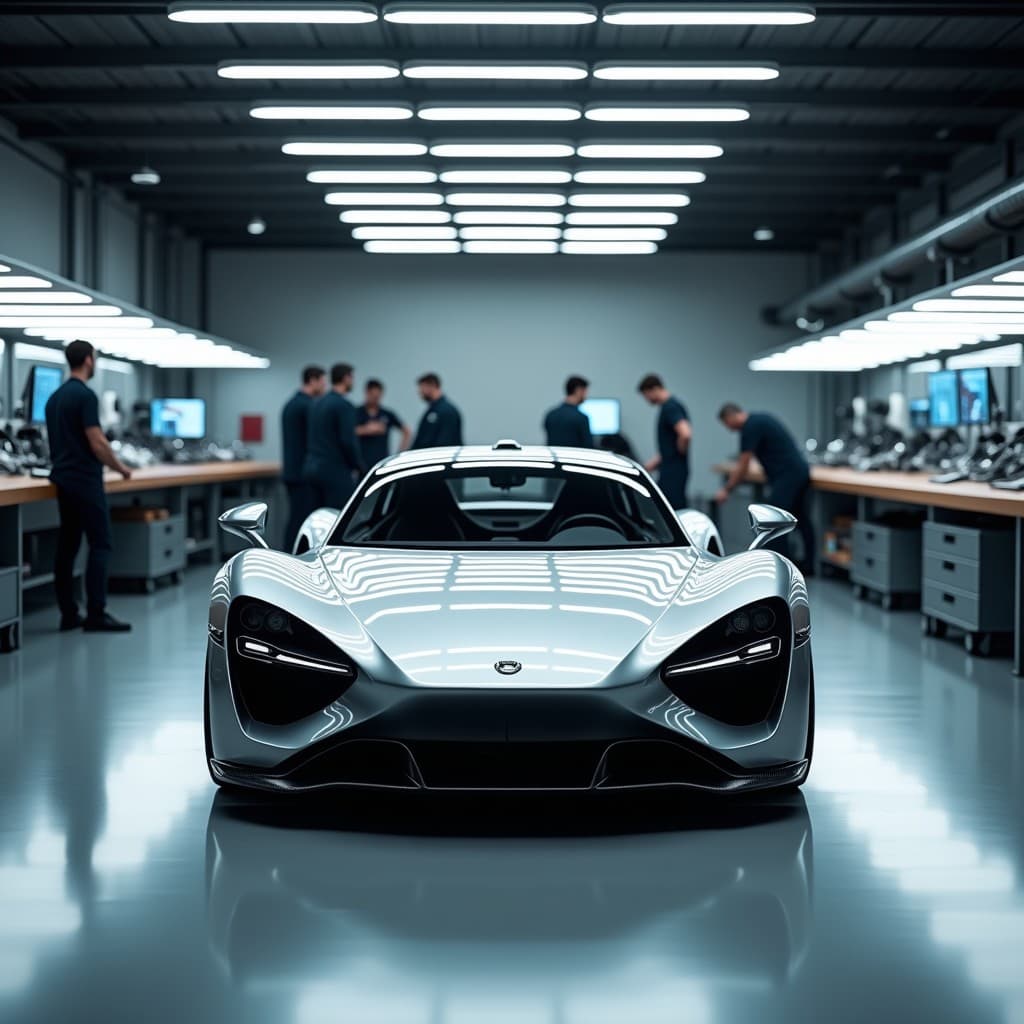
Ferrari unveiled its first fully electric vehicle, the 1,000-horsepower Luce, this week, marking a watershed moment for Italian supercar engineering. According to Forbes, the move positions Ferrari as the first major Italian supercar manufacturer to fully commit to an all-electric halo model at a time when most mainstream automakers are investing heavily in battery-powered vehicles and governments continue to push electrification. The decision stands in sharp contrast to Lamborghini and Pagani, which have signalled they will not follow suit with all-electric flagships.
The Luce represents more than a single model launch. It signals a fundamental recalibration of how Maranello—and by extension, the broader Motor Valley—will compete in a market where electrification is no longer optional. Car and Driver reported separately that Audi is preparing its own challenge to Ferrari's dominance with the Nuvolari, a 987-horsepower Formula One-inspired supercar that will borrow its underpinnings from Lamborghini, another Motor Valley manufacturer. The competitive pressure is mounting across the region's engineering ecosystem.
For Emilia-Romagna, the implications run deeper than horsepower and acceleration. The region's supercar cluster—Ferrari, Lamborghini, Ducati, and the supply chains that feed them—has long been built on the principle of mechanical perfection and internal combustion engines. Electrification demands a different kind of engineering mastery: battery systems, power electronics, thermal management, and software integration. The question now is whether the region's suppliers, engineers, and manufacturing culture can pivot as decisively as Ferrari has chosen to do.
The Luce's arrival comes at a moment of genuine uncertainty for the supercar industry. Governments across Europe and beyond have set aggressive timelines for phasing out fossil fuels. The European Union's regulations, while subject to ongoing negotiation, continue to tighten emissions standards. Yet the market for supercars has historically been driven by exclusivity, performance, and the visceral experience of a high-revving engine. Electrification threatens to upend all three—or, as Ferrari's engineers appear to believe, to redefine them entirely.
Ferrari's decision to lead rather than follow reflects a calculation about the future of luxury engineering. The company has long positioned itself at the intersection of art and technology, and the Luce is being framed as a continuation of that tradition rather than a retreat from it. The 1,000-horsepower output matches the most powerful combustion engines Ferrari has ever built, suggesting that the company believes electric powertrains can deliver the performance credentials that define a Ferrari.
Lamborghini's resistance to an all-electric flagship is telling. The Sant'Agata manufacturer has committed to hybrid technology and has signalled that it will not abandon internal combustion engines in the near term. Pagani, the ultra-exclusive hypercar maker based in Modena, has taken a similar stance. This divergence within Motor Valley reflects a genuine disagreement about the future of supercar engineering—and about what customers will value in the years ahead.
The regional supply chain faces immediate pressure to adapt. Emilia-Romagna's engineering suppliers have spent decades perfecting the manufacture of components for high-performance combustion engines: turbochargers, fuel injection systems, exhaust manifolds, gearboxes. Many of these skills do not transfer directly to electric powertrains. Battery systems require expertise in chemistry, thermal management, and software that has traditionally been located elsewhere—in Germany, South Korea, and the United States. The question of whether these capabilities can be developed or acquired locally remains open.
Ducati, the region's motorcycle manufacturer, offers a potential model. The company has already begun electrifying its product line, and its engineers have been experimenting with electric powertrains for years. Yet motorcycles operate at a different scale and with different performance parameters than supercars. The transition, while instructive, is not a direct blueprint.
The broader context is one of technological disruption and regional economic anxiety. Emilia-Romagna has built its identity on the principle that engineering excellence and manufacturing precision can sustain competitive advantage indefinitely. The region's cooperatives, its vocational training system, and its culture of continuous improvement have all been oriented toward perfecting mechanical systems. Electrification challenges this model at its foundation.
Ferrari's move also reflects a calculation about brand positioning and market access. An electric Ferrari will be able to be sold in markets where combustion engines face regulatory barriers. China, which has become increasingly important to the global luxury market, has been aggressively promoting electrification. A fully electric Luce opens doors that a purely combustion-powered lineup would close. For a company that derives a significant portion of its revenue from international markets, this consideration is not trivial.
The timing is also significant. Charles Leclerc, Ferrari's Formula One driver, recently signed a new multiyear contract with the team, according to the Houston Chronicle. The announcement reinforces Ferrari's commitment to the sport and to the brand's racing heritage. Yet Formula One itself is moving toward hybrid powertrains and, eventually, toward more sustainable fuels. The disconnect between Ferrari's racing program and its road car strategy is narrowing.
For Emilia-Romagna's workforce, the transition will be neither smooth nor painless. The region's manufacturing culture has been built on the principle of hands-on craftsmanship and mechanical intuition. Electrification demands a different kind of skill: software engineering, systems integration, and data analysis. The vocational training system that has served the region so well for decades will need to evolve. Some of the region's most experienced engineers—those who have spent careers perfecting combustion engines—may find their expertise becoming less valuable.
Yet there are also opportunities. Electric powertrains are, in some respects, simpler than combustion engines. They have fewer moving parts, require less maintenance, and can be tuned and optimized through software rather than mechanical adjustment. For a region known for precision manufacturing and continuous improvement, these characteristics align well with existing strengths. The challenge is to recognize and capitalize on them before the window of opportunity closes.
The Luce's development also raises questions about where the value will be created in the supercar industry going forward. Historically, the engine has been the heart of a Ferrari—the component that justified the price premium and the exclusivity. If the powertrain becomes commoditized—if battery systems and electric motors can be sourced from suppliers anywhere in the world—then the source of Ferrari's competitive advantage will shift elsewhere. Design, software, brand, and the overall driving experience will become more important. This shift favors companies that can integrate these elements effectively, but it also means that the traditional sources of engineering prestige may diminish.
Lamborghini's decision to resist full electrification, at least for now, suggests that not all Motor Valley manufacturers see the future in the same way. The company may be betting that the market for high-performance combustion engines will persist longer than conventional wisdom suggests, or that hybrid technology offers a better compromise between performance and regulation. If Lamborghini's bet proves correct, it will have preserved a competitive advantage. If it proves wrong, the company will face a costly catch-up effort.
The regional government and business community are watching these developments with evident concern. Emilia-Romagna's economic model has been built on the assumption that manufacturing excellence and engineering innovation can sustain prosperity indefinitely. The supercar cluster has been a symbol of that model—proof that a region in the heart of Europe can compete globally on the basis of skill and precision rather than cost. Electrification threatens that narrative, not because electric cars cannot be built with precision, but because the skills required are different, and the region's existing advantages may not transfer.
What comes next will depend partly on how quickly the region's suppliers and manufacturers can adapt, and partly on how the global market for supercars evolves. If customers embrace electric supercars as eagerly as Ferrari's engineers believe they will, then the region that can master the new technology fastest will prosper. If the market proves more resistant to electrification than expected, then the companies that have invested most heavily in the transition may face difficulties. For Emilia-Romagna, the stakes are high, and the outcome remains uncertain.