
EMILIA-ROMAGNA
Ferrari's $640,000 electric gamble divides Motor Valley
CEO defends Luce pricing as orders arrive; Emilia-Romagna's supercar sector faces EV transition test
Giulia Benati1,247 wordsEdition №4Thursday, 4 June 2026 — Edition № 4
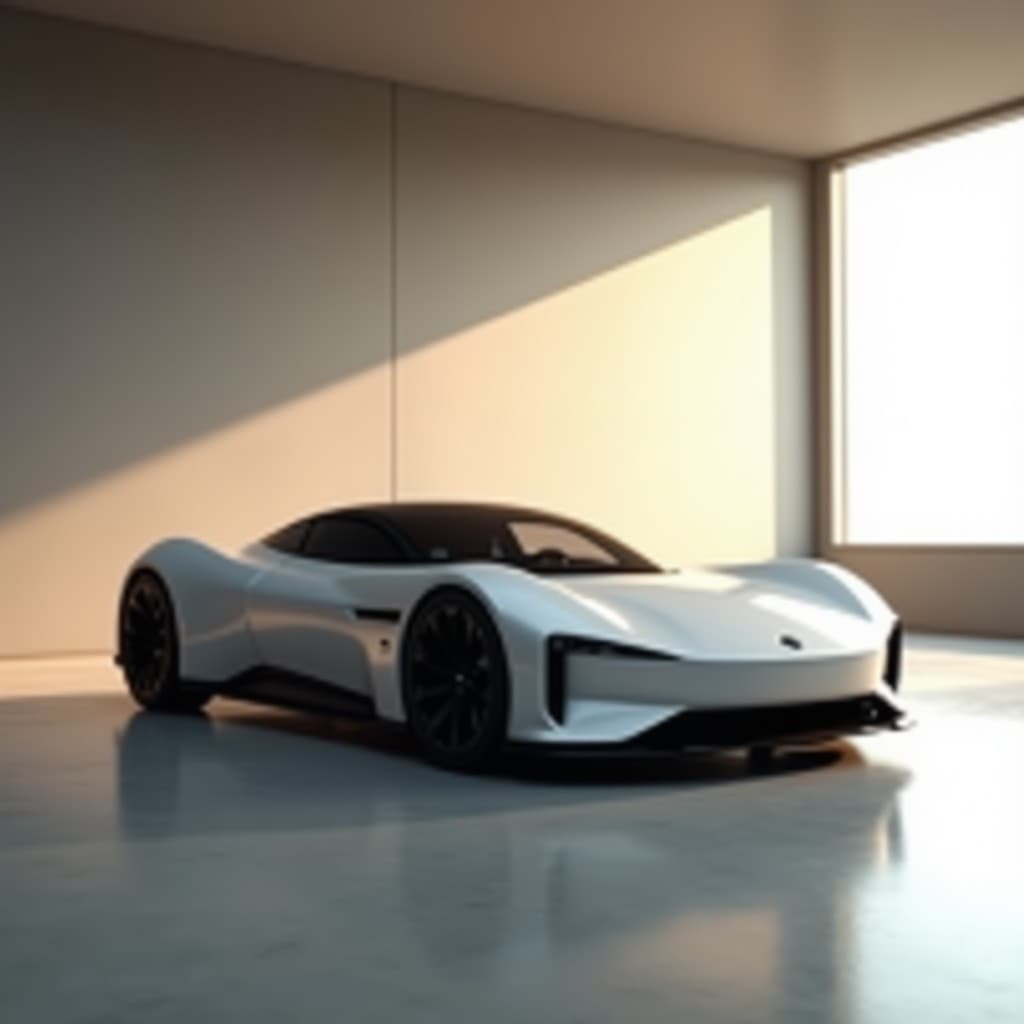
Ferrari CEO Benedetto Vigna defended the €550,000 (roughly $640,000) price tag for the Luce, the carmaker's debut fully electric vehicle, on Thursday, saying the model had received strong orders despite an explosion of criticism attacking both its design and cost. According to CNBC, Vigna argued the price reflected innovation; the New York Post reported that orders were already rolling in despite the furor. The announcement marks a pivotal moment for the Emilia-Romagna supercar sector as it navigates the global shift toward electrification.
The Luce represents Ferrari's answer to a market increasingly demanding zero-emission luxury vehicles, even as traditional combustion-engine purists question whether an electric Ferrari can preserve the brand's identity. Motorsport.com reported that the car has drawn reactions across the motorsport world, with Formula One driver Charles Leclerc's response to Lewis Hamilton test-driving the vehicle going viral. The unveiling comes as European luxury carmakers race to establish credibility in the EV segment while maintaining the exclusivity and performance their customers expect.
For Motor Valley—the cluster of supercar, motorcycle and engineering firms centred on Modena, Bologna and Reggio Emilia—the Luce's reception will test whether the region's manufacturers can sustain their global reputation as battery technology reshapes the industry. The sector has long relied on petrol engines, handcrafted assembly and the mythology of speed; electrification demands new engineering competencies, supply chains and a redefinition of what performance means to a Ferrari buyer.
Ferrari's announcement comes at a moment when the European automotive industry faces mounting pressure to electrify. The European Union has set strict emissions targets, and luxury carmakers have begun positioning themselves as leaders in sustainable performance. Yet the market for ultra-premium electric vehicles remains untested, and the Luce's €550,000 entry price—roughly equivalent to three conventional Ferraris—signals Ferrari's bet that wealthy buyers will pay a premium for exclusivity and innovation rather than volume.
Vigna's public defence of the pricing suggests internal confidence in demand, even as critics question the design language and whether the car's electric architecture compromises the visceral experience that has defined Ferrari for seventy years. The New York Post quoted Vigna saying "look at the people writing to us, the people placing orders," implying that early customer response has validated the strategy. CNBC reported that Vigna framed the cost as fair compensation for technological advancement, though the outlet did not specify order volumes or delivery timelines.
The Luce's arrival reflects a broader industry transition. Lamborghini, also based in Motor Valley, has committed to hybrid and electric models; Ducati, the region's motorcycle manufacturer, has announced battery-powered prototypes. Porsche, Mercedes and Aston Martin have all launched or announced electric vehicles at comparable price points, suggesting that the ultra-luxury segment may be willing to absorb the cost of battery technology if exclusivity and performance are preserved.
For Emilia-Romagna, the implications are both opportunity and risk. The region's competitive advantage has rested on engineering excellence, design heritage and the ability to command premium prices for limited-production vehicles. Electrification does not eliminate those strengths—if anything, electric motors demand new precision in powertrain integration and software architecture. Yet the transition requires investment in battery expertise, supply-chain partnerships with semiconductor and cell manufacturers, and a workforce retrained in electric propulsion.
The region's cooperative and small-to-medium enterprise ecosystem, which has historically supported Ferrari and Lamborghini through specialized suppliers, faces its own adaptation challenge. Many Emilia-Romagna firms have built their business models around combustion-engine components—fuel injection systems, transmission housings, exhaust technologies. The shift to electric drivetrains will consolidate some supply chains while opening new opportunities in thermal management, battery housing and high-voltage electrical systems.
Motorsport.com's report of Leclerc's viral reaction to Hamilton driving the Luce suggests that Ferrari is also managing a cultural narrative: the car must be credible to the motorsport world and to existing Ferrari owners, many of whom view the brand through the lens of Formula One performance and mechanical tradition. The fact that a Formula One driver's response to the vehicle became newsworthy indicates how closely the automotive world is watching whether Ferrari can translate its racing DNA into the electric era.
The timing of the Luce's launch also reflects market dynamics beyond Motor Valley. According to CNBC, the global luxury electric vehicle market is expanding, with demand concentrated among wealthy buyers in North America, Western Europe and China who view electrification as both an environmental statement and a technological frontier. Ferrari's decision to price the Luce at the absolute top of the market suggests confidence that brand loyalty and exclusivity will overcome price sensitivity among its target demographic.
Yet the critical reception has been sharp. Design criticism has centred on whether the Luce's proportions—dictated partly by battery packaging and aerodynamic efficiency—retain the visual drama that has made Ferrari instantly recognizable. Some observers have questioned whether an electric car, lacking the mechanical theatre of a high-revving engine, can deliver the sensory experience that justifies Ferrari's price premium. These debates will shape not only the Luce's commercial success but also how Motor Valley's other manufacturers approach their own EV transitions.
The Luce also arrives as European energy prices remain volatile and as questions persist about the sustainability of battery production and electricity grids. While the EU has committed to decarbonization, the real-world infrastructure for charging ultra-premium vehicles at scale remains nascent, particularly outside major cities. For an Emilia-Romagna buyer, the practical calculus of owning a €550,000 electric Ferrari includes not only the purchase price but also the availability of high-speed charging infrastructure and the total cost of ownership over the vehicle's lifetime.
Vigna's public confidence in orders suggests that Ferrari's market research has identified sufficient demand to justify the investment. Yet the Luce will be watched closely by competitors, investors and industry analysts as a bellwether for whether the ultra-luxury segment can sustain premium pricing in the electric era. If the Luce sells well, it will validate Ferrari's strategy and likely accelerate electrification across Motor Valley; if demand disappoints, it may force a recalibration of pricing and product strategy across the region's supercar sector.
For Emilia-Romagna's broader economy, the stakes extend beyond Ferrari. The region's identity as a centre of mechanical excellence and design innovation depends on its ability to lead—not follow—in technological transitions. The Luce represents an opportunity to demonstrate that Motor Valley can pioneer electric performance, not merely adapt to it. Success would reinforce the region's position in global luxury markets; failure would suggest that electrification favours established automotive powers with deeper resources and larger production scales.
The coming months will reveal whether Vigna's confidence in orders translates into sustained demand, whether the Luce's design proves timeless or becomes a cautionary tale, and whether Motor Valley's supply ecosystem can adapt quickly enough to support the region's supercar makers through the electric transition. The €550,000 question, in other words, is not just whether Ferrari can sell electric cars—but whether Emilia-Romagna can remain the world's premier centre for automotive innovation in an era of battery power.