
LOMBARDIA
Ferrari enters EV market with five-seat Luce, eyes younger buyers and China
The Maranello carmaker's first all-electric model signals a shift toward mass-market ambitions and emerging economies.
Beatrice Comolli1,347 wordsEdition №3Wednesday, 3 June 2026 — Edition № 3
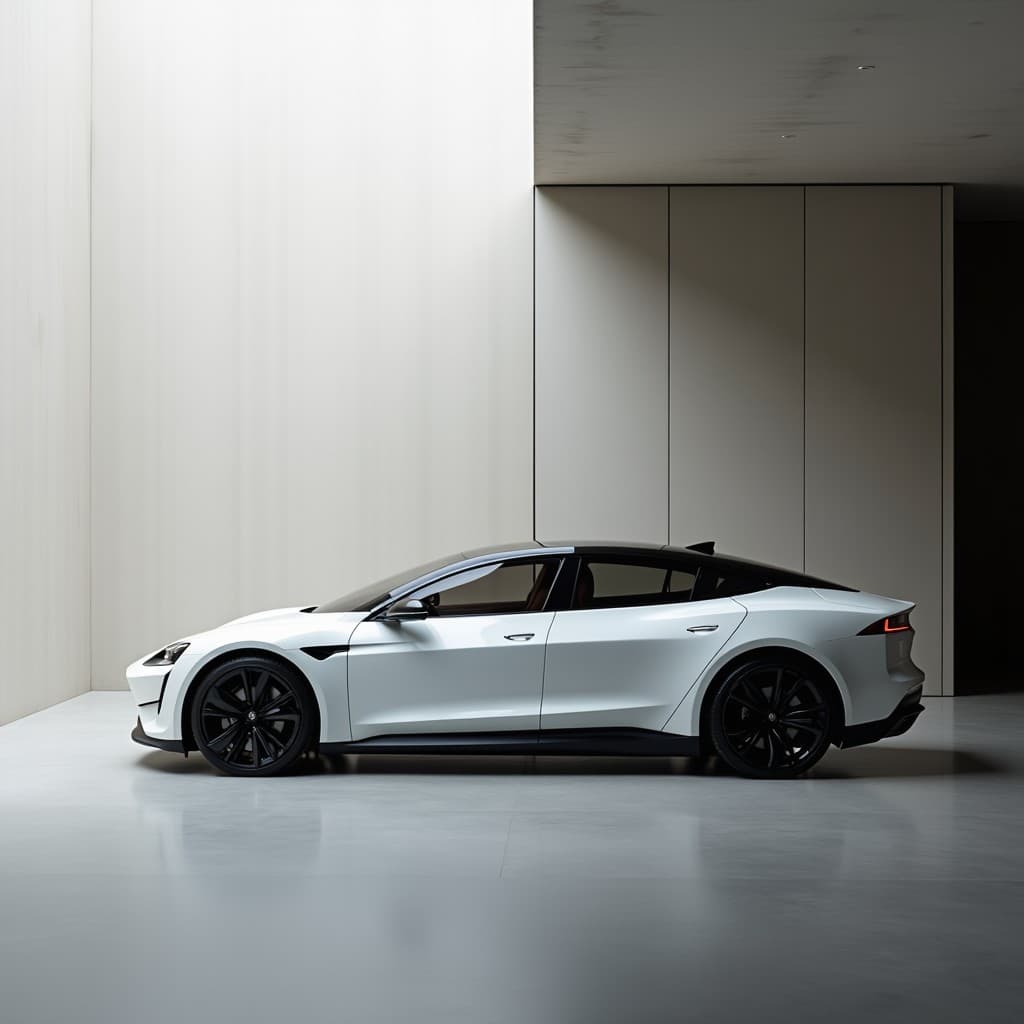
Ferrari, the Maranello supercar manufacturer, has released images of the Luce, marking its entry into the all-electric segment and a departure from the single-minded pursuit of performance that has defined the brand for decades. According to Deutsche Welle, the Luce will be both Ferrari's first pure EV and its first car capable of seating five people, a significant expansion of the brand's traditional two-seat, ultra-high-performance formula.
The move signals a strategic pivot toward younger clientele and the increasingly competitive Chinese market, where electric vehicles have become the dominant growth category and where traditional luxury marques face mounting pressure from domestic competitors. The five-seat configuration and electric powertrain represent a deliberate softening of Ferrari's exclusivity positioning, a calculated gamble that the brand's heritage can sustain a broader appeal.
For Milan's financial markets and the broader Lombardy manufacturing ecosystem, the Luce represents both an opportunity and a test case. Italian automotive suppliers, concentrated in the northern regions, have struggled to compete in the EV supply chain against German and Asian competitors. Ferrari's commitment to electrification could anchor demand for high-specification components and battery systems within Italy's advanced manufacturing base.
The Luce announcement arrives as the global automotive industry accelerates its transition away from internal combustion engines, a shift that has left traditional European manufacturers scrambling to defend market share against Chinese EV makers and Tesla. Ferrari, long positioned as the pinnacle of petrol-powered performance, has resisted full electrification longer than rivals like Lamborghini and Porsche, both of which have already committed to electric lineups.
Deutsche Welle's reporting emphasizes that the Luce targets a demographic shift: younger, wealthier consumers in emerging markets who view electric vehicles not as a compromise but as a statement of technological sophistication and environmental consciousness. This represents a fundamental recalibration of Ferrari's brand strategy, which has historically relied on scarcity, noise, and raw mechanical power as its primary selling points.
The five-seat configuration is particularly telling. Ferrari's heritage is built on the two-seat roadster—the 250 GTO, the F40, the 458—vehicles designed for the driver and a single passenger. A five-seat Ferrari dilutes that purity, but it also opens the vehicle to family use and daily practicality, categories that have never been part of the brand's vocabulary. This is a concession to market reality: even ultra-luxury buyers increasingly demand vehicles that can accommodate their lives, not merely their fantasies.
China represents the strategic prize. The Chinese automotive market, now the world's largest, has become the battleground for EV dominance. BYD, NIO, and other domestic manufacturers have captured the mass-market EV segment, while Tesla and European luxury brands compete for the premium tier. Ferrari's entry into this market with an electric flagship signals recognition that future growth in luxury automobiles will be driven by Chinese purchasing power and Chinese regulatory mandates favoring zero-emission vehicles.
For Lombardy, the implications are complex. The region is home to Italy's most advanced automotive suppliers—companies specializing in carbon fiber, lightweight composites, and precision engineering. These suppliers have traditionally served Ferrari and other supercar manufacturers, commanding premium margins for bespoke, low-volume components. The shift to electrification threatens to commoditize parts of this supply chain: electric motors, battery enclosures, and power management systems are increasingly standardized across manufacturers, reducing the competitive advantage of specialized Italian suppliers.
However, the Luce also presents an opportunity. High-performance electric vehicles demand sophisticated thermal management systems, lightweight structural materials, and precision engineering—precisely the capabilities that Lombardy's suppliers have developed over decades. If Ferrari sources these components from Italian manufacturers rather than outsourcing to cheaper Asian alternatives, the Luce could anchor a new generation of EV-focused supply contracts in the region.
The broader context is Italy's struggle to maintain its position in the global automotive value chain. Italy produces roughly 800,000 vehicles annually, a fraction of Germany's output and a declining share of European manufacturing. The country has lost ground in EV production to Germany, France, and increasingly Eastern Europe. Ferrari's commitment to electrification, if backed by substantial investment in Italian manufacturing and supply chains, could signal a reversal of this trend—or merely accelerate it if production is shifted elsewhere.
Maranello itself, the small Emilia-Romagna town where Ferrari has been based since 1943, faces its own transition. The factory has historically been a symbol of Italian craftsmanship and engineering excellence, attracting wealthy enthusiasts and tourists who view the brand as inseparable from its place of origin. An electric Ferrari produced in Maranello could reinforce this narrative—innovation rooted in tradition—or undermine it, if the shift to EVs is seen as a capitulation to market forces rather than a choice.
The Luce's design language will be crucial to its reception. Ferrari has always competed on aesthetic grounds as much as performance: the visual drama of a Ferrari is part of its value proposition. An electric vehicle, lacking the sculptural exhaust pipes and mechanical complexity of a petrol engine, must communicate performance and exclusivity through different visual cues. The design will signal whether Ferrari views electrification as an evolution of its identity or a departure from it.
The timeline for the Luce's market entry remains unclear from Deutsche Welle's reporting, but the announcement itself is a statement of intent. Ferrari is signaling to investors, competitors, and customers that it recognizes the inevitability of electrification and is willing to adapt its core product to survive it. This is a significant shift from the brand's historical stance, which has been to resist market trends and define luxury on its own terms.
For Milan's investment community, the Luce raises questions about Ferrari's valuation and growth trajectory. The company has been publicly traded and has delivered consistent returns to shareholders, but growth has been constrained by the inherent limits of the ultra-luxury market. An electric vehicle aimed at a younger, broader demographic could expand Ferrari's addressable market—but only if the brand can maintain its exclusivity and desirability while becoming more accessible.
The competitive landscape will intensify. Porsche's Taycan, launched in 2019, has proven that electric vehicles can deliver performance and luxury simultaneously. Lamborghini has committed to electrification by 2030. Bentley and Rolls-Royce are developing electric flagships. Ferrari's Luce enters a crowded field, but with the advantage of unmatched brand heritage and a century of performance engineering. Whether that heritage translates to EV success remains an open question.
The announcement also reflects broader shifts in Italian manufacturing strategy. The country has historically competed on design, craftsmanship, and brand heritage rather than on volume or cost efficiency. Electrification threatens to level this playing field: an electric motor is an electric motor, whether made in Italy or China. Ferrari's response—to build an electric vehicle that is unmistakably Ferrari—is a bet that brand and design can still command premium pricing even as the underlying technology becomes commoditized.
For Lombardy specifically, the Luce represents a test case for whether the region can maintain its position as a hub for advanced automotive manufacturing and design. Milan is home to design studios, engineering firms, and luxury brands that compete globally on innovation and aesthetics. If Ferrari's electric transition is managed in partnership with Lombardy-based suppliers and designers, it could reinforce the region's position as Italy's innovation center. If production and supply chains migrate elsewhere, it will accelerate the hollowing out of Italian automotive manufacturing.