
REGIONAL
Trump envoy's superyacht 'diplomacy' plan ignites Venice fury
Billionaire ambassador's 380-foot yacht visit draws protests as Lagoon city braces for what locals call a symbol of resource excess amid climate crisis.
Tommaso Veronese527 wordsEdition №29Sunday, 28 June 2026 — Edition № 29
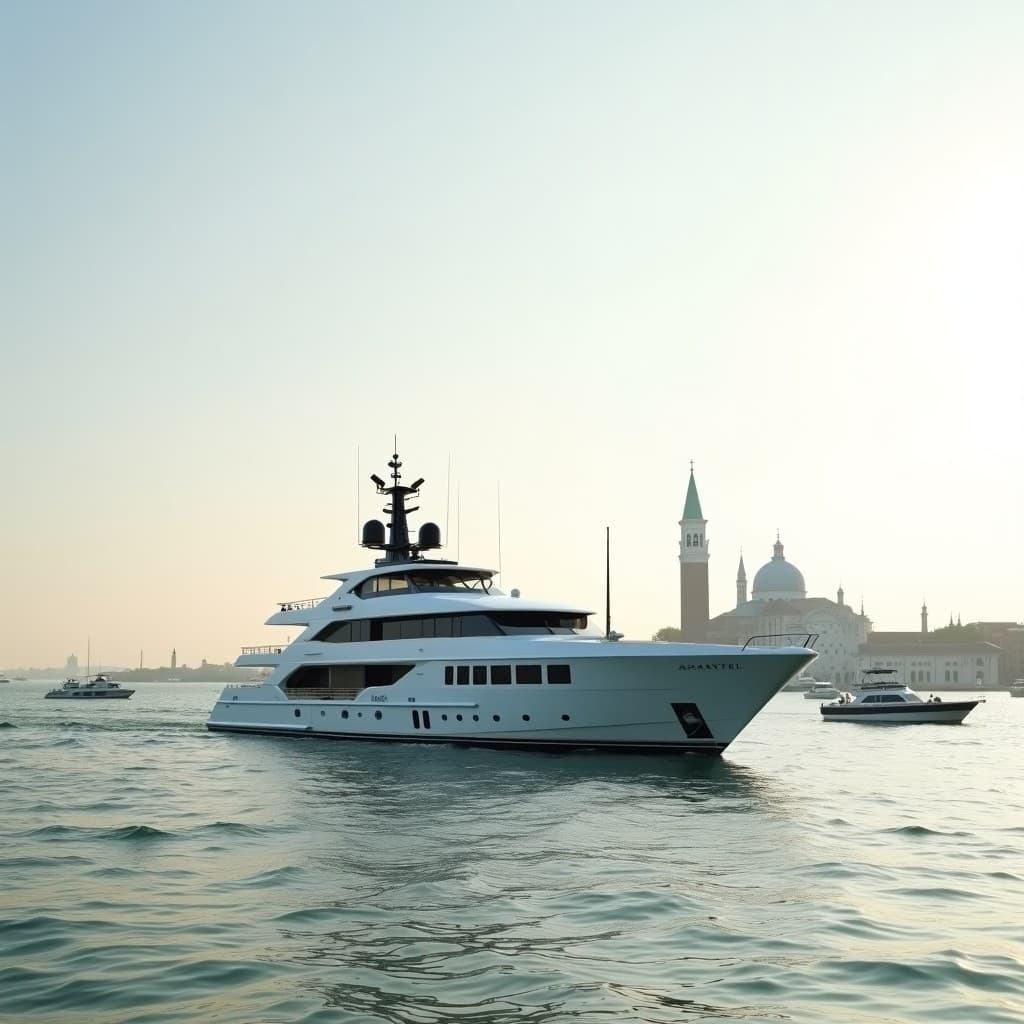
President Donald Trump's billionaire ambassador to Italy has announced plans to spend weeks aboard a 380-foot superyacht called the Boardwalk during what he calls "coastal diplomacy," according to The Daily Beast. The vessel, worth $450 million and featuring six decks, is set to anchor in Venice—a move that has triggered immediate backlash from a city already struggling with overtourism, subsidence, and the symbolic weight of climate crisis. Venice residents and environmental groups have begun organizing protests, viewing the superyacht visit as emblematic of the resource excess and inequality that underpin the climate emergency the lagoon faces daily.
For Venice, the timing could hardly be more pointed. The city is still recovering from the 2019 acqua alta, when flooding reached near-record levels, and the MOSE barrier system—designed to protect the lagoon from high tides—remains the subject of heated debate about whether infrastructure alone can save a sinking city. The Daily Beast reported that the ambassador's plan to "flaunt" the yacht has infuriated members of his host country, with locals seeing it as a deliberate gesture of indifference to the environmental pressures that define Venetian life. A superyacht of that scale consumes enormous fuel, requires constant resupply, and generates waste streams that small island communities cannot easily absorb.
The diplomatic stunt arrives as Italy's Giorgia Meloni has publicly distanced herself from Trump over what she called his "constant, unprovoked attacks," according to France 24 reporting on her recent summit with Emmanuel Macron on the French Riviera. The fracture in Rome-Washington relations means the ambassador's Venetian visit carries added weight as a symbol of American cultural assertiveness at a moment when Italy is recalibrating its European alignment. For Venice, already a global symbol of climate vulnerability, the superyacht becomes a visual argument about whose interests the American embassy prioritizes.
Venice has long been a flashpoint in debates about tourism, inequality, and environmental stewardship. The city's resident population has fallen from 175,000 in 1951 to fewer than 250,000 today, driven out partly by flooding, subsidence, and the transformation of the city into a day-tripper destination. The introduction of a daily entry levy for tourists, implemented to manage overcrowding, has become a symbol of Venice's attempt to reclaim control over its own space. A superyacht visit by a Trump appointee—during a week when record European heatwaves are killing people and forcing power rationing across Italy—reads to Venetians as a statement that American wealth operates on a different set of rules.
The environmental cost is concrete. Superyachts of this scale burn heavy fuel oil, produce emissions equivalent to hundreds of cars, and require extensive provisioning that strains local supply chains. The Boardwalk's six decks and luxury amenities represent consumption at a scale that contradicts every climate commitment the Italian government has made. Meloni, despite her recent break with Trump, has not publicly commented on the yacht plan, leaving the diplomatic response to local authorities and civil society. Venice's mayor and environmental groups are expected to mount formal protests, though the U.S. embassy's security apparatus and Italian state cooperation make obstruction unlikely.
The deeper issue is symbolic. Venice exists in the world's imagination as a cautionary tale—a city drowning in climate change, saved only by engineering marvels like MOSE and the daily work of residents who refuse to abandon their home. A billionaire ambassador's weeks-long "coastal diplomacy" aboard a superyacht inverts that narrative, suggesting that wealth and American power transcend the constraints that ordinary Venetians face. For a city that has become a laboratory for climate adaptation and a symbol of what the world stands to lose, the yacht visit feels less like diplomacy and more like a deliberate performance of indifference.