
CULTURA
Pink newcomers: flamingos reshape Venice's ecological story
Record numbers of the birds are colonising restored wetlands in the lagoon, marking a shift in the city's relationship with its water and wildlife.
Eleonora Vanzetti1,247 wordsEdition №3Wednesday, 3 June 2026 — Edition № 3
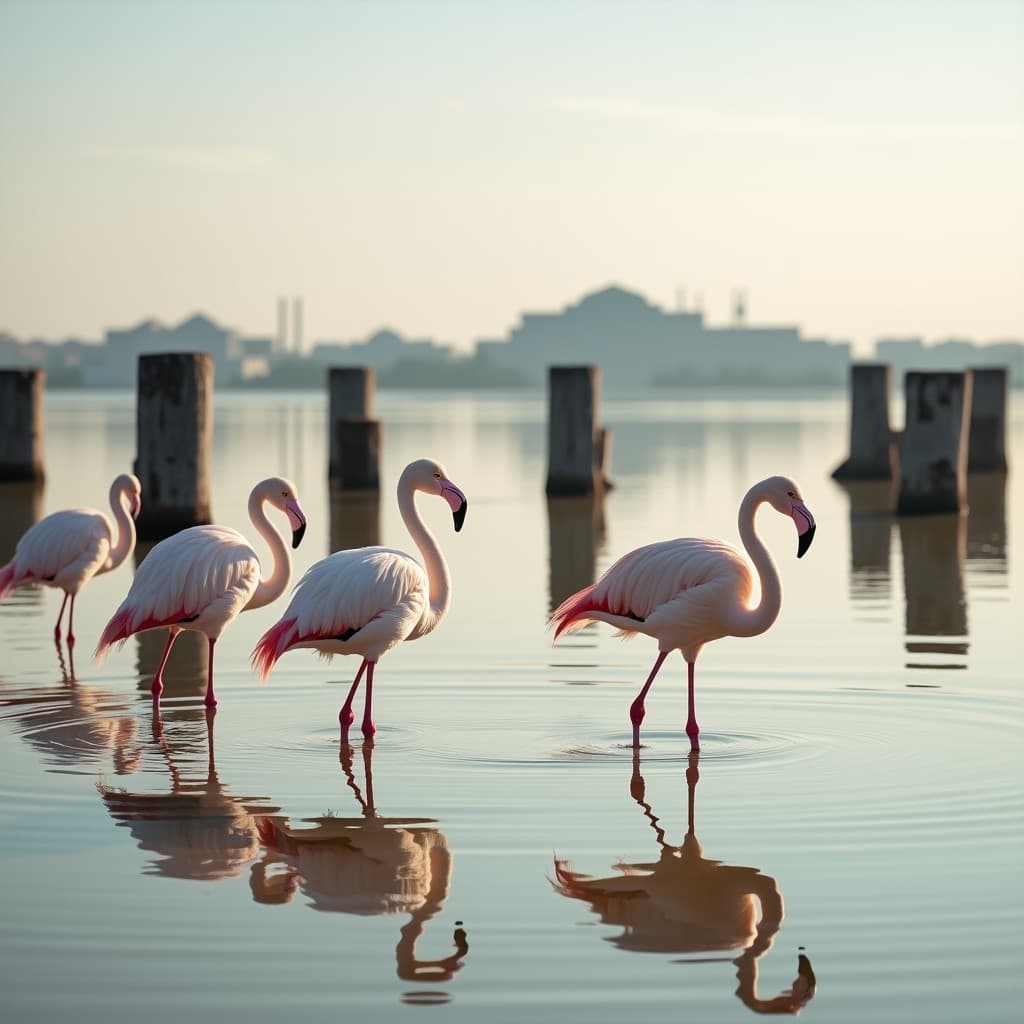
The pale pink birds now congregating in the waters around Venice represent something foreign correspondents have noted with some surprise: a success story in one of Europe's most fragile ecosystems. According to AP News, flamingos — called fenicotteri in Italian — are flocking to the Venetian Lagoon in record numbers, a phenomenon so recent that the local dialect possesses no word for them. The birds' arrival coincides with ecological efforts to restore damaged wetlands, which could expand their habitat and potentially encourage them to nest in the lagoon for the first time.
The flamingos' colonisation of Venice marks a reversal of the lagoon's long decline. The Venetian Lagoon has faced decades of environmental stress from industrial pollution, subsidence, and the erosion of salt marshes that once dominated the ecosystem. The restoration projects now underway represent an attempt to reverse that damage by recreating the shallow-water habitats that support migratory and breeding birds. The flamingos' presence signals that these efforts are beginning to work.
The birds' arrival carries cultural and economic implications for a city already grappling with the pressures of mass tourism and climate change. Venice's identity has long rested on its singular relationship with water — the lagoon as both threat and foundation. The flamingos introduce a new dimension to that story: not just Venice as a city under siege, but as a place where nature can recover if given the chance.
The scale of the flamingo influx has surprised even ecologists monitoring the lagoon. AP's reporting indicates that the birds are now present in numbers that would have been unthinkable a decade ago, when the Venetian wetlands were in sharper decline. The restoration work has focused on recreating the salt marshes and shallow lagoons that provide feeding grounds for wading birds. Flamingos, which filter-feed in shallow water, are particularly well-suited to these restored habitats.
The ecological context matters for understanding why this story has captured international attention. Venice's lagoon is one of Europe's most complex and stressed ecosystems. It sits at the intersection of freshwater input from mainland rivers, tidal flows from the Adriatic, and the weight of a city built on pilings and islands. Subsidence — the gradual sinking of the city — has been a chronic problem for centuries, accelerated in the 20th century by industrial groundwater extraction on the mainland. The combination of subsidence and rising sea levels has compressed the lagoon's capacity to support its traditional wildlife.
The flamingos themselves are not native to the Venetian Lagoon. They are migratory birds, breeding in North Africa and the Middle East, that have historically wintered in Mediterranean wetlands further south and east. Their appearance in Venice suggests a shift in migration patterns, possibly driven by climate change or the availability of newly restored habitat. The fact that the local Venetian dialect lacks a word for them underscores how recent and unexpected their presence is.
The restoration efforts that have made the flamingos' arrival possible are part of a broader initiative to stabilise and revive the lagoon ecosystem. These projects involve the reconstruction of salt marshes, the management of invasive species, and the careful balance of water flows to maintain the lagoon's ecological health. The work is expensive and ongoing, funded by a combination of Italian government resources and European Union environmental programmes. It represents a recognition that Venice's survival depends not only on engineering solutions to flooding — such as the MOSE barrier system — but also on the health of the natural systems that surround the city.
For Venice's cultural economy, the flamingos offer a new narrative dimension. The city has long marketed itself through its art, architecture, and history — the Biennale, the museums, the festivals. Tourism to Venice has become a fraught subject in international coverage, with foreign correspondents regularly documenting the strain that millions of annual visitors place on the city's infrastructure and social fabric. The flamingos introduce an alternative story: Venice not as a museum frozen in time, but as a living ecosystem capable of renewal.
The birds' presence also intersects with Venice's role in global climate and environmental discourse. The city has become a symbol of climate vulnerability, regularly featured in international reporting on rising seas and threatened cultural heritage. The flamingo story complicates that narrative. It suggests that adaptation and restoration are possible, that ecological systems can recover with sustained effort. For foreign environmental journalists, the flamingos represent a counterpoint to the more common story of Venice as a cautionary tale.
The arrival of the flamingos has not gone unnoticed by the city's tourism industry. Venice's economy depends heavily on visitors drawn by the city's unique character and historical significance. The flamingos add a new dimension to what visitors might experience — the possibility of encountering wildlife in the lagoon, of seeing the city not as an isolated monument but as part of a living ecosystem. Some tourism operators have begun incorporating the flamingos into their marketing, offering guided tours of the lagoon specifically to observe the birds.
The ecological recovery of the Venetian Lagoon also has implications for the broader Adriatic region. The lagoon is one of several Mediterranean wetland systems that have been degraded by human activity and climate change. If the restoration efforts in Venice prove successful in attracting and sustaining populations of migratory birds like flamingos, the model could be applied elsewhere. The Adriatic coast of Italy, Croatia, and other countries has similar wetland systems that have suffered comparable damage.
The flamingos' nesting behaviour, should it materialise, would mark a significant milestone. Migratory birds that begin to breed in a new location represent a shift in their population dynamics and behaviour. If flamingos establish breeding colonies in the Venetian Lagoon, it would indicate that the restored habitat has become not merely a stopover point but a viable breeding ground. This would require sustained ecological management and protection from disturbance.
The international press coverage of the flamingos reflects a broader shift in how foreign correspondents report on Italy. Rather than focusing solely on political dysfunction, economic challenges, or cultural decline, some outlets are beginning to report on stories of environmental recovery and ecological innovation. The flamingos fit into this emerging narrative: Italy not as a country in irreversible decline, but as a place where difficult problems can be addressed through sustained effort and investment.
The presence of the flamingos also raises questions about human-wildlife coexistence in a densely populated region. Venice's lagoon is not a pristine wilderness; it is a working ecosystem that supports fishing, agriculture, and human settlement. The arrival of large numbers of flamingos must be managed carefully to avoid conflict with existing uses of the lagoon. Fishermen, in particular, may view the birds as competitors for resources or as a nuisance. The restoration projects have had to balance ecological goals with the needs of the communities that depend on the lagoon for their livelihoods.
Looking forward, the flamingos' presence in Venice will likely continue to attract international attention. Environmental journalists, wildlife photographers, and tourism operators will all have reasons to follow the story. The birds represent a visible, photogenic indicator of ecological change — something that foreign media outlets can easily communicate to their audiences. As climate change and environmental degradation become increasingly central to international news coverage, stories like the flamingos offer a rare example of positive ecological change.
The restoration of the Venetian Lagoon remains incomplete and ongoing. The flamingos' arrival is encouraging, but it does not mean that the lagoon's problems have been solved. Subsidence continues, sea levels continue to rise, and the balance between human use and ecological health remains precarious. The flamingos are, in a sense, both a symbol of hope and a reminder of how much work remains to be done. For Venice, they represent a small but significant victory in the effort to preserve not just the city's cultural heritage, but the natural systems on which both the city and its wildlife depend.