
NATIONAL
Four burned alive in Calabria van: system failure in Italy's migrant labour
Surveillance shows deliberate killing of Afghan and Pakistani farmworkers; arrests follow as foreign press examines exploitation chain
Saverio Gallo1,247 wordsEdition №9Tuesday, 9 June 2026 — Edition № 9
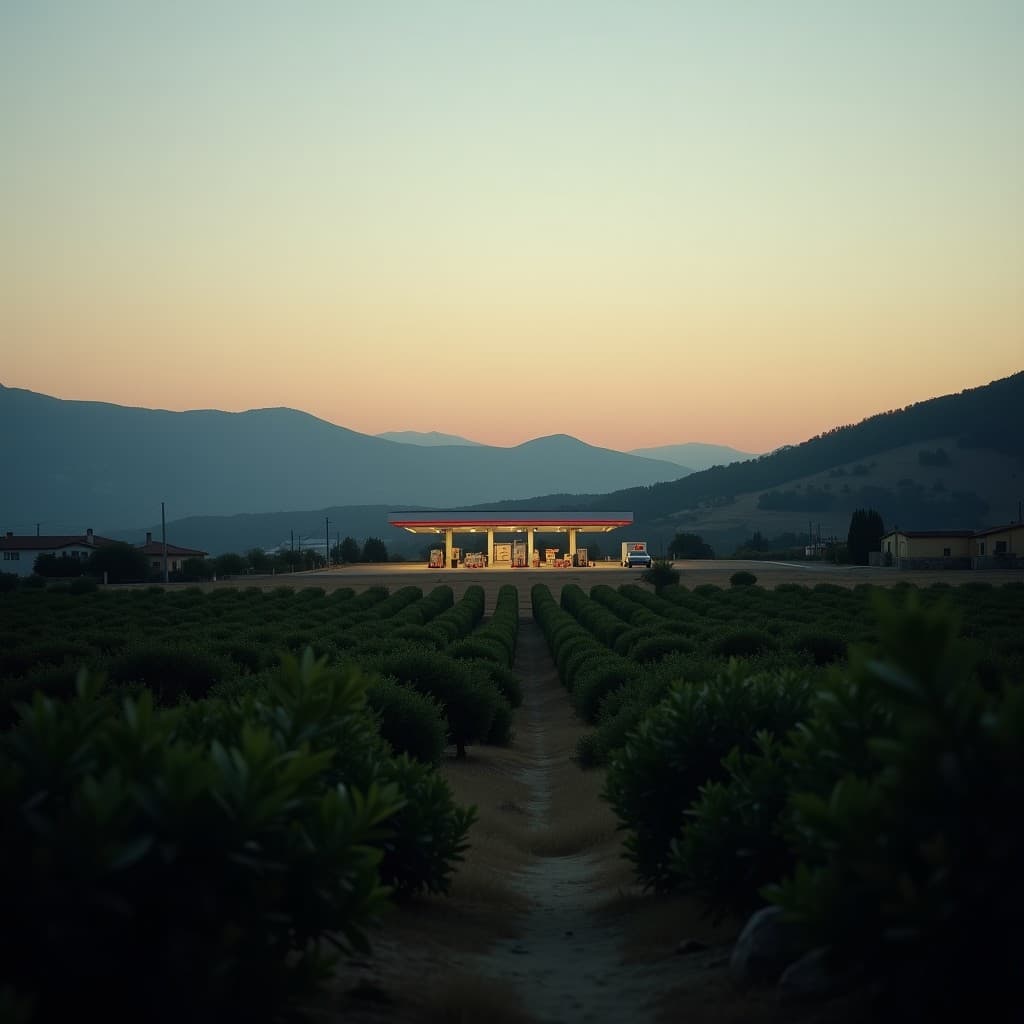
Surveillance footage captured two figures dousing a minivan with fuel and blocking its doors as the vehicle burned in Calabria on June 2, killing four migrant farmworkers inside. According to the New York Times, three of the dead were Afghan nationals and one was Pakistani; all were employed in agriculture. Italian police arrested two Pakistani nationals in connection with the deaths, the Hindustan Times reported, though the motive and the precise circumstances remain under investigation.
The killing took place at a petrol station in the region, in daylight, suggesting either a deliberate act of violence or a catastrophic workplace dispute. The New York Times noted that surveillance evidence showed the vehicle's doors being blocked as it burned, indicating the deaths were not accidental. The case has drawn international attention to the conditions faced by undocumented migrant workers across southern Italy's agricultural sector.
Calabria's citrus and bergamot farms depend heavily on seasonal migrant labour, much of it undocumented and vulnerable to wage theft, unsafe conditions, and now, as this case demonstrates, lethal violence. The four men were part of a vast informal workforce that sustains the region's agriculture but exists largely outside legal protection. Their deaths expose not a single criminal act but a system in which migrant workers operate with minimal oversight, no recourse to labour authorities, and no safety net.
The New York Times reported that the two men arrested are both Pakistani nationals, though their identities have not been publicly disclosed. Italian authorities have not yet announced formal charges or a clear motive. The minivan was parked at a petrol station, a public space, raising questions about how such an act could occur without immediate intervention or witness testimony that might have prevented the deaths.
The Hindustan Times identified the dead as three Afghans and one Pakistani, all migrant farmworkers. Their names and ages have not been widely circulated in the international press, a detail that itself reflects the invisibility of undocumented migrant labour in Italy's formal record-keeping. The New York Times noted that the case highlights the broader abuse of foreign workers in Italian agriculture, a sector that has long relied on migrant labour while offering minimal legal protections.
Calabria's agricultural economy rests on this precarious foundation. The region produces roughly 90 per cent of Italy's bergamot, a citrus fruit used in perfumery and Earl Grey tea, and substantial quantities of lemons, oranges, and other citrus. The harvest is labour-intensive and seasonal, drawing workers from North Africa, South Asia, and Eastern Europe. Many arrive on tourist visas and overstay; others are smuggled in by labour traffickers who control their documents, housing, and wages.
The minivan killing is not the first such incident in Calabria. In April 2024, four farmworkers were burned alive in a similar incident in Basilicata, a neighbouring region with comparable agricultural patterns. That case also involved migrant workers in precarious employment; it too exposed the absence of meaningful labour inspection or worker protection in the informal agricultural sector. The repetition suggests a structural failure, not an isolated crime.
The New York Times observed that the case raises questions about labour trafficking, wage disputes, and the absence of regulatory oversight in Calabrian agriculture. Migrant workers often live in makeshift camps or overcrowded housing provided by employers or labour brokers, isolated from Italian-speaking communities and unaware of their legal rights. They communicate with employers through intermediaries, have no written contracts, and are paid in cash—if they are paid at all.
Italian authorities have not yet disclosed whether the two arrested men were employers, labour brokers, or fellow workers. The motive remains unclear: was this a wage dispute, a trafficking-related killing, a personal vendetta, or something else? The ambiguity itself reflects the opacity of Calabria's informal labour market, where transactions occur off the books and disputes are settled outside the law.
The Hindustan Times reported that the arrests came swiftly, suggesting either strong eyewitness testimony or surveillance evidence beyond the footage from the petrol station. Yet speed of arrest does not necessarily lead to clarity about motive or systemic failure. Italian prosecutors will need to trace the employment chain: who hired these men, who transported them, who housed them, who paid them, and what dispute or circumstance led to their deaths.
Calabria's regional government and the Italian state have long acknowledged the problem of labour trafficking in agriculture but have struggled to enforce protections. Migrant workers are reluctant to report abuse or wage theft because they fear deportation. Employers and labour brokers operate with near-impunity because enforcement is sparse and penalties are light. The result is a labour market where violence becomes a tool of control and dispute resolution.
The New York Times noted that the case has prompted renewed calls for stronger labour inspection and worker protection in Italian agriculture. Yet such calls have been made before, after previous incidents, without producing sustained change. The structural incentives remain: farmers and labour brokers profit from low-wage, unregulated labour; workers have no bargaining power; and the state's enforcement capacity is limited.
Calabria's ports, particularly Gioia Tauro, are known to international law enforcement as trafficking hubs. The region is a transit point for drugs, weapons, and human cargo moving through the Mediterranean. The presence of organised crime—the 'Ndrangheta operates extensively in Calabria—adds another layer of danger to migrant workers, who may be caught between criminal networks competing for control of labour supply or trafficking routes.
The four dead men were part of a larger cohort of undocumented workers in Calabrian agriculture. Exact numbers are unknown, but estimates suggest tens of thousands work in the region's fields at any given time, particularly during harvest seasons. Most are invisible to official statistics, unregistered with tax authorities, and uncounted in labour force surveys. Their deaths, when they occur, are often treated as isolated incidents rather than symptoms of systemic exploitation.
The New York Times reported that the case has drawn attention from international labour rights organisations, though their ability to influence Italian policy is limited. The European Union has raised concerns about labour trafficking and exploitation in southern European agriculture, but enforcement remains primarily a national matter. Italy's government has committed to stronger labour inspection, but resources and political will remain constrained.
For Calabria, the killing represents a failure at multiple levels: the failure of employers to provide safe working conditions, the failure of labour brokers to protect workers, the failure of the state to enforce labour law, and the failure of the international community to pressure Italy to act. The four men were part of a system designed to extract their labour while minimising their visibility and their claims on the state.
The arrests of two Pakistani nationals may lead to prosecutions, but they are unlikely to address the underlying conditions that made the killing possible. Until Calabria's agricultural sector is brought into the formal economy, with registered workers, written contracts, minimum wages, and regular inspection, migrant farmworkers will remain vulnerable to exploitation, abuse, and violence. The minivan fire is a symptom of a deeper pathology in the region's labour market.