
PUGLIA
Green Steel Gains Ground in U.S.; Taranto Watches Closely
A Gary, Indiana town hall on low-carbon steel production offers lessons for Italy's most polluted industrial zone.
Francesca Lazzari1,456 wordsEdition №5Friday, 5 June 2026 — Edition № 5
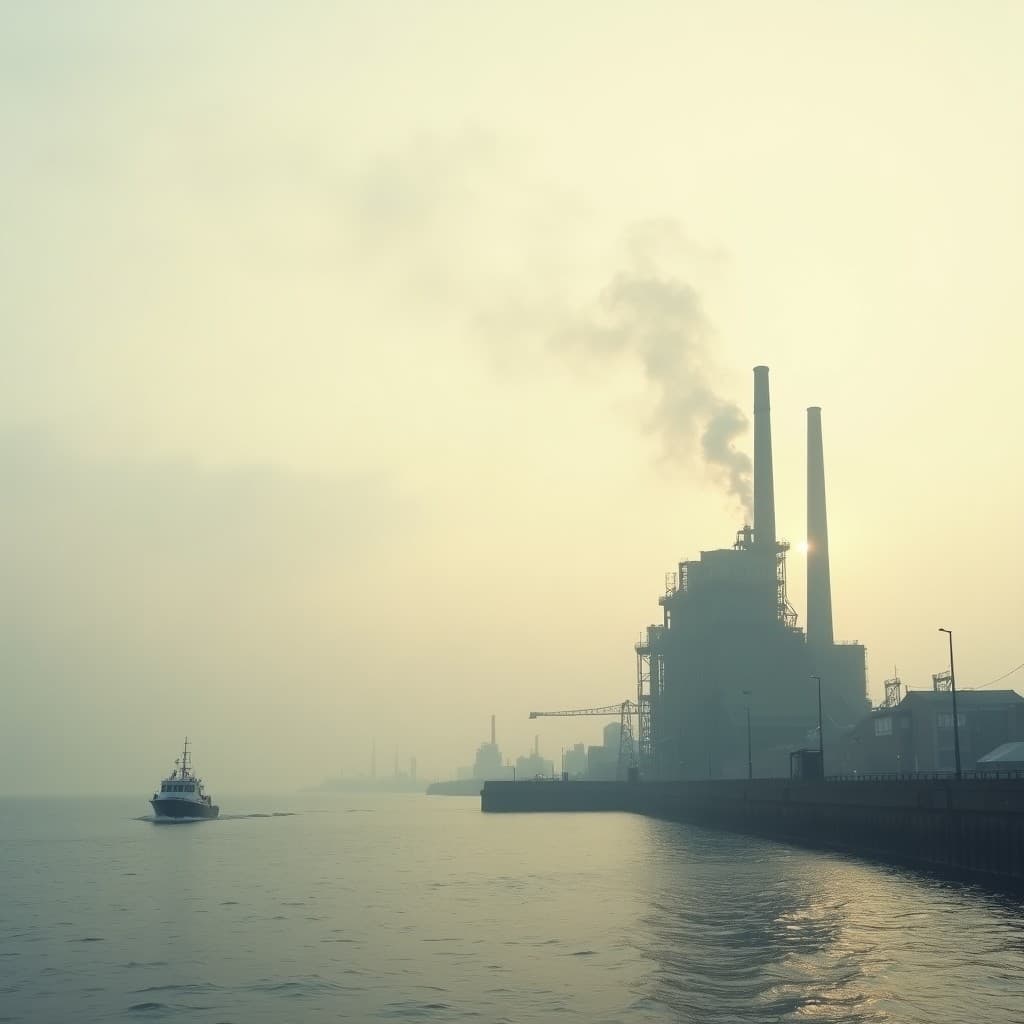
More than 110 people gathered in Gary, Indiana for a town hall on green steel production, according to the Chicago Tribune, where representatives from local advocacy groups explained how low-carbon steelmaking could benefit the region economically and environmentally. The meeting focused on technology that could decrease pollution while preserving industrial employment—a balance that has eluded rust-belt communities for decades.
Green steel production uses hydrogen, electric arc furnaces, or other low-carbon methods to replace traditional blast furnaces that burn coal and coke. The technology is more expensive upfront but produces steel with a substantially lower carbon footprint. For regions dependent on steelmaking, the shift represents both an opportunity to meet climate targets and a risk of job losses if the transition is not managed carefully.
The Gary town hall reflects a broader American conversation about industrial decarbonisation. In Europe, the EU's carbon border adjustment mechanism and climate targets are forcing steelmakers to adopt similar technologies. Italy's Taranto steelworks—Europe's largest integrated steel mill—faces the same pressure, but with less political consensus about how to manage the transition.
The Chicago Tribune reported that the Gary meeting brought together members of GARD (Gary Area Residents Demanding Action) and JTNWI (Just Transition Network of the Midwest), groups focused on environmental justice and worker protection. Their emphasis on community advocacy for green steel technology reflects a shift in how rust-belt communities are engaging with industrial transformation. Rather than accept either pollution or deindustrialisation, they are demanding that steelmakers invest in cleaner production methods while protecting employment.
This framing has direct relevance to Taranto, where the ILVA steelworks has been a flashpoint between environmental health and industrial survival for decades. The mill is responsible for a significant share of Italy's steel production but also contributes substantially to air and water pollution in the Puglia region. Local residents have long faced a false choice: accept pollution or lose jobs.
The green steel technology discussed in Gary—electric arc furnaces, hydrogen-based reduction, carbon capture—exists and is being deployed in Europe. ArcelorMittal, which operates the Taranto works under a concession from the Italian state, has announced plans to invest in greener production methods. However, the pace and scale of that investment remain contested, and the cost of the transition is a source of ongoing dispute between the company, the Italian government, and environmental advocates.
The Chicago Tribune noted that the Gary meeting addressed a fundamental question: how can a community ensure that green steel technology actually benefits local workers and residents, rather than simply reducing emissions while accelerating job losses? This is precisely the question that Taranto must answer. If green steel production requires fewer workers per ton of output—as some analyses suggest—then the transition could deepen unemployment in a region already marked by high joblessness.
In Puglia, the stakes are particularly high. Taranto's steelworks directly employs thousands and supports a much larger ecosystem of suppliers, logistics, and service providers. The region's economy has long depended on this single industrial anchor. A transition to green steel that is not carefully managed could hollow out the local economy even as it reduces pollution.
The Italian government has been engaged in negotiations with ArcelorMittal over the terms of the concession and the pace of environmental compliance. These negotiations have been contentious, with the company arguing that stricter environmental standards threaten profitability, and environmental groups and local residents arguing that the current level of pollution is unacceptable. The green steel transition offers a potential way out of this impasse—but only if the investment is real and the jobs are protected.
The Gary model, as described by the Chicago Tribune, suggests that community organising and advocacy can shape how industrial transformation unfolds. GARD and JTNWI are not simply accepting green steel as a technical fix; they are demanding that it be deployed in ways that serve the community. This approach—grounded in local knowledge and community power—contrasts with top-down industrial policy that treats workers and residents as passive recipients of change.
In Taranto, similar organising has occurred. Environmental groups, worker unions, and residents have all mobilised around the question of the steelworks' future. However, the political economy is more complex in Italy than in the U.S. The Italian state retains a stake in the outcome; European climate policy constrains the options; and the company's financial situation shapes what is possible. The Gary town hall suggests that community pressure can matter, but it also shows that the transition is difficult and contested.
The technology itself is not the constraint. Green steel can be produced at scale; the question is cost and investment. A hydrogen-based reduction furnace requires reliable supplies of green hydrogen, which in turn requires renewable electricity. Italy has significant renewable energy resources, particularly in the South, but the infrastructure to produce and transport green hydrogen is still being built. Taranto could potentially become a hub for green steel production in the Mediterranean, but only with sustained investment and political commitment.
The Chicago Tribune's reporting also highlights the role of just transition frameworks—policies designed to ensure that workers and communities affected by industrial change receive support. In the U.S., there is growing recognition that green energy and decarbonisation cannot be achieved without protecting workers. The EU has similar frameworks, including the Just Transition Mechanism, which provides funding to regions dependent on coal or other carbon-intensive industries.
Puglia is eligible for some of this support, but the amounts are modest relative to the scale of the transition required at Taranto. The region's development agencies and the Italian government will need to coordinate on a comprehensive plan that includes retraining, economic diversification, and investment in new industries. The green steel transition itself could be part of this plan—if it is managed as a genuine opportunity for renewal rather than a cost to be minimised.
The Gary town hall also underscores the importance of transparency and public engagement. The Chicago Tribune reported that residents wanted to understand what green steel is and how it could benefit the region. In Taranto, similar questions are being asked, but the answers are often opaque. ArcelorMittal's investment plans are not always clearly communicated; the government's expectations are sometimes contradictory; and environmental groups and residents are left to piece together information from fragmented sources.
Looking ahead, the green steel transition at Taranto will likely unfold over the next decade or more. The pace will depend on investment decisions, technological development, and political will. The Gary model suggests that community organising and advocacy can shape this process, but they cannot determine it alone. What is clear is that Puglia's future depends on getting this transition right—preserving employment and economic vitality while finally addressing the environmental damage that has marked the steelworks for generations.