
NATIONAL
Genoa bridge chief sentenced to 12 years over 2018 collapse that killed 43
Giovanni Castellucci among 32 convicted; verdict exposes Italy's aging infrastructure crisis and regulatory failures
Davide Ruspoli420 wordsEdition №49Saturday, 18 July 2026 — Edition № 49
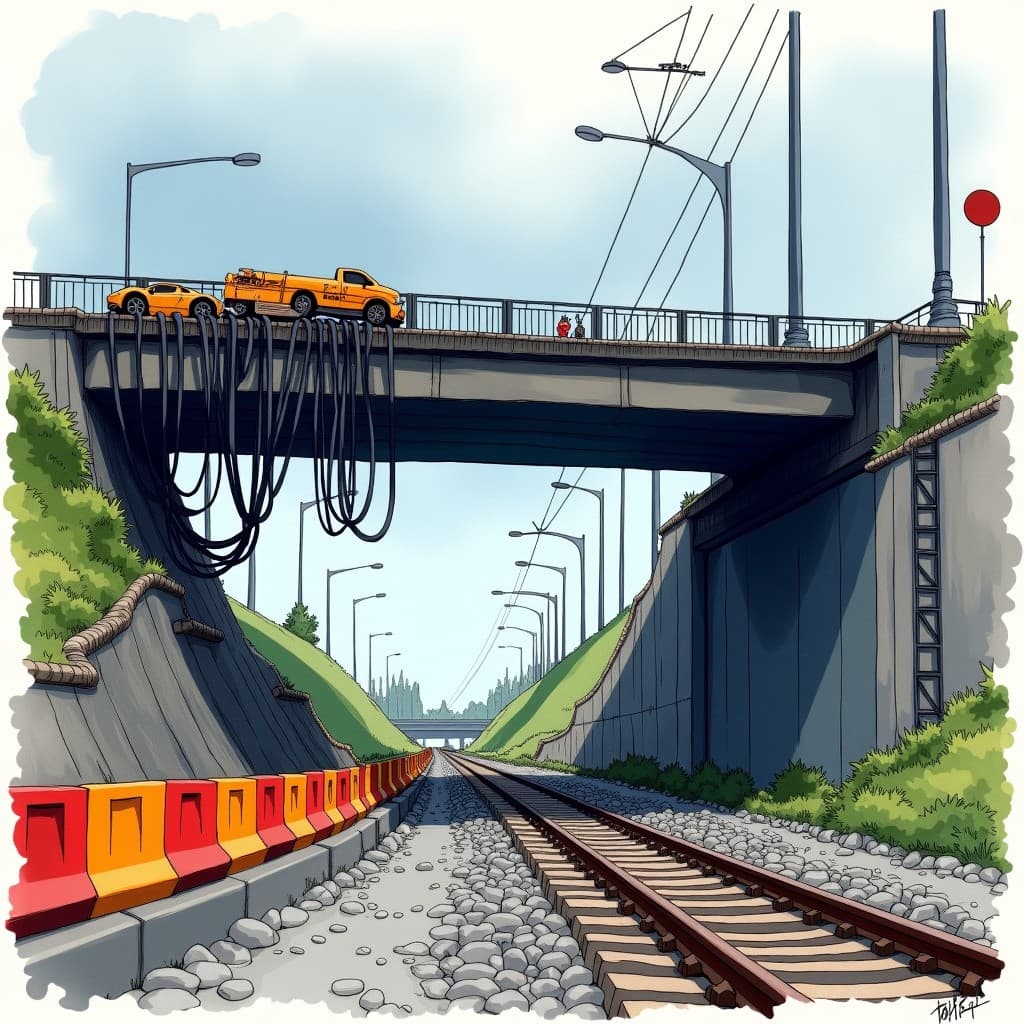
Giovanni Castellucci, who headed Italy's motorway operator Autostrade when the Morandi Bridge in Genoa collapsed in August 2018, has been sentenced to 12 years in prison for vehicular homicide and negligence. According to the Guardian, BBC and France 24, a court on Thursday convicted 32 defendants in total, while 25 others were acquitted or cleared. The verdict marks the formal conclusion of a trial that has laid bare the regulatory and maintenance failures that allowed a critical piece of infrastructure to fail catastrophically.
The collapse of the bridge—a 1.2-kilometre span that carried motorway traffic over the Polcevera valley—remains one of Italy's deadliest infrastructure disasters in recent decades. Autostrade had held the concession to operate the motorway since 1972 and was responsible for maintaining the bridge, including the cable-stayed towers that supported its deck. France 24 reported that the court found the company and its leadership guilty of failing to conduct adequate inspections and repairs despite knowledge of corrosion and structural degradation in the steel cables.
The verdict carries implications that extend far beyond Genoa. The international press has used the trial as a lens through which to examine Italy's broader infrastructure crisis—a national fault line that the foreign media has returned to repeatedly over the past decade. According to France 24, the judgment "highlights Italy's ageing infrastructure issue," a problem that affects not only motorways but railways, bridges, aqueducts and dams across the country. The BBC noted that more than 50 defendants had been on trial, underscoring the scope of institutional and corporate responsibility the courts sought to establish.
For Lazio, the verdict carries a secondary but significant message. Rome and its region depend on an extensive network of motorways, regional roads and urban transit infrastructure—much of it built in the 1960s and 1970s and subject to similar maintenance pressures. The Genoa case has prompted scrutiny of concession agreements and regulatory oversight across Italy's transport network. Autostrade itself operates major routes serving the capital, including the A1 to Florence and the A2 to Naples, making the company's governance and safety record a matter of direct concern to the region.
The sentence also signals a shift in how Italian courts are willing to hold corporate and individual executives accountable for systemic failures. The New York Times reported that Castellucci was among the most senior figures convicted, a rarity in Italian corporate negligence cases. The verdict may set a precedent for future infrastructure litigation, particularly as climate stress and aging assets combine to increase the risk of catastrophic failure across the peninsula.