
SCIENCE
Scientists Study Vitrified Brain Tissue from Vesuvius Victim
Discovery at Herculaneum challenges assumptions about volcanic destruction nearly 2,000 years after eruption
Rosaria Esposito387 wordsEdition №12Thursday, 11 June 2026 — Edition № 12
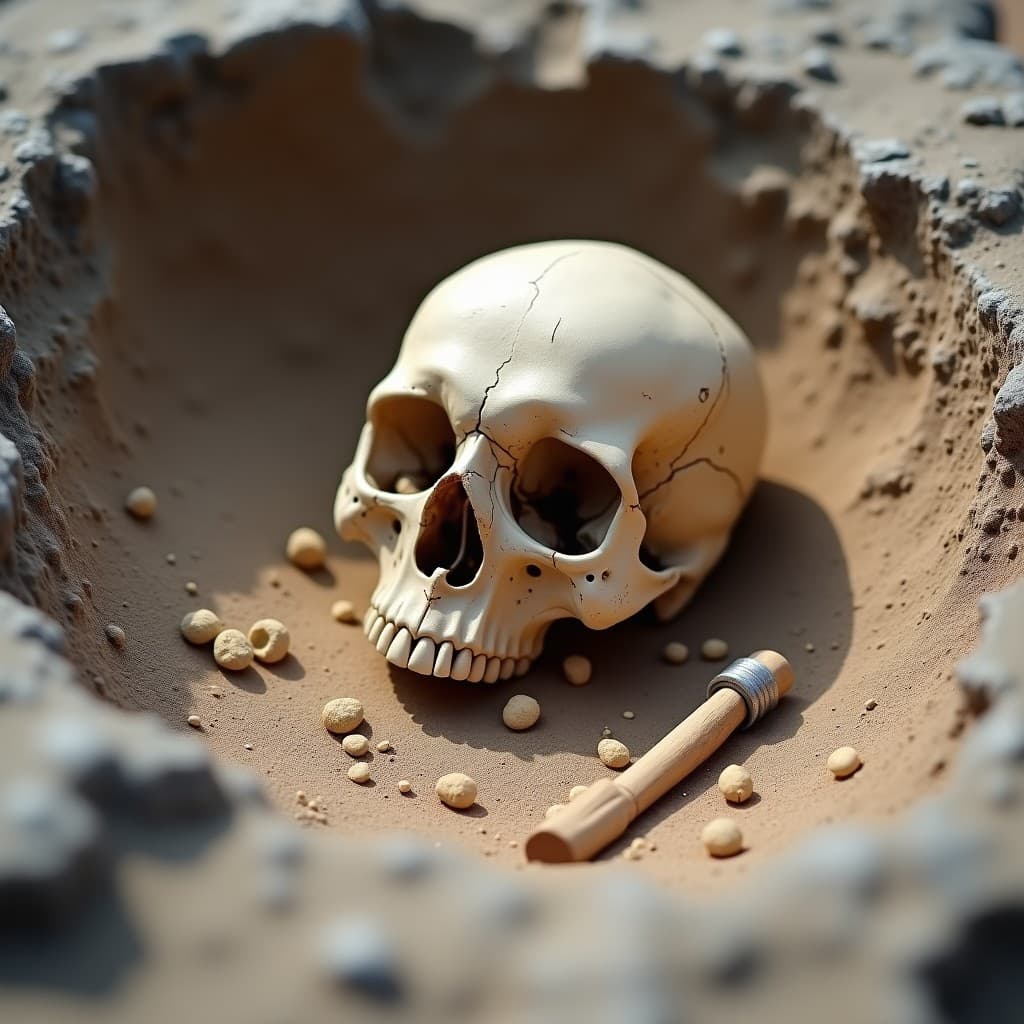
A discovery made at the Collegium Augustalium structure in Herculaneum has drawn international scientific attention. According to the Times of India, researchers have identified what they argue may be vitrified—or glass-like—brain tissue inside the skull of a young male whose body was unearthed from the site. The find challenges long-held assumptions about the total destructive power of the volcanic eruption that buried both Herculaneum and its neighbouring city Pompeii roughly 2,000 years ago.
The Times of India reported that the black glass-like mass suggests the eruption may not have entirely destroyed the victim's brain tissue. Instead, the extreme heat appears to have transformed it into a preserved form, offering scientists an unprecedented window into the moment of death. The discovery adds to a growing body of evidence that volcanic destruction, while catastrophic, left behind traces of organic material in conditions that allowed for unusual preservation.
Herculaneum and Pompeii have long fascinated the international scientific press as laboratories of human catastrophe. Foreign archaeology and science coverage has treated the sites as repositories of everyday Roman life frozen in time—food still in bowls, graffiti on walls, the contours of bodies preserved in ash. This discovery of possible vitrified brain tissue, if confirmed, would represent a new frontier in understanding the physiological impact of the eruption on its victims.
The find carries particular resonance for Campania's tourism and cultural economy. Pompeii and Herculaneum draw hundreds of thousands of international visitors annually, many of them motivated by the dramatic narrative of preservation and sudden death. Foreign travel and culture media frequently frame these sites as windows into ancient Roman existence—a narrative that discoveries like this one reinforce and deepen. The scientific rigor behind such findings lends credibility to the sites' claims as historical documents, not merely tourist attractions.
As research continues, the implications extend beyond archaeology into forensic science and our understanding of extreme heat's effects on human tissue. The Times of India's coverage positions the discovery within broader questions about preservation and destruction in volcanic environments. For Campania, where Vesuvius remains an active geological presence and a defining feature of regional identity, such findings remind both residents and visitors that the volcano's legacy is not merely historical or romantic, but grounded in measurable, ongoing scientific inquiry.