
LOMBARDIA
Italian manufacturers report stronger orders as safety stockpiling drives output
Lombardy's industrial base shows renewed momentum on renewed demand signals
Beatrice Comolli1,389 wordsEdition №8Monday, 8 June 2026 — Edition № 8
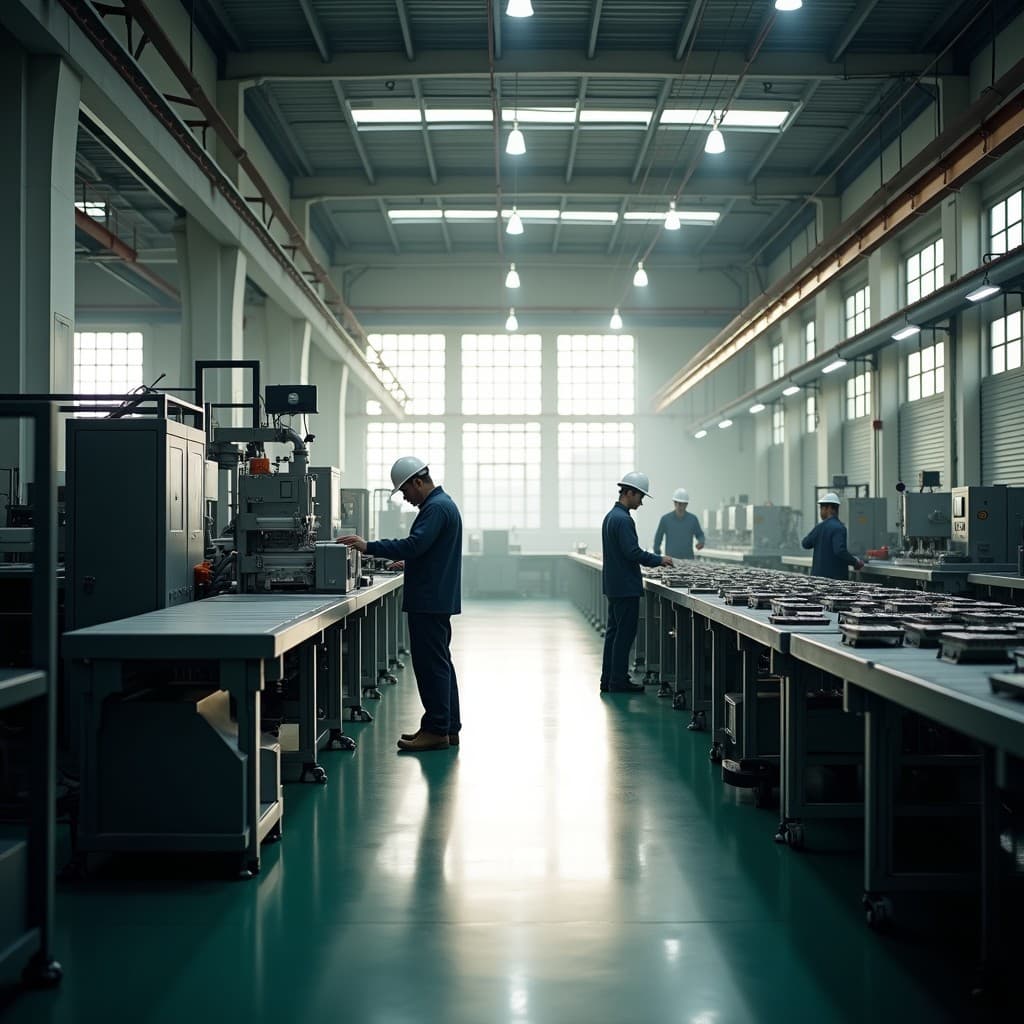
Italian manufacturers reported renewed growth in new orders in early June, driving a faster expansion in manufacturing output, according to S&P Global's purchasing managers' index data cited by Forex Factory. The rebound in demand reflects a shift toward safety stockpiling among buyers, a pattern that suggests companies are rebuilding inventory buffers after periods of lean supply-chain management.
The PMI data signals a shift in business confidence across Italy's industrial base. Renewed orders indicate that demand is not merely recovering from cyclical weakness but accelerating as firms respond to perceived supply risks or anticipate future demand pressures. For Lombardy, Italy's manufacturing heartland, the data carries weight: the region accounts for a substantial share of the country's industrial output, particularly in advanced manufacturing, pharmaceuticals, and precision engineering.
Safety stockpiling as a driver of demand reflects a broader post-pandemic pattern in global supply chains. Companies that experienced disruptions during earlier crises have adopted more cautious inventory strategies, building buffers to insulate themselves from future shocks. This behaviour supports current manufacturing output even if underlying demand growth remains modest, a distinction that matters for assessing the durability of the rebound.
The S&P Global PMI is a closely watched indicator of manufacturing health across the eurozone and Italy specifically. The index tracks purchasing managers' assessments of new orders, production, employment, and supplier delivery times, aggregating their responses into a single figure that signals expansion or contraction. A reading above 50 indicates expansion; below 50 signals contraction. The latest data, as reported by Forex Factory, showed renewed growth in both new orders and output, suggesting that the Italian manufacturing sector is moving into a stronger phase after earlier weakness.
Lombardy's manufacturing sector is concentrated in several clusters: the Brescia-Bergamo area for mechanical engineering and metalworking; the Como area for textiles and chemicals; the Pavia-Lodi corridor for food processing and pharmaceuticals; and Milan's metropolitan zone for advanced manufacturing, design, and precision industries. The PMI data, which aggregates responses from manufacturers across Italy, will have captured sentiment from Lombardy's firms, which represent a disproportionate share of the national total.
Safety stockpiling as a demand driver is distinct from organic demand growth. When companies build inventory buffers, they place orders for raw materials and components that exceed their immediate production needs. This behaviour temporarily inflates order books and output figures. However, once inventory targets are reached, order growth may moderate unless underlying demand continues to rise. The distinction matters for assessing whether the current rebound is sustainable or represents a temporary inventory cycle.
The international financial press, particularly Bloomberg and Reuters, have tracked Italian manufacturing closely as a bellwether for eurozone industrial health. Italy's manufacturing sector is large enough to move eurozone-wide aggregates, and its recovery or weakness signals broader European economic trends. The PMI data suggesting renewed order growth will likely be cited by financial analysts as evidence that the eurozone's largest southern economy is stabilising after earlier concerns about stagnation.
For Lombardy's multinational firms and export-oriented manufacturers, renewed order growth has immediate implications. Companies that supply automotive, aerospace, pharmaceutical, and machinery sectors will see increased demand if the PMI data reflects genuine order expansion. The safety stockpiling pattern suggests that buyers are willing to pay for delivery certainty, which may improve margins for suppliers with reliable production capacity.
The timing of the PMI data—early June—places it at a point in the year when seasonal factors typically support manufacturing activity. Spring demand often carries forward into early summer as construction projects, automotive production, and machinery orders accelerate. The PMI data will reflect this seasonality, but the fact that new orders are growing faster than in earlier months suggests that seasonal factors alone do not explain the rebound.
Italian manufacturing has faced headwinds from several directions: energy costs elevated by geopolitical tensions; labour cost pressures; competition from lower-cost producers in Asia; and demand weakness in key export markets. The PMI data suggesting renewed order growth indicates that at least some of these pressures have eased or that demand is strong enough to overcome them. For Lombardy's firms, this is a positive signal, particularly for those in export-oriented sectors.
The safety stockpiling pattern reflects lessons learned from recent supply-chain disruptions. The COVID-19 pandemic exposed the risks of just-in-time inventory management, and subsequent geopolitical tensions (particularly around energy and semiconductors) reinforced the case for holding larger buffers. Companies that adopted lean inventory strategies in the 2010s are now reversing course, building safety stock as insurance against future disruptions.
Lombardy's position as a manufacturing and design hub means that the region benefits disproportionately from order growth in precision industries. Companies in the Brescia-Bergamo mechanical engineering cluster, for example, supply global automotive and machinery manufacturers. Renewed orders from these customers will flow through to Lombardy's supply chains, supporting employment and investment in the region.
The PMI data also carries implications for employment. Faster manufacturing output typically leads to increased hiring or longer working hours, both of which support household incomes and consumer spending. For Lombardy, where manufacturing employment is significant, renewed order growth may translate into labour market tightening and upward wage pressure—a dynamic that matters for both workers and employers in the region.
The distinction between safety stockpiling and organic demand growth will become clearer in coming months. If the PMI data in July and August continue to show order growth, it will suggest that demand is genuinely strengthening. If order growth moderates as inventory targets are reached, it will indicate that the current rebound is primarily inventory-driven and may not persist.
For Lombardy's financial sector and investment community, the PMI data is a positive signal. Banks and asset managers monitor manufacturing PMI as an indicator of credit demand, corporate profitability, and the health of the regional economy. Renewed order growth supports lending appetite and equity valuations for industrial firms listed on the Milan stock exchange.
The international financial press will likely interpret the Italian PMI data as evidence that the eurozone is stabilising after earlier concerns about recession or stagnation. Italy's manufacturing rebound, if it persists, will support broader eurozone growth forecasts and may influence European Central Bank policy decisions about interest rates and monetary accommodation.