
LOMBARDIA
Italian factories signal demand rebound on safety stockpiling
New orders drive output growth as manufacturers respond to supply-chain caution across Europe
Beatrice Comolli1,247 wordsEdition №5Friday, 5 June 2026 — Edition № 5
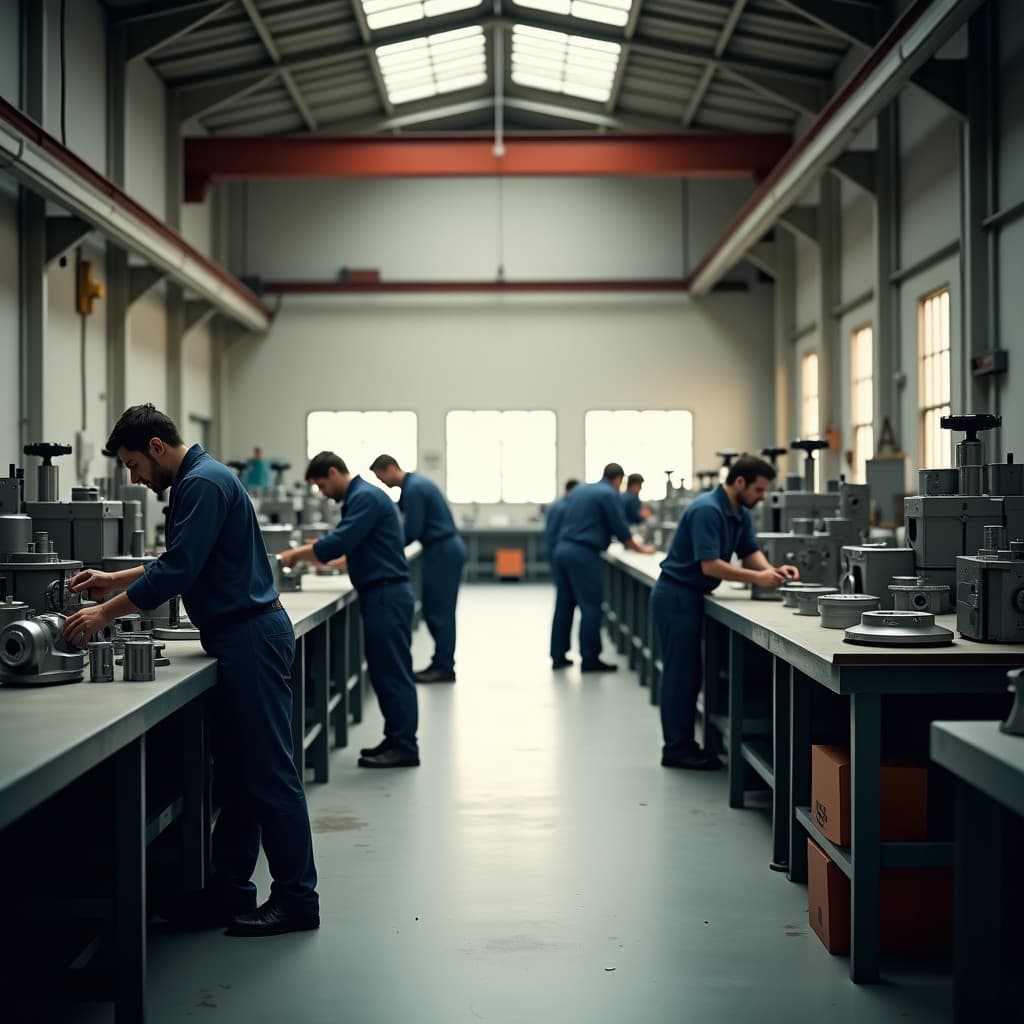
Italian manufacturers signalled a boost in demand linked to safety stockpiling in May, according to the latest PMI data released by S&P Global on 1 June. Renewed growth in new orders fuelled a faster expansion in manufacturing output, marking a shift in the sector after months of subdued activity across the eurozone.
The data comes as European supply chains remain fragile and buyers adopt precautionary inventory strategies. For Lombardia, Italy's manufacturing heartland, the uptick in orders signals potential relief for the region's advanced manufacturing and industrial base, which has weathered prolonged demand weakness.
The regional economy depends heavily on export-oriented production: machinery, automotive components, pharmaceuticals and precision engineering. A sustained rebound in new orders could ease pressure on employment and investment across the Milan industrial belt and the Brescia-Bergamo corridor.
The S&P Global PMI survey, conducted across Italian factories in May, showed manufacturers responding to what Reuters and Bloomberg analysts have identified as a shift in European buyer behaviour. Safety stockpiling—the practice of building inventories to hedge against future supply disruption or geopolitical uncertainty—has become a recurring feature of post-pandemic procurement strategies. Italian factories, positioned as key suppliers to German, French and Central European manufacturers, stand to benefit from this defensive restocking.
Lombardia accounts for roughly 30 per cent of Italian manufacturing output and employs over 1 million workers in the sector. The region's factories produce everything from industrial machinery and automotive components to pharmaceutical ingredients and fashion textiles. A sustained rebound in new orders would ease the pressure on capacity utilisation and hiring decisions that have been frozen since late 2024.
The timing matters. The eurozone manufacturing sector contracted in the first quarter of 2026, according to Eurostat data cited by Reuters and the Financial Times. Italian factories, which depend on exports for over 40 per cent of output, were hit harder than the German or French average. A rebound in demand signals that the worst of the slowdown may have passed, though the recovery remains uneven.
Foreign financial analysts have cautioned that safety stockpiling is not the same as organic demand growth. Bloomberg's European manufacturing desk noted in May that precautionary inventory builds often precede demand weakness, as buyers prepare for potential disruption rather than anticipate rising sales. If stockpiling peaks and reverses, factories could face a sharp contraction in orders later in the year.
For Milan's financial markets, the PMI data offered a modest boost. The FTSE MIB index, which tracks Italy's largest listed companies, rose on the back of the manufacturing report, with investors reassessing the risk of a deeper recession. Italian banks with exposure to manufacturing lending—Intesa Sanpaolo, UniCredit and Banco BPM, all headquartered or heavily active in Lombardia—saw modest gains.
The regional government and business associations have signalled cautious optimism. The Lombardia Chamber of Commerce, which tracks business sentiment in the region, has noted that factory managers are beginning to hire again after a hiring freeze that lasted through the first half of 2026. However, investment in new capacity remains subdued, suggesting manufacturers expect the rebound to be temporary.
The data also reflects sectoral divergence. Luxury goods manufacturers—a significant presence in Lombardia's fashion and design sectors—have continued to report weak demand from North American and Asian buyers, according to reports in the Business of Fashion and WWD. Meanwhile, industrial machinery and automotive suppliers have seen stronger inquiry, particularly from German and Scandinavian customers preparing for the transition to electric vehicles.
Wage pressures in Lombardia remain elevated. Italian unions have secured wage agreements that link pay to inflation, and manufacturers have absorbed significant labour cost increases since 2023. A rebound in orders will test whether factories can pass these costs to customers or whether margin compression will limit hiring and investment.
The broader European context shapes the outlook. The European Central Bank has signalled it may cut interest rates further if inflation continues to moderate. Lower borrowing costs could support investment and consumer spending, which would sustain the demand rebound. However, geopolitical tensions—particularly around energy supplies and trade relations with the United States—continue to weigh on business confidence across the continent.
For Lombardia's export-dependent economy, the PMI rebound is a necessary but insufficient condition for sustained recovery. The region's manufacturers need to see demand growth that is not driven by precautionary stockpiling but by genuine increases in end-user consumption. That shift has not yet materialised, according to Reuters reports on consumer spending across Europe in May and early June.
The next critical data point will be the June PMI survey, due in early July. If new orders continue to grow and factories report rising backlogs of work, the rebound will be credible. If orders flatten or decline, the stockpiling hypothesis will be confirmed, and Lombardia's factories could face a sharp contraction in the second half of 2026.