
SPORT
Three Italian Men Reach French Open Quarterfinals Without Sinner
Berrettini, Arnaldi and Cobolli advance despite top-ranked Sinner's second-round exit, marking a historic moment for Italian men's tennis.
Tobia Marenghi1,247 wordsEdition №9Tuesday, 9 June 2026 — Edition № 9
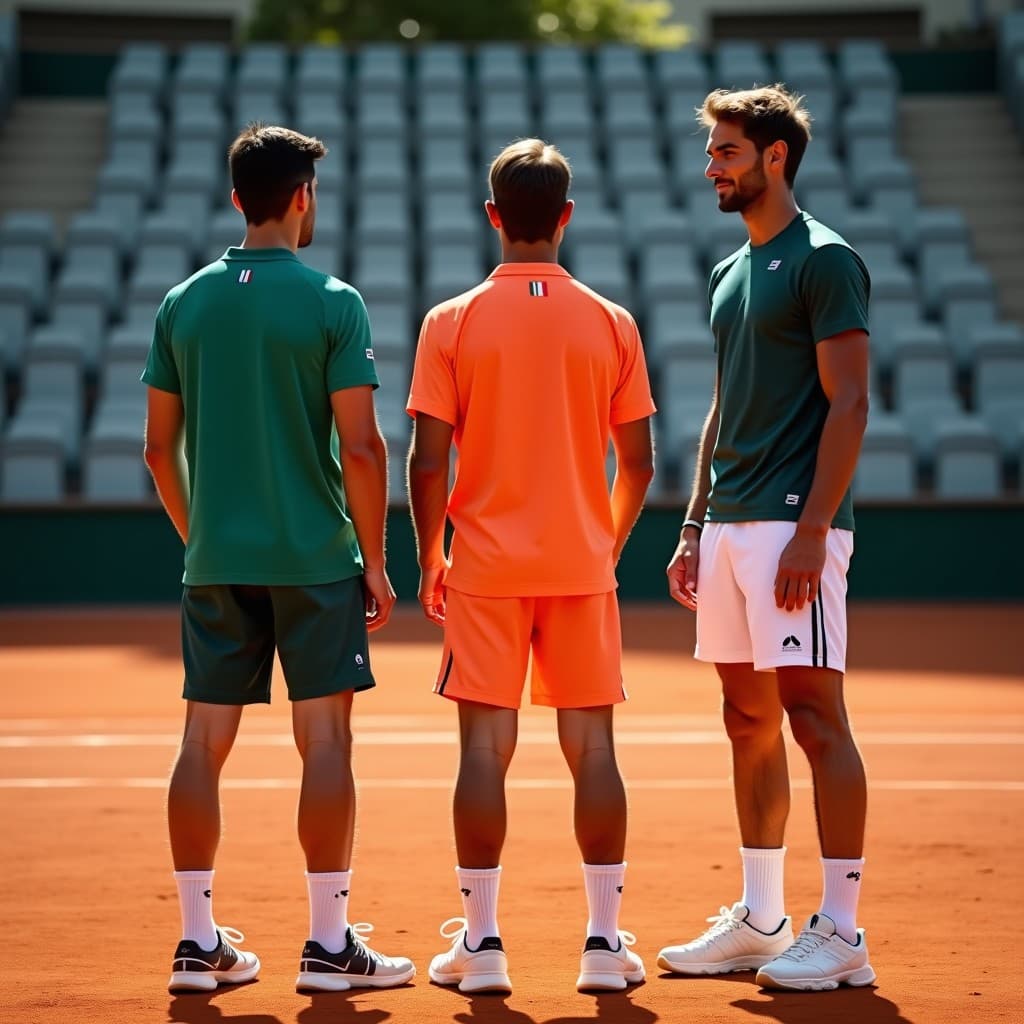
Three Italian men reached the French Open quarterfinals this week for the first time in the tournament's history, according to reporting from Greenwich Time and AP. Matteo Berrettini and Matteo Arnaldi faced each other in the night session on Wednesday, guaranteeing at least one Italian in the semifinals, while Flavio Cobolli was set to meet Canada's Felix Auger-Aliassime in another quarterfinal. The achievement is remarkable given that top-ranked Jannik Sinner was stunned in the second round.
Sinner's early exit might have been expected to derail Italian hopes at Roland Garros. Instead, the depth of Italian men's tennis has proven resilient. Berrettini, a former finalist at Wimbledon and the US Open, has rebuilt his career after injury. Arnaldi, younger and less decorated, has steadily climbed the rankings. Cobolli, at 22, represents the next generation. Together, they have created a moment that reflects a shift in Italian tennis beyond any single player.
The quarterfinal matchup between Berrettini and Arnaldi carried particular weight. One Italian would advance to the semifinals, ensuring representation at the tournament's later stages. The other would fall, but the fact that both had reached this point underscored the breadth of Italian talent. For a nation that has long relied on individual champions, this collective achievement signals a deeper strength in the sport.
Sinner's second-round loss was a shock that reverberated through the tournament and beyond. The world number one, who had won the Italian Open in Rome just weeks earlier, fell to an opponent ranked well outside the top 10. His exit raised questions about form, fitness, and the pressure of defending a top ranking at a Grand Slam. Yet his absence also created space for other Italian players to step forward, and they have done so decisively.
Berrettini's path to the quarterfinals represents a career resurrection. The 28-year-old Italian had been plagued by injuries that threatened to derail his prime years. A former top-10 player and finalist at multiple majors, Berrettini had faded from the spotlight as younger rivals rose. His run to the quarterfinals at Roland Garros suggests that his recovery is genuine and that he remains a force in men's tennis. For Italian fans, his presence in the last eight offers a reminder of what he can achieve when healthy.
Arnaldi's progress is equally significant, though for different reasons. At 23, he represents the generation that has grown up watching Sinner's rise and learning from his example. Arnaldi has shown steady improvement over the past two years, climbing from outside the top 100 to the quarterfinals of a Grand Slam. His presence in the last eight, alongside Berrettini, suggests that Italian tennis is not dependent on a single star but rather on a cohort of talented players who are all improving simultaneously.
Cobolli's quarterfinal appearance against Auger-Aliassime carries its own narrative. The Canadian is a player of considerable talent who has long been expected to break through at the majors but has struggled to do so consistently. Cobolli, at 22, is younger and less experienced, yet he has proven capable of competing at the highest level. His match against Auger-Aliassime was a test of whether Italian tennis can produce players who can beat established top-10 rivals on the biggest stages.
The BBC's coverage of Zverev's five-set victory over Cobolli in the final rounds noted that the German's triumph ended a three-time Grand Slam runner-up streak. Yet that same coverage highlighted the strength of Cobolli's performance, suggesting that the Italian's loss was not a failure but rather a near-miss against a player who finally seized his opportunity. For Italian tennis, Cobolli's run to the later rounds of Roland Garros is a sign of progress, not regression.
The broader context is Adriano Panatta's legacy. The AP reported that Panatta, who won the French Open in 1976, has been waiting 50 years for an Italian man to match his achievement. While none of the three Italian quarterfinalsts this year will win the tournament, their collective presence at this stage of the competition suggests that an Italian Grand Slam winner may not be far away. The depth of talent is there; the question is whether one of these players can convert opportunity into a title.
Sinner's absence from the later rounds also raises questions about his form heading into the second half of 2026. The world number one had been expected to challenge for the title at Roland Garros, where his aggressive baseline game and improving clay-court skills had made him a genuine contender. His second-round exit suggests either a temporary dip in form or a more serious concern about his fitness or mental state. For Italian tennis, the question is whether Sinner can recover and reassert himself, or whether the other three players will step into the void he has left.
The French Open's timing in the tennis calendar is significant. It comes after the Italian Open in Rome, where Sinner had just won, and before Wimbledon, where grass-court specialists will dominate. For Italian players, the clay-court swing is traditionally their strongest period. The fact that three Italians have reached the quarterfinals at Roland Garros suggests that Italian tennis is thriving on its preferred surface. Whether that success translates to other surfaces and other tournaments remains to be seen.
The quarterfinal between Berrettini and Arnaldi was particularly poignant because it meant that one Italian would advance and one would fall. In a sense, it was a microcosm of Italian tennis: talented, competitive, but ultimately limited by the number of spots available in the later rounds. The winner would face either Cobolli or Auger-Aliassime, continuing the Italian presence in the semifinals. The loser would exit, but with the knowledge that he had achieved something significant by reaching the quarterfinals of a Grand Slam.
Looking ahead, the question for Italian tennis is sustainability. Can Berrettini, Arnaldi, and Cobolli maintain this level of performance at other majors and on other surfaces? Or is the French Open, with its clay courts and Italian-friendly conditions, an outlier? The next few months will be telling. Wimbledon, the US Open, and the Australian Open will test whether Italian tennis has truly deepened or whether the French Open quarterfinals represent a high-water mark.
For the Italian public and media, the presence of three men in the French Open quarterfinals is a moment to celebrate. It represents progress, depth, and the possibility of future Grand Slam champions. Sinner's absence, while disappointing, has not derailed Italian tennis but rather highlighted its breadth. Whether that breadth can be converted into a Grand Slam title remains the ultimate question, but the foundation is clearly in place.