
SARDEGNA
Italy's rice bowl faces reckoning as drought tightens grip
Early summer heat and water scarcity threaten Pavia province; northern waterways reach critical levels
Gavino Sanna480 wordsEdition №36Sunday, 5 July 2026 — Edition № 36
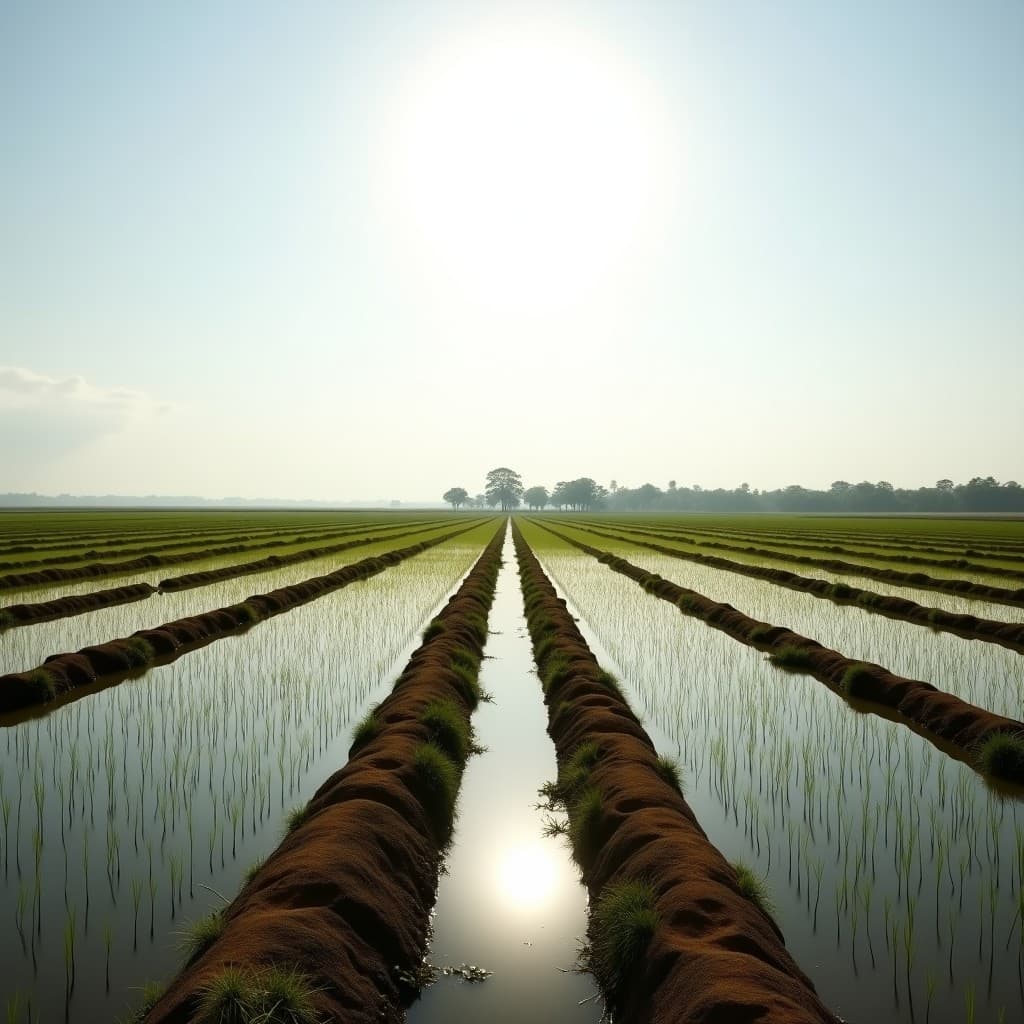
Summer arrived early and with brutal force to northern Italy's rice paddies. The Local Italy reported that weeds are taking over Sharon Angoli's parched paddies in Pavia province, the heart of Europe's most important rice-growing region, as drought has arrived ahead of schedule. The same outlet noted Friday that several waterways in northern Italy are in a critical state due to drought, with the Po River Authority warning that the weather forecast bodes ill for the coming days. The crisis marks an acceleration of the water stress that has plagued the region throughout 2025 and into 2026.
The Pavia province sits at the confluence of the Po and Ticino rivers, a landscape engineered over centuries to channel water across thousands of hectares of rice paddies. That infrastructure now confronts a fundamental problem: there is not enough water to distribute. The Local Italy's reporting suggests that the drought has advanced the usual seasonal stress by weeks, forcing farmers to make difficult decisions about water allocation, crop treatment and potential losses. Rice cultivation is water-intensive; paddies typically require standing water through the growing season. When that water is unavailable, the crop becomes vulnerable to weeds and disease, and yields collapse.
For Sardinia and the broader Mediterranean south, the drought crisis in the north carries a different but related significance. While the Pavia region struggles with insufficient river flow, Sardinia faces its own water stress—compounded by the island's drier climate and smaller freshwater reserves. The Local Italy reported in late June that a powerful European heatwave in late June ranks among the worst ever recorded, rivalling the freak 2003 episode. The heatwave and drought together signal a shift in Europe's climate pattern that affects north and south unequally. The north's crisis is acute but rooted in infrastructure built for abundance; the south's challenge is chronic scarcity made worse by heat and demographic decline.
Rome has begun to acknowledge the scale of the climate adaptation challenge. The Local Italy reported Friday that Rome unveiled Italy's first comprehensive climate adaptation plan, called Piano Caldo, recognizing that the nation's summers are getting hotter due to man-made climate change. The plan signals official awareness that ad-hoc responses to drought and heat are insufficient; the country must restructure how it manages water, agriculture, urban heat and energy demand. Yet implementation across Italy's twenty regions remains fragmented, and the agricultural sector—particularly water-intensive crops like rice—faces a transition without clear policy support.
The rice crisis in Pavia also reflects a wider economic vulnerability. Northern Italy's agricultural export sector depends on crops that require reliable water supplies; rice is one of several. As drought becomes more frequent and severe, farmers face a choice between investing in irrigation infrastructure adapted to scarcity, shifting to drought-resistant crops, or abandoning the land. For rural communities already aging and losing younger residents to cities, the financial burden of climate adaptation may accelerate depopulation. Sardinia's interior has faced this dynamic for decades; the north is now beginning to experience it. The difference is that the north has capital and infrastructure; the south has neither in abundance.