
BASILICATA
Italy Seeks EU Flexibility on Energy Spending as Transition Costs Mount
Foreign minister signals expectation of budgetary relief; Basilicata's oil sector watches policy shift
Pietro Lasorsa1,389 wordsEdition №9Tuesday, 9 June 2026 — Edition № 9
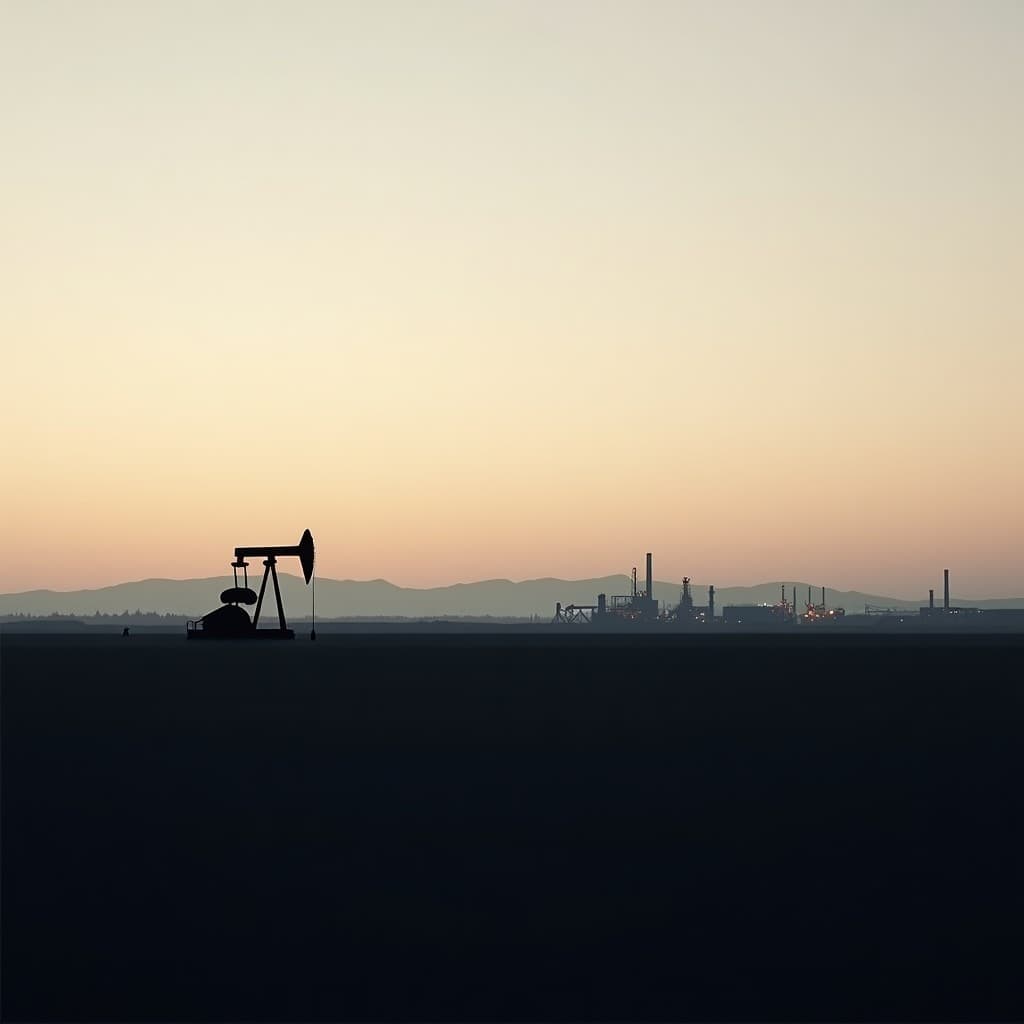
Italy's foreign minister signalled on Tuesday that the government expects European Union backing for increased spending flexibility on energy, according to Reuters. The statement reflects growing pressure on Italy to fund both its energy transition and immediate supply security while managing a large public debt. The move carries particular significance for Basilicata, home to Italy's largest onshore oil field, where energy policy intersects with questions of economic transition and regional development.
The request for spending flexibility suggests Italy is seeking relief from EU fiscal rules that constrain public investment in energy infrastructure. Reuters reported that the foreign minister framed energy spending as a strategic priority requiring budgetary accommodation. Such flexibility would allow Italy to invest in renewable energy, grid modernisation, and energy security measures without the constraints imposed by standard deficit rules—a concession the EU has occasionally granted for strategic investments.
Basilicata's energy economy centres on the Val d'Agri oil field, operated primarily by ENI, which produces roughly 100,000 barrels per day and constitutes a significant portion of Italy's domestic oil output. The region also hosts natural gas infrastructure and has begun developing renewable energy capacity. Italy's energy transition strategy thus has immediate regional consequences: declining oil revenues could affect local employment and tax receipts, while investment in renewables and grid infrastructure could create new economic opportunities. Foreign analysts covering Italy's energy sector have noted that the country's transition strategy remains contested, with southern regions dependent on fossil fuel extraction facing particular uncertainty.
The Reuters report did not specify the amount of spending flexibility Italy seeks or the precise mechanisms through which it would be implemented. However, the timing of the request reflects broader EU discussions about fiscal rules and strategic investment. The European Commission has periodically granted exemptions or flexibility to member states for investments deemed strategically important—defence spending, for instance, has recently received such treatment. Italy's request suggests energy investment may receive similar consideration.
Italy's energy sector faces multiple pressures simultaneously. Newsweek reported in early June that global oil markets remain volatile, with disruptions around the Strait of Hormuz affecting global supply and prices. While the United States has substantial domestic production capacity, Europe remains more dependent on imports and faces higher energy costs. Italy, as a major industrial economy with limited domestic fossil fuel reserves outside Basilicata, is particularly exposed to global energy price volatility.
Basilicata's oil field has been in production since the 1990s and remains economically significant for the region. ENI's operations there employ hundreds directly and thousands indirectly through supply chains and services. However, the field is mature; production has declined over recent years as reserves deplete. The region's economic future thus depends partly on whether oil revenues can be reinvested in alternative economic activities—renewable energy, tourism, agriculture—or whether the decline of oil extraction will simply accelerate depopulation and economic contraction.
The foreign minister's statement about energy spending flexibility must be read against Italy's broader fiscal constraints. The country carries one of Europe's highest public debt ratios, a fact that foreign financial press outlets regularly emphasise. EU fiscal rules limit Italy's ability to borrow for public investment without triggering scrutiny from Brussels and bond markets. Energy spending flexibility would, in effect, carve out an exception to these rules, allowing Italy to invest in energy transition without the usual deficit consequences.
The request also reflects Italy's strategic position within Europe. Reuters and other outlets have reported on European concerns about energy security, particularly following disruptions to Russian gas supplies. Italy has worked to diversify its energy sources, investing in liquefied natural gas terminals and renewable capacity. However, these investments require substantial capital. Spending flexibility would ease the fiscal burden of such transitions, allowing Italy to pursue energy security goals without sacrificing other public investments or deepening its debt burden.
Basilicata's perspective on energy spending flexibility is complex. The region benefits from oil extraction revenues and employment, yet also faces environmental pressures from oil operations. Foreign environmental press coverage has documented concerns about groundwater contamination and air quality in the Val d'Agri region. Renewable energy investment could offer environmental benefits and economic diversification, but would require managed transition of the oil sector workforce. Energy spending flexibility that funds renewables could support such a transition, but only if coupled with regional development strategies.
The World Oil report on Latin American energy development, published in early June, offers a comparative context. Industry leaders discussed how regions like Argentina's Vaca Muerta shale field are positioning themselves as major energy suppliers through infrastructure investment and regional cooperation. While Basilicata's oil field is far smaller, the principle applies: energy regions must invest in infrastructure and technology to remain competitive. EU spending flexibility could enable such investment in Italy.
Italy's energy transition strategy, as reported by international outlets, aims to increase renewable capacity while phasing down fossil fuels. However, the timeline and pace of this transition remain contested. Environmental groups and some EU institutions push for rapid decarbonisation, while fossil fuel-dependent regions and industries argue for gradual, managed transitions. The foreign minister's request for spending flexibility suggests the government is seeking to accelerate renewable investment while managing the political and economic consequences of fossil fuel decline.
Basilicata's regional government has historically supported oil extraction as economically essential, yet has also promoted renewable energy development. The region receives EU cohesion funding, which has partly financed renewable projects. However, cohesion funding is limited and competes with other regional priorities. Spending flexibility at the national level could increase resources available for renewable investment in the south, potentially accelerating Basilicata's economic transition.
The foreign minister's statement also reflects Italy's position within broader EU energy discussions. The European Commission has proposed various mechanisms to support member states' energy transitions, including joint procurement of renewable energy and investment in grid modernisation. Italy's request for spending flexibility fits within these discussions, suggesting the government is negotiating for terms that ease the fiscal burden of transition.
International financial markets have closely watched Italy's fiscal position. Bond spreads—the difference between Italian and German government bond yields—fluctuate partly on investor perceptions of Italy's ability to manage its debt while investing in strategic priorities. A credible commitment to energy transition, coupled with EU support for spending flexibility, could reassure markets that Italy is pursuing sustainable long-term policies. Conversely, if energy spending flexibility is perceived as fiscal laxity, it could trigger market concerns.
The timing of the request is significant. Italy's government is preparing its next budget cycle, and energy spending will be a major component. By signalling expectations of EU flexibility now, the foreign minister is attempting to shape the fiscal space available for energy investment. Whether the EU grants such flexibility remains uncertain; it depends on broader negotiations about fiscal rules, strategic priorities, and burden-sharing among member states.
For Basilicata specifically, the outcome of these negotiations could determine the pace and scale of economic transition. Spending flexibility that funds renewable energy and grid modernisation could create new employment and economic opportunities, offsetting some losses from oil sector decline. However, without such investment, the region risks a more abrupt and economically painful transition, with oil employment declining faster than alternatives emerge.