
MOLISE
Brussels prepares rebuke of Italy's fuel duty cuts
Energy crisis response divides Rome and EU Commission over fiscal flexibility and vulnerable households
Antonio Petrella1,356 wordsEdition №4Thursday, 4 June 2026 — Edition № 4
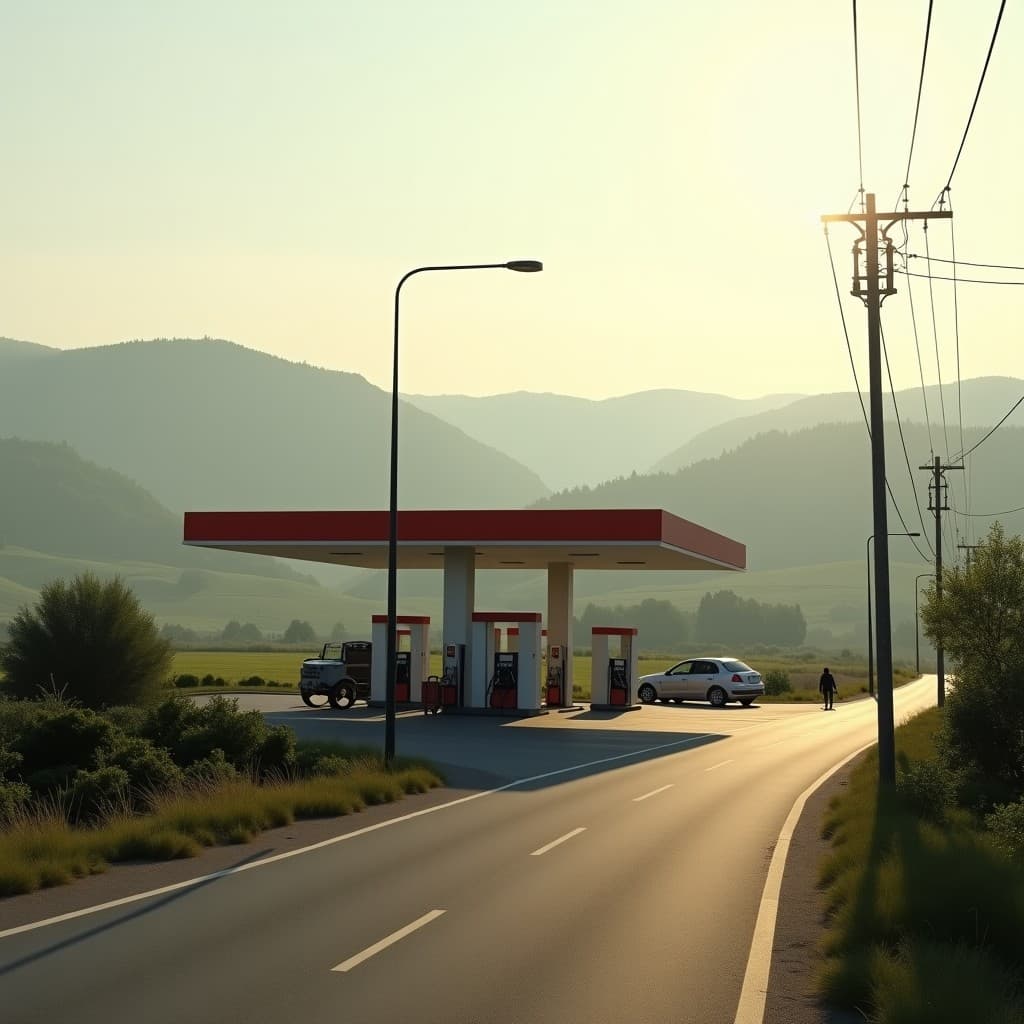
The European Commission is preparing a formal criticism of Italy's decision to cut excise duties on fuels, according to Euronews. The rebuke will appear in a report published on Wednesday and reflects a broader disagreement between Rome and Brussels over how member states should respond to the energy crisis. Italy has argued for greater fiscal flexibility to address high energy prices; the Commission contends that targeted support for vulnerable households and industries is more effective and fiscally responsible than broad fuel duty reductions.
The dispute touches on a recurring tension within the European Union: the balance between national fiscal autonomy and supranational fiscal discipline. Italy, like other southern member states, has long argued that Brussels imposes overly rigid constraints on government spending, particularly during crises. The Commission, by contrast, has sought to enforce fiscal rules that prevent member states from running unsustainable deficits or distorting internal markets through subsidies.
For Molise, the implications are complex. The region's economy depends partly on agriculture and small manufacturing, both energy-intensive sectors. Lower fuel prices benefit farmers and small producers directly. But Molise also receives substantial EU cohesion funding—transfers designed to reduce regional inequality—and that funding is contingent on Italy's compliance with EU fiscal and regulatory frameworks. A confrontation between Rome and Brussels over fuel subsidies could jeopardise the region's access to EU development funds.
The Commission's forthcoming report will argue that Italy's fuel duty cuts are a blunt instrument that benefits all consumers regardless of income or need, rather than concentrating support where it is most necessary. Euronews reported that Brussels believes fiscal flexibility should be directed at vulnerable families and industries facing genuine hardship from energy costs. The Commission's position reflects a broader EU policy preference: targeted transfers are more cost-effective than universal price controls or broad subsidies.
Italy's government has framed the fuel duty cuts as a necessary response to energy prices that remain elevated despite falling from their 2022 peaks. The country imports most of its energy, and energy costs have been a persistent drag on competitiveness and household budgets. Rome has argued that it needs room to manoeuvre fiscally to protect its economy and citizens. The fuel duty reduction is one tool among several that the Italian government has deployed.
The Commission's criticism will likely focus on fiscal sustainability. Italy carries a public debt of roughly 140 percent of GDP—the third-largest in the eurozone after Greece and Spain—and the Commission monitors Italian fiscal policy closely. Broad fuel subsidies reduce government revenue without corresponding spending cuts, which widens the deficit. The Commission has been particularly concerned about member states using temporary crisis measures that become permanent, locking in structural deficits.
The dispute also reflects different assessments of the energy crisis itself. The Commission sees energy prices as having stabilised at elevated but manageable levels, particularly after the 2022 spike following Russia's invasion of Ukraine. Italy's government, by contrast, emphasises that energy costs remain a burden on households and businesses, and that without continued support, inflation could accelerate and competitiveness could suffer. The disagreement is partly technical—about whether the crisis justifies ongoing fiscal support—and partly political.
For Molise specifically, the fuel duty cuts have a direct economic impact. The region's agricultural sector depends on diesel for tractors, irrigation pumps, and transport. Lower fuel costs reduce production costs for farmers, improving margins on cereal and livestock production. Small manufacturers in Molise—many of them family-run firms producing textiles, furniture, or food products—also benefit from lower energy costs. The region's economy is fragile enough that even modest cost savings matter.
But Molise's dependence on EU cohesion funding creates a countervailing pressure. The region receives roughly €1 billion in EU development funding over the current seven-year cycle, money that finances infrastructure, education, and business development projects. That funding is allocated partly on the basis of compliance with EU rules and fiscal discipline. If Italy's government enters into a protracted conflict with the Commission over fiscal policy, the consequences could extend to regional funding allocations.
The Commission's approach to fiscal policy has been controversial in southern Europe. Italy, Spain, and Greece have all argued that Brussels's fiscal rules are too rigid and do not account for the legitimate needs of member states facing crises or structural challenges. The southern regions of Italy—including Molise—have been particularly vocal about the constraints that EU fiscal rules impose on regional development spending. The fuel duty dispute is one manifestation of this broader tension.
The international press has noted that the Commission's fiscal stance has shifted somewhat since the pandemic. During 2020 and 2021, the Commission suspended its normal fiscal rules and allowed member states greater borrowing flexibility. That flexibility was intended to be temporary, but it demonstrated that the Commission could adapt its approach in response to genuine crises. The energy crisis of 2022–2023 prompted similar flexibility, though the Commission has been more cautious about extending it indefinitely.
Italy's fuel duty cuts are not the only area where Rome and Brussels are at odds over energy policy. According to Montel News, Italy has also proposed an emissions cost reimbursement scheme that could cut wholesale power prices by up to 9 percent but would reduce power imports and distort cross-border electricity markets. The Commission is likely to scrutinise that proposal as well, arguing that it violates EU rules on state aid and market distortion.
The broader context is Italy's energy transition. The country has committed to reducing carbon emissions and increasing renewable energy generation, in line with EU climate targets. But Italy's energy system remains partly dependent on fossil fuels, and the transition to renewables is expensive. The government has argued that temporary fiscal support is necessary to manage the transition without imposing unacceptable costs on households and businesses. The Commission counters that subsidies distort markets and delay the necessary structural adjustments.
Molise has a small but growing renewable energy sector, centred on wind farms in the interior. The region's geography—elevated terrain with consistent winds—makes it suitable for wind generation. But wind farms require capital investment and face local opposition from residents concerned about landscape impact. Lower electricity prices resulting from subsidies could reduce the incentive for renewable energy investment, potentially slowing Molise's energy transition.
The Commission's forthcoming report will likely recommend that Italy phase out the fuel duty cuts and replace them with targeted support for vulnerable households and energy-intensive industries. The Italian government will probably resist, arguing that it needs fiscal flexibility to respond to ongoing energy stress. The dispute will play out over coming months, with the Commission potentially initiating formal procedures against Italy if the government does not adjust its policies.
For Molise, the outcome matters. If the Commission forces Italy to abandon broad fuel subsidies, energy costs for farmers and manufacturers will rise, squeezing already thin margins. If Italy wins greater fiscal flexibility, the region benefits from lower energy costs but risks reduced EU cohesion funding if the Commission retaliates by reducing development transfers. The region's economy is too small and too fragile to absorb either outcome easily.