
CALABRIA
EU challenges Italy's fuel cuts as energy crisis deepens
Commission report criticises Rome's excise duty reduction; southern regions face competing pressures on cost of living and transport.
Saverio Gallo1,247 wordsEdition №3Wednesday, 3 June 2026 — Edition № 3
The European Commission will publish a report on Wednesday criticising Italy's decision to cut excise duties on fuels, according to Euronews. Rome has sought greater fiscal flexibility to address energy price spikes, but Brussels contends the measure should be directed at families and industries most exposed to energy costs rather than applied broadly across the fuel market.
The dispute reflects a wider tension within the eurozone: member states facing domestic pressure to ease energy costs versus EU fiscal discipline and the principle that relief should be targeted rather than universal. Italy's approach — a blanket reduction in the tax burden on fuel — sits uneasily with Brussels's view of how crisis support should work.
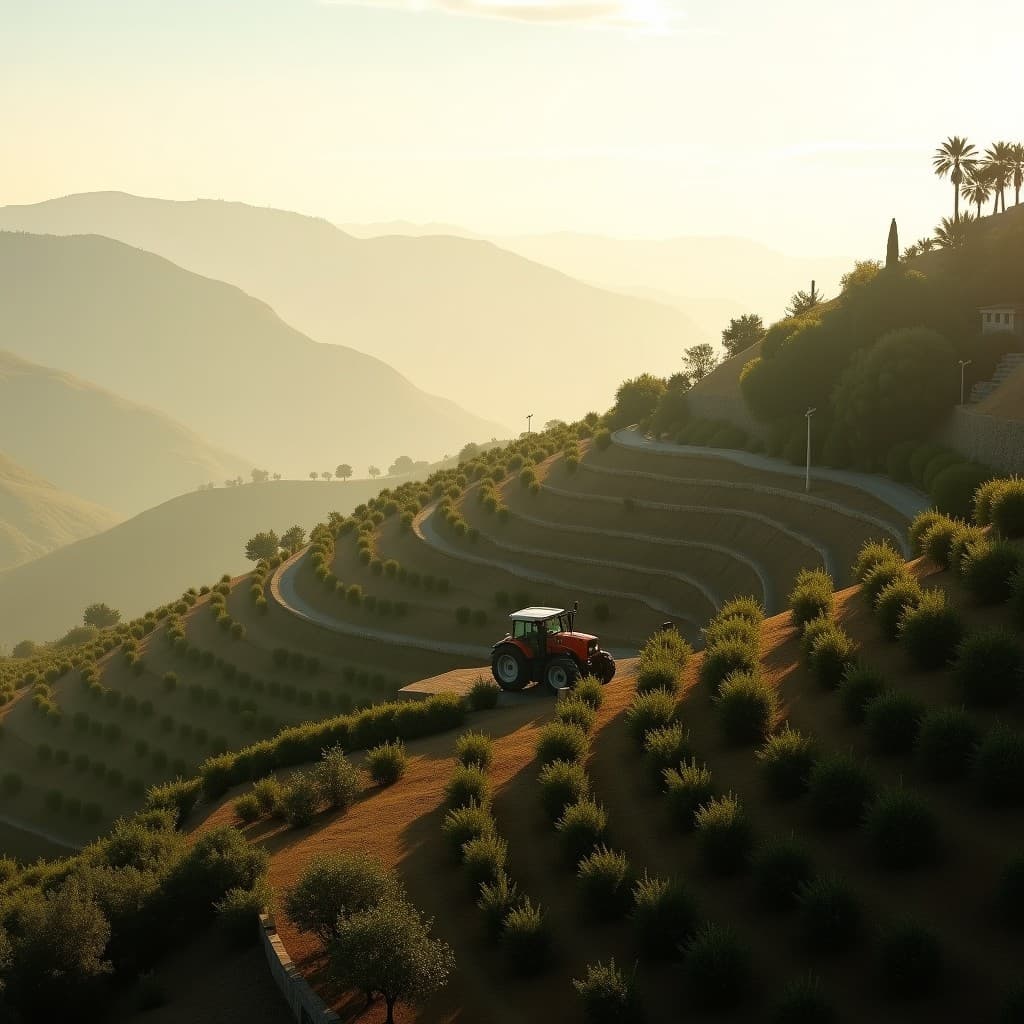
For Calabria, the regional consequence is acute. The South depends on fuel-intensive agriculture, long-distance road transport to northern markets, and fishing fleets that operate across the Mediterranean. A fuel duty cut offers immediate relief to these sectors, but the Commission's criticism signals that such relief may not be sustainable under EU scrutiny.
The timing of the Commission's intervention matters. Energy prices across Europe have remained volatile since the 2022 crisis, and Italy — with its large manufacturing base, agricultural sector, and reliance on imported energy — has been particularly exposed. The Italian government's response has been to reduce the excise duty on petrol and diesel, a measure that lowers prices at the pump for all consumers and businesses.
Euronews reports that the Commission will argue this approach is too blunt. Brussels prefers targeted support: subsidies or tax relief directed at vulnerable households, small businesses, and energy-intensive industries. A blanket fuel duty cut, the Commission's reasoning goes, benefits everyone equally, including those who can afford higher prices, and does not address the underlying energy security challenge.
In Calabria, the regional economy has long depended on price-sensitive sectors. Citrus and bergamot growers rely on diesel for irrigation pumps, tractors, and transport to processing plants and export ports. The port of Gioia Tauro, one of Europe's busiest container terminals, depends on fuel-intensive logistics. Fishing communities along the Ionian and Tyrrhenian coasts face fuel costs that can exceed 40 per cent of operating expenses in lean years.
The fuel duty cut, announced by Rome in response to the energy crisis, has provided temporary relief. A litre of diesel in Calabria, which had climbed above €1.80 in 2022, has edged down slightly. For a farmer running a 100-hectare citrus estate, or a fishing boat making weekly runs to Messina or beyond, the difference amounts to thousands of euros annually.
Yet the Commission's forthcoming criticism signals that this relief may be politically fragile. If Brussels forces Rome to reverse or narrow the duty cut, Calabria's agricultural and maritime sectors would face renewed pressure. The region's per-capita income remains the lowest in Italy — roughly 60 per cent of the northern average — and energy costs hit harder here than in wealthier regions.
The dispute also reflects a deeper structural problem. Italy's public debt, at roughly 140 per cent of GDP, constrains the government's ability to fund long-term energy support. A fuel duty cut is fiscally cheaper than direct subsidies, but it is also less precise: it helps everyone, not just those in need. The Commission's position — that Italy should use its limited fiscal space more carefully — is not unreasonable, but it offers no alternative path for regions like Calabria where energy costs are a genuine economic brake.
Historical precedent suggests the Commission's criticism will carry weight. In 2022 and 2023, Brussels repeatedly pushed back against Italian proposals for broad energy relief, arguing instead for means-tested support and investment in renewable energy. The Italian government, under pressure from both Brussels and its own fiscal constraints, has typically compromised: maintaining some duty cuts while adding targeted measures for low-income households and small businesses.
The agricultural lobby in Calabria has been vocal about energy costs. The Coldiretti farmers' union, which has significant membership in the region, has repeatedly called for extended fuel duty relief and has warned that without it, production costs will force smaller growers out of business. A Commission-driven reversal of the duty cut would likely trigger renewed pressure on Rome from the South.
Gioia Tauro's logistics operators face a different calculus. The port handles roughly 3.7 million containers annually, many destined for northern Europe or transshipped to other Mediterranean ports. Fuel costs affect the trucking companies that move containers inland and the shipping lines that call at the terminal. A fuel duty cut helps them compete with ports in Greece, Spain, and France; a reversal would make Gioia Tauro less attractive to operators already weighing alternatives.
The Commission's report, due Wednesday, will likely propose that Italy redirect fuel duty relief toward specific sectors — agriculture, fishing, public transport — rather than maintain a blanket cut. This would require new legislation and would inevitably be slower to implement than the current measure. In the meantime, Calabrian businesses will watch Brussels and Rome negotiate, aware that the outcome will shape their operating costs for months to come.
The broader context is Italy's energy transition. The EU's climate goals require Italy to reduce fossil fuel consumption and shift toward renewables. A fuel duty cut, by making petrol and diesel cheaper, works against that objective. The Commission's criticism is partly about fiscal discipline, but it is also about climate policy: cheaper fuel encourages consumption, not conservation.
For Calabria, this tension is especially sharp. The region has significant renewable potential — Mediterranean sun, coastal wind — but investment in solar and wind farms has lagged behind the North. If the Commission succeeds in forcing Rome to narrow the fuel duty cut, the pressure on the regional government to accelerate renewable energy development would intensify. Without cheaper fuel, agricultural and maritime operators would have stronger incentive to invest in efficiency and alternative energy sources.
The Commission's report will be published in the context of wider EU fiscal debates. Italy, Spain, and other southern member states have argued for greater flexibility on energy spending during crises; Germany and the Netherlands have resisted, citing moral hazard and the need for fiscal discipline. Italy's fuel duty cut is a test case: if Brussels can overturn it, the precedent will constrain future Italian governments' room for manoeuvre on energy policy.
What happens next depends on Rome's response. The government may defend the fuel duty cut as a temporary crisis measure, argue for a phased reduction rather than immediate reversal, or propose a compromise that targets relief toward specific sectors. The Commission, for its part, will likely demand evidence that Italy is using fiscal space efficiently and moving toward longer-term energy security solutions rather than short-term price relief.
For Calabria, the stakes are real. Energy costs are not abstract: they determine whether a citrus farmer can afford to irrigate, whether a fishing boat can afford to sail, whether Gioia Tauro can compete with other ports. The region has survived centuries of economic marginality partly by adapting to constraints. The fuel duty cut offered a moment of relief; the Commission's criticism signals that relief may be temporary. The regional economy will adjust, as it always has, but the adjustment will be costly.